

Product Field NotesCompanion Plants
June Hosta: The Color-Shifting Classic for Shady Walks
 Save
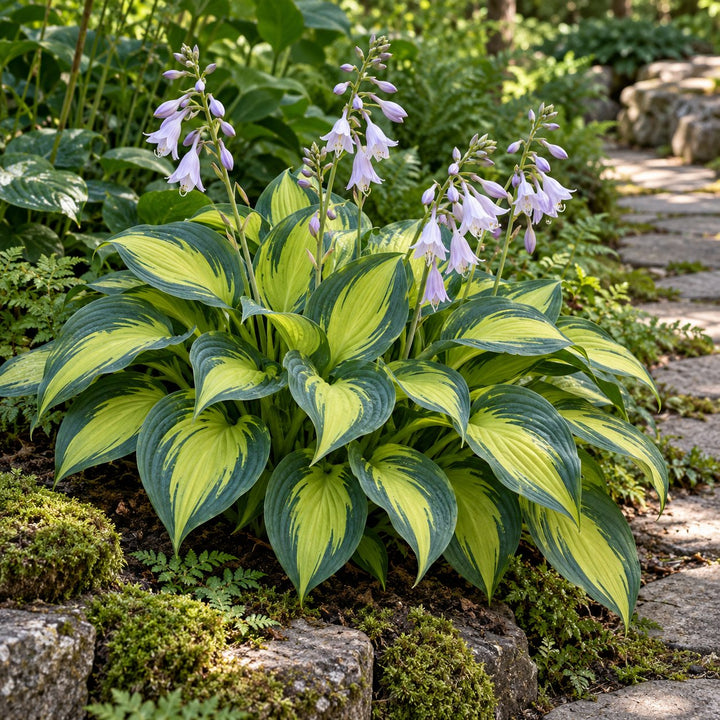
June hosta is one of the most loved medium hostas, and one of the most widely awarded, including an Award of Garden Merit and Hosta of the Year for 2001. Its pointed leaves change through the season: chartreuse centers wrapped in wide, streaky blue-green borders in spring, warming to gold by summer if the plant gets a bit of light. It forms a neat, symmetrical mound about 15 inches tall and 20 inches wide.
Like all hostas, June lives in the shade, so it is a companion for the shady parts of a lavender property rather than the lavender bed itself.
June at a glance
| Trait | What to expect |
|---|---|
| Botanical name | Hosta 'June' |
| Foliage | Chartreuse to gold center, wide streaked blue-green margin |
| Flowers | Pale bluish-lavender bells on 20-inch stems |
| Size | About 15 inches tall, 20 inches wide |
| Bloom | Mid-July into early August |
| Hardiness | USDA zones 3-9 |
| Light | Part shade to full shade |
| Deer | Susceptible |
Choosing your color with light
June gives you some control over its look. In deep shade the centers stay chartreuse all summer. With a little morning sun they turn gold, which glows against the blue edges. What it does not want is hot afternoon sun, which fades the blue margins and can scorch the leaves. So pick the spot for the color you want: a dim corner under trees for cool chartreuse, an east-facing bed for gold.
Where it fits with lavender
A shady walk that leads out to the sunny lavender beds is a perfect home for a row of June. Its pale bluish-lavender flowers in late July nod back to the lavender, and its blue-green margins pick up the silvery tone of lavender foliage. Pair it with ferns and astilbe in the shade, and plan both light zones in the Companion Plant Planner.
Planting and care
- Soil: rich, humus-heavy and evenly moist, but well drained.
- Water: deeply during dry spells, especially the first summer.
- Slugs: June's thick leaves resist slug damage better than most hostas.
- After bloom: cut the flower stems to keep the mound neat.
- Fall: cut foliage down after a hard frost to clear slug eggs and debris.
- Dividing: divide crowded clumps in early spring as shoots emerge.
The 72-cell plug tray
June is easy to grow and looks best massed, so a 72-cell plug tray is a natural fit for edging a long shady walk or potting up your own plants. See the product page for current availability, or visit the Wholesale Hub.
Frequently asked questions
Is June related to other hostas you grow?
June is itself a sport of the blue hosta 'Halcyon', and it has produced sports of its own, such as High Society, which has wider blue margins.
Is it safe for pets?
Hosta foliage is listed as toxic to dogs and cats.

































Share how it went in your field