

Use & Care NotesLavender Plants
KERBEEDARK Lavender: Dense Dark Violet Edging That Stays Tidy
 Save
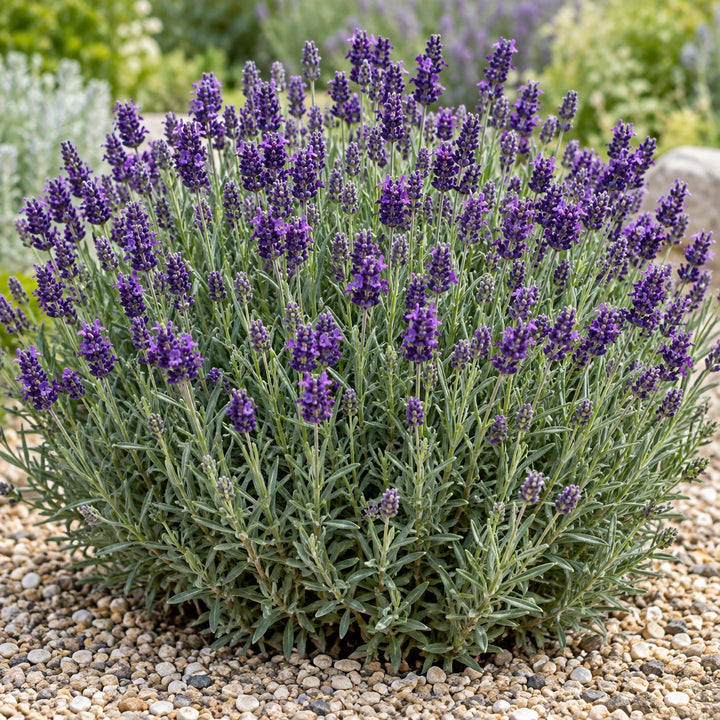
KERBEEDARK lavender is a compact, bushy and dense English lavender with dark violet flowers. Its flower stems are unusually short, so the blooms sit close to the gray-green foliage and the whole plant holds a tight, rounded shape about 16 inches tall and wide. It flowers freely and smells sweet and floral, with soft herbal notes and little camphor.
It is Lavandula angustifolia, rated for USDA zones 5a to 8b, so it handles Great Lakes winters when the drainage is right. If you have ever wished lavender would stop flopping onto the path, this is the one to try.
KERBEEDARK at a glance
| Trait | What to expect |
|---|---|
| Botanical name | Lavandula angustifolia 'KERBEEDARK' |
| Flower color | Dark violet |
| Foliage | Gray-green, compact, bushy and dense |
| Size | About 15.7 inches tall and 15.7 inches wide |
| Stems | Notably short, holding flowers close to the foliage |
| Bloom | Starts mid-June, peaks mid-July, moderate rebloom |
| Hardiness | USDA zones 5a to 8b |
| Fragrance | Strong; sweet floral with low camphor |
Built for edges and low hedges
Short flower stems are the defining trait here. Taller lavenders lean outward in bloom, especially after a summer storm. KERBEEDARK keeps its flowers tucked close, so a row along a walkway, patio or driveway stays crisp. The dark violet color is strong enough to read from a distance and pairs well with gray stone, brick or a pale gravel path.
For a continuous low hedge, space plants about 12 inches apart; for individual mounds, give each about 16 inches. A knot-garden style edge around a herb bed is another good use.
Planting
Full sun, six to eight hours, and soil that drains quickly are essential. Improve heavy clay with grit or plant in a raised bed. Set the crown level with the soil and keep bark mulch away from the stems; a gravel mulch works better. Water deeply at planting and whenever the top few inches dry through the first summer. The USDA Zone Finder confirms your zone.
A year with KERBEEDARK
- Spring: wait for new growth, then trim off any winter-damaged tips.
- Mid-June to July: main bloom. Harvest buds or let bees enjoy it.
- After bloom: shear the whole plant lightly, staying in the leafy growth, to keep the dome shape and encourage a moderate rebloom.
- Late summer: water only in long dry spells.
- Winter: no covering needed; sharp drainage is the best protection.
The Pruning Calendar has more on timing.
For the kitchen and the linen closet
KERBEEDARK rates great for culinary use, and its sweet, low-camphor scent is the kind cooks want. Harvest on a dry morning when buds are colored but before most flowers open, dry small bunches in a dark, airy spot and rub the buds off. Use only food-grown buds and start with a pinch. The short stems are not ideal for long bundles, but dried buds are perfect for sachets and drawer pouches.
Plant formats
It is offered as a 3-inch plug, a 4-inch pot or a 1-gallon pot. Plugs make a long edging project more affordable to plant; gallons fill in fastest. See the product page for current sizes and availability.
Frequently asked questions
Does KERBEEDARK make good cut flowers?
Its cut and dried ratings are good, but the stems are short. It is better for buds, sachets and small posies than long bundles.
Is it hardy in Michigan?
It is rated for zones 5a to 8b. Good drainage matters more than cold.
How is it different from the other KERBEE lavenders?
The KERBEE lavenders share a compact, short-stemmed habit. KERBEEDARK has the darkest violet flowers and the densest form. The Compare tool lines them up.
















Share how it went in your field