

Use & Care NotesLavender Plants
KERBEELIGHT Lavender: Light Violet Blooms for a Kitchen Herb Bed
 Save
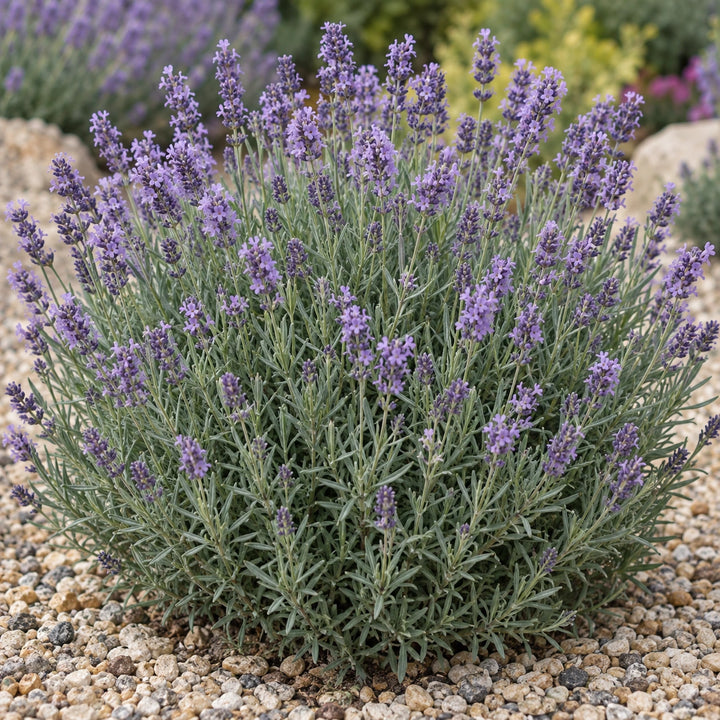
KERBEELIGHT lavender is the soft-colored member of the KERBEE group. Its light violet flowers sit on short stems over a compact, bushy mound of gray-green leaves, and it flowers freely from mid-June. At about 20 inches tall and wide, it grows a little larger than most of its siblings.
It is Lavandula angustifolia, an English lavender rated for USDA zones 5a to 8b. Its scent is strong, sweet and floral with soft herbal notes and low camphor, and it rates great for culinary use. That combination makes it an easy fit in a sunny kitchen garden.
KERBEELIGHT at a glance
| Trait | What to expect |
|---|---|
| Botanical name | Lavandula angustifolia 'KERBEELIGHT' |
| Flower color | Light violet |
| Foliage | Gray-green, compact and bushy |
| Size | About 19.7 inches tall and 19.7 inches wide |
| Bloom | Starts mid-June, peaks mid-July, moderate rebloom |
| Hardiness | USDA zones 5a to 8b |
| Culinary | Rated great |
| Fragrance | Strong; sweet floral with low camphor |
A natural for the herb garden
English lavender is the type most cooks reach for, and low camphor is what keeps lavender tasting floral instead of medicinal. KERBEELIGHT checks both boxes. Plant it alongside other sun-loving herbs that like lean, well-drained soil, such as thyme, sage and rosemary in a pot, and keep it away from the thirsty vegetables that get daily watering.
Light violet also mixes beautifully. Next to a darker English lavender it looks airy; beside white or pink flowers it reads as classic lavender color.
Planting and spacing
- Sun: full sun, at least six to eight hours.
- Soil: sandy or loamy and quick-draining. Raise the bed if water lingers after rain.
- Spacing: about 20 inches between plants, so air moves freely in humid weather.
- Planting depth: crown level with the soil, no mulch piled against the stems.
Use the Frost Date Estimator to plan spring planting.
Harvesting culinary buds
Watch the spikes in late June and early July. When the buds are fully colored and only a few flowers have opened, cut on a dry morning after the dew is gone. Bundle small handfuls, hang them upside down in a shaded, airy place and rub off the buds once they are crisp. Store them airtight out of light. Use only plants grown and handled as a food crop, and start with small amounts; a little lavender goes a long way.
Ongoing care
Once established, KERBEELIGHT has low water needs. Skip heavy fertilizer, which makes soft growth and fewer flowers. After the main bloom, shear the mound lightly, staying in the leafy growth, to keep it compact and invite a moderate second round. In spring, tidy any winter damage after new growth appears. The Care Calendar lays out the year month by month.
Plant formats
KERBEELIGHT is listed as a 3-inch plug, 4-inch pot and 1-gallon pot. See the product page for current sizes and availability, or sign up on the Availability Alerts page.
Frequently asked questions
Is KERBEELIGHT good for baking?
Yes. It is an English lavender with a great culinary rating and a sweet, low-camphor scent.
Is it bigger than KERBEEDARK?
A little. It is listed at about 20 inches tall and wide, compared with about 16 inches for KERBEEDARK.
Can I grow it in a pot?
Yes, in a large pot with drainage holes and a gritty mix. Plants in pots are more exposed to winter cold than those in the ground, so a sheltered spot helps.
















Share how it went in your field