

Use & Care NotesLavender Plants
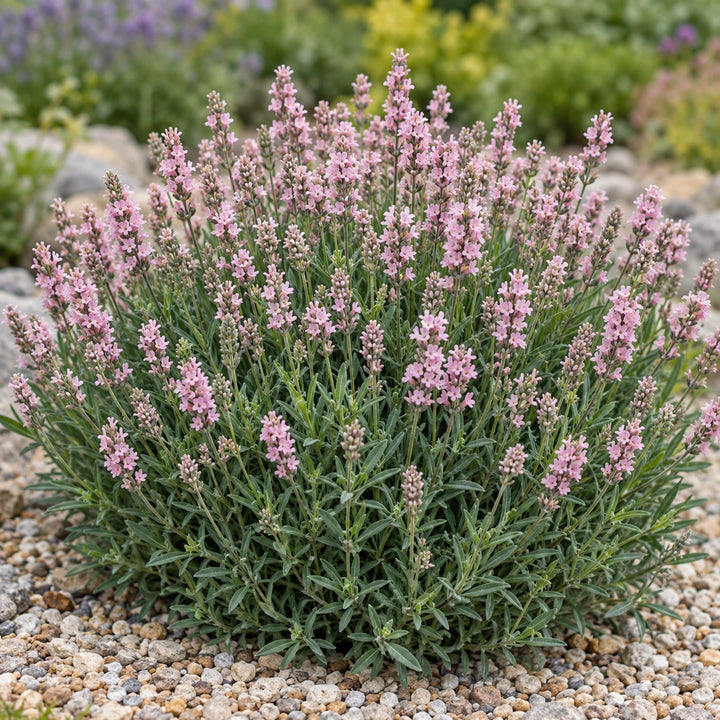
KERBEEPINK Lavender: Light Pink English Lavender in a Compact Dome
 Save
KERBEEPINK lavender is a pink English lavender with the same tidy build as the rest of the KERBEE group: compact and bushy, about 16 inches tall and wide, with short stems that hold light pink flowers just above gray-green foliage. It flowers freely and smells sweet and floral, with low camphor.
As Lavandula angustifolia, it is rated for USDA zones 5a to 8b, so this is a pink lavender you can leave in the ground through a Michigan winter. That is not something you can say about many pink lavenders.
KERBEEPINK at a glance
| Trait | What to expect |
|---|---|
| Botanical name | Lavandula angustifolia 'KERBEEPINK' |
| Flower color | Light pink |
| Foliage | Gray-green, compact and bushy |
| Size | About 15.7 inches tall and 15.7 inches wide |
| Bloom | Starts mid-June, peaks mid-July, moderate rebloom |
| Hardiness | USDA zones 5a to 8b |
| Fragrance | Strong; sweet floral with low camphor |
| Wildlife | Great for pollinators; deer resistant |
Making light pink look its best
Pale pink can disappear in a sea of green. Give it contrast and it becomes the plant people ask about:
- Alternate KERBEEPINK with dark violet English lavender along a path for a striped edge.
- Plant a cluster of three in front of silver foliage.
- Set it near a bench or doorway so you see the flowers up close.
- Mix pink, white and purple KERBEE lavenders in one bed; they share the same size and bloom time, so the planting stays even.
Lay out a planting in the garden planner to see how the colors line up.
Planting
KERBEEPINK needs six to eight hours of sun and soil that drains fast. In heavy clay, build a raised bed or mound. Space plants about 16 inches apart, set the crown level with the soil and water deeply. Through the first summer, water whenever the top few inches dry out, then cut back as the roots establish.
Care
Established plants have low water needs and want little or no fertilizer. After the main bloom, shear lightly in the leafy growth to keep the dome shape and encourage a moderate rebloom. Leave the plant uncovered in winter; wet mulch over the crown causes more losses than cold. In spring, trim any winter-browned tips once new growth shows. The Lavender Care Academy goes deeper on English lavender care.
Pink buds in the kitchen
KERBEEPINK rates great for culinary use. Pink buds make a pretty finish on shortbread, lemonade or a cake when used sparingly. Harvest on a dry morning once the buds are colored but before most flowers open, dry small bunches out of direct light and store the buds airtight. Use only plants grown as a food crop. Pale flowers dry lighter than they look in the garden, so expect a softer pink.
Plant formats
It is listed as a 3-inch plug, 4-inch pot and 1-gallon pot. See the product page for current sizes and availability.
Frequently asked questions
Is pink lavender as hardy as purple?
Hardiness depends on the type, not the color. KERBEEPINK is an English lavender rated for zones 5a to 8b.
Does pink lavender smell different?
KERBEEPINK has the same sweet, floral, low-camphor scent as its siblings.
Can it grow in a container?
Yes. Use a large pot with drainage holes and a gritty mix. Potted lavender is more exposed to winter cold than plants in the ground, so move the pot to a sheltered spot for winter.
Will it flop over?
Its short stems keep flowers close to the foliage, so it stays neat in bloom.
















Share how it went in your field