

Use & Care NotesLavender Plants
KERBEEPOWER Lavender: Big Violet-Blue Spikes on a Compact Plant
 Save
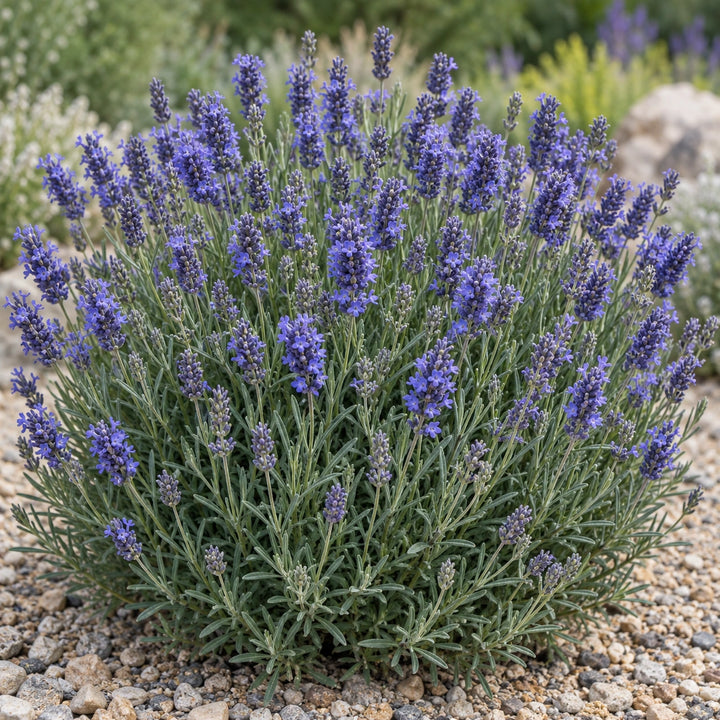
KERBEEPOWER lavender packs big flowers onto a small frame. It carries large violet-blue spikes on short stems over a compact, bushy mound of gray-green foliage, about 16 inches tall and wide. The scent is strong, sweet and floral, with low camphor.
It is Lavandula angustifolia, rated for USDA zones 5a to 8b. Of the KERBEE lavenders, this is the one with the boldest flower spikes and the bluest color, which makes it the one to plant in a sweep when you want lavender color you can see from across the yard.
KERBEEPOWER at a glance
| Trait | What to expect |
|---|---|
| Botanical name | Lavandula angustifolia 'KERBEEPOWER' |
| Flower color | Violet-blue, on large spikes |
| Foliage | Gray-green, compact and bushy |
| Size | About 15.7 inches tall and 15.7 inches wide |
| Bloom | Starts mid-June, peaks mid-July, moderate rebloom |
| Hardiness | USDA zones 5a to 8b |
| Fragrance | Strong; sweet floral with low camphor |
| Best uses | Culinary, fragrance, oil, pollinator plantings |
Planting for impact
One lavender is pleasant. Fifteen in a drift is a scene. KERBEEPOWER's large spikes and compact size make it a good candidate for mass planting on a sunny slope, along a long fence line or filling a whole raised bed. Because the stems are short, the color stays in a low, even band instead of a loose cloud, which looks especially sharp in modern or formal settings.
Violet-blue also bridges colors nicely. It sits comfortably next to deeper purples, pinks and whites, and it looks cool and fresh against warm brick.
A bee magnet
Its pollinator rating is great, and big spikes mean more flowers per plant. A drift in full bloom in July draws honeybees, bumblebees and butterflies on every sunny morning. If you keep bees or are planting for them, the Beekeeper Tools page has planning ideas. It is also rated deer resistant, which helps in rural gardens.
Planting and care
- Site: full sun, six to eight hours, with soil that drains fast after storms.
- Spacing: 14 to 16 inches apart for a drift that knits together; about 18 inches if you prefer separate mounds.
- Water: deep watering through the first summer, then low water needs.
- Feeding: little or none.
- Pruning: after the main bloom, shear lightly in the leafy growth. Never cut into bare wood.
- Winter: no cover needed; keep the crown free of wet mulch.
The Pruning Calendar keeps the timing straight.
Harvest and uses
KERBEEPOWER rates great for culinary use and excellent for oil suitability. For culinary buds, cut on a dry morning when buds are fully colored and only a few flowers are open. Dry in small bunches out of direct light and store the buds airtight. Use only food-grown buds and start with small amounts. The short stems suit sachets, buds and small posies more than long bundles.
Plant formats
It is available as a 3-inch plug, 4-inch pot or 1-gallon pot. For a big drift, plugs keep costs reasonable; see the product page for current sizes and availability.
Frequently asked questions
How many plants for a 10-foot row?
At about 15 inches apart, plan on eight plants for a continuous 10-foot row.
Is it more blue or purple?
It is listed as blue to violet-blue, the coolest color in the KERBEE group.
Will it come back after a Michigan winter?
It is rated for zones 5a to 8b. Sharp drainage is the main thing that brings English lavender through winter.
















Share how it went in your field