

Use & Care NotesLavender Plants
KERBEEWHITE Lavender: Wide White Spikes for a Bright Border
 Save
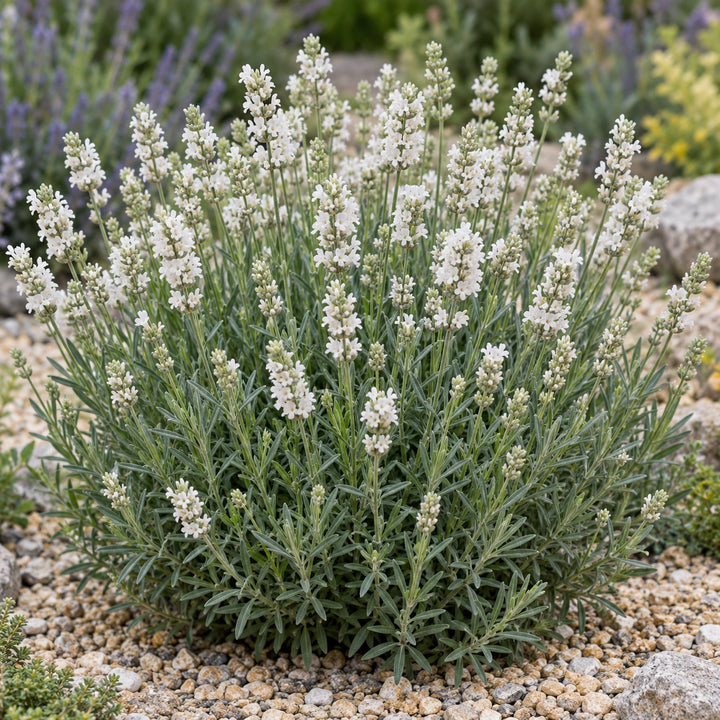
KERBEEWHITE lavender is a white English lavender with wide flower spikes on short stems, set over a compact, bushy mound of gray-green foliage about 16 inches tall and wide. It flowers freely, and its fragrance is strong, sweet and floral with low camphor.
It is Lavandula angustifolia, rated for USDA zones 5a to 8b, so it is a white lavender that comes back year after year in most Great Lakes gardens. White lavender often surprises visitors to a garden. The usual reaction is a double take, then a sniff to make sure it is really lavender.
KERBEEWHITE at a glance
| Trait | What to expect |
|---|---|
| Botanical name | Lavandula angustifolia 'KERBEEWHITE' |
| Flower color | White, on wide spikes |
| Foliage | Gray-green, compact and bushy |
| Size | About 15.7 inches tall and 15.7 inches wide |
| Bloom | Starts mid-June, peaks mid-July, moderate rebloom |
| Hardiness | USDA zones 5a to 8b |
| Fragrance | Strong; sweet floral with low camphor |
| Culinary | Rated great |
Three ways to use white lavender
An evening garden
White flowers hold light after sunset. Plant KERBEEWHITE along a patio, around a fire pit area or beside a path you walk at dusk, and the wide white spikes will stay visible long after purple lavender fades into shadow.
A color separator
In a mixed lavender planting, white keeps neighboring colors from blurring together. A KERBEEWHITE between dark violet and pink lavenders makes each one look cleaner. Because the KERBEE lavenders share size and bloom timing, they mix evenly.
A white kitchen border
White lavender buds are rated great for cooking and look elegant in pale baked goods and drinks where purple buds can look gray. Edge a sunny herb bed with it and you have both.
Planting and spacing
Full sun and fast drainage are the two essentials. Improve heavy clay with grit or plant in a raised bed. Space plants about 16 inches apart, or 12 inches for a low hedge. Set the crown level with the soil and keep bark mulch off the stems. Water deeply at planting and through the first summer whenever the top few inches dry. Check timing with the Frost Date Estimator.
Care
- Water: low needs once established.
- Feeding: little or none.
- Deadheading: white flowers show browning more than dark ones; a light shear after bloom keeps it fresh and invites a moderate rebloom.
- Winter: drainage first. No heavy mulch over the crown.
Harvest
For culinary buds or sachets, cut on a dry morning when the buds are fully formed and only a few flowers are open. Dry small bunches in a dark, airy spot. White buds dry to a creamy color. Stored airtight and away from light, dried buds keep their sweet scent for months. Use only food-grown buds and start with small amounts.
Plant formats
KERBEEWHITE is offered as a 3-inch plug, 4-inch pot or 1-gallon pot. See the product page for current sizes and availability, or set up Availability Alerts.
Frequently asked questions
Does white lavender smell like purple lavender?
Yes. KERBEEWHITE has the same sweet, floral, low-camphor English lavender scent.
Can I plant it with the other KERBEE lavenders?
Yes. They share a compact size, short stems and mid-June to mid-July bloom, so a mixed planting of white, pink and violet stays even and tidy.
What makes its spikes different?
It is documented with wide flower spikes, giving a fuller look than many white lavenders.
















Share how it went in your field