

Use & Care NotesLavender Plants
Sweet Dreams Blue Lavender: Fragrant Foliage, Violet-Blue Spikes
 Save
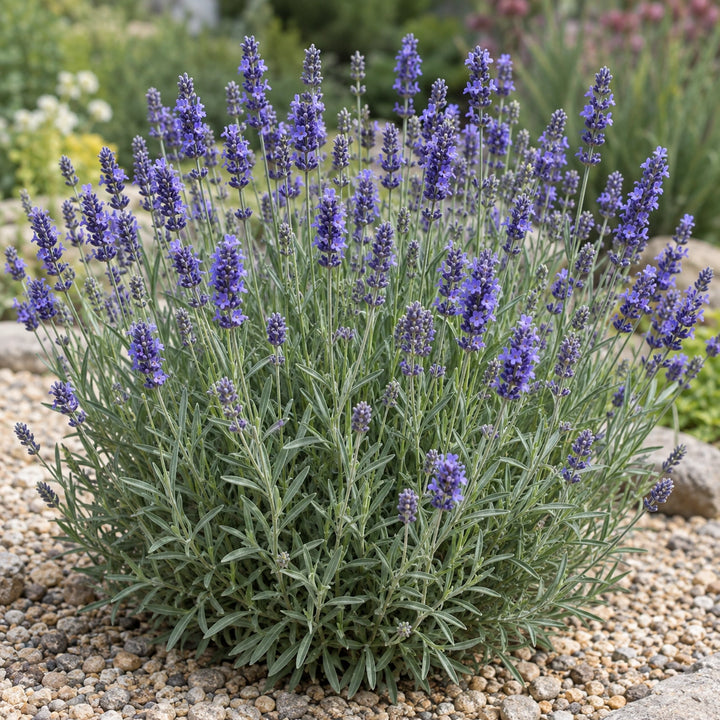
Sweet Dreams Blue lavender, listed as KLELV16119, flips the usual lavender script. Its violet-blue flowers have little to no detectable fragrance, but the foliage is strongly lavender-scented. Brush the leaves and you get the full lavender experience; sniff the flowers and you mostly get color.
It is Lavandula angustifolia, an English lavender rated for USDA zone 5a. It grows bushy and well branched to about 13 inches tall and 11 inches wide, with spikes around 3 inches long, and it is documented as early flowering for its type.
Sweet Dreams Blue at a glance
| Trait | What to expect |
|---|---|
| Botanical name | Lavandula angustifolia Sweet Dreams Blue (KLELV16119) |
| Flower color | Violet-blue, spikes about 3 inches long |
| Foliage | Gray-green, strongly lavender-scented |
| Size | About 12.7 inches tall and 11 inches wide |
| Bloom | Starts late May, peaks mid-July, single flush |
| Hardiness | USDA zone 5a |
| Fragrance | Strong in the leaves; flowers have little to no scent |
| Wildlife | Great for pollinators; deer resistant |
Plant it where you will touch it
Because the scent is in the leaves, placement matters more than usual. Edge a path, a front step or a patio with Sweet Dreams Blue and every brush of a pant leg or a hand releases the fragrance. A low row along a walkway is ideal: it is compact enough not to crowd the path, and the violet-blue spikes give a clean line of color in summer.
It also suits small gardens and containers. At about a foot tall and wide, three plants fit comfortably in a large planter.
Planting
- Light: full sun, six to eight hours.
- Soil: sandy or loamy and quick-draining. Raise heavy clay.
- Spacing: about 12 inches apart for an edge, a bit more for separate mounds.
- Depth: crown level with the soil, with no mulch against the stems.
Its zone 5a rating covers much of the Great Lakes region; confirm yours with the USDA Zone Finder.
Care through the year
Water deeply through the first summer whenever the top few inches dry, then back off; English lavender has low water needs once established. Feed little or not at all. Sweet Dreams Blue blooms in a single flush, so after the spikes fade, shear the plant lightly in the leafy growth to keep it compact and tidy. Avoid cutting into bare wood. In winter, drainage is the best protection; skip heavy mulch over the crown.
The Pruning Calendar covers timing for single-flush lavenders.
Using the leaves and flowers
Its cut and dried ratings are both good. Flowers add color to small bouquets, and stems with plenty of leaves bring the scent indoors. For sachets, include some dried leaves along with the buds, since that is where the fragrance is. It is not recommended for culinary use; choose a culinary-rated English lavender for the kitchen.
Plant formats
It is listed as a 3-inch plug, 4-inch pot and 1-gallon pot. See the product page for current sizes and availability.
Frequently asked questions
Why don't the flowers smell?
This selection is documented with strongly scented foliage and flowers that have little to no detectable fragrance. Crush a leaf to enjoy its scent.
Is Sweet Dreams Blue hardy in Michigan?
It is rated for zone 5a. With good drainage it handles cold winters well.
Does it rebloom?
No. It flowers in a single flush, starting as early as late May and peaking in mid-July.
















Share how it went in your field