

Use & Care NotesLavender Plants
Antoine Lavender: An Early Blue English Lavender with Long Spikes
 Save
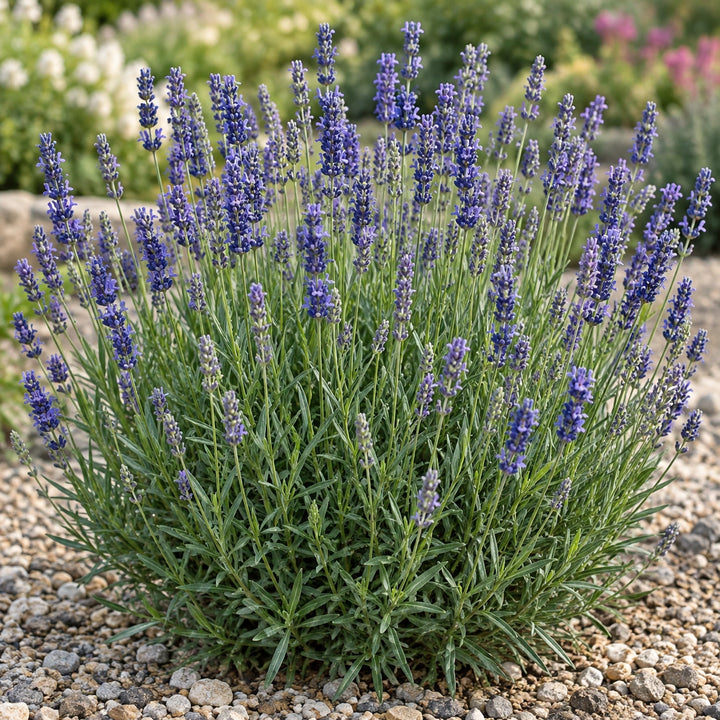
Antoine lavender, listed as KLELV16122, is an English lavender with true blue-toned flowers on long spikes. It is part of the LesBleus series and is documented as flowering roughly two weeks earlier than 'Hidcote Blue', so it opens the English lavender season in many gardens.
Botanically it is Lavandula angustifolia 'Antoine', a well-branched plant about 15 inches tall and 14 inches wide with green rather than silver foliage. It is rated for USDA zones 5a to 9b, a comfortable fit for Great Lakes gardens.
Antoine at a glance
| Trait | What to expect |
|---|---|
| Botanical name | Lavandula angustifolia 'Antoine' (KLELV16122) |
| Series | LesBleus |
| Flower color | Blue, on long spikes |
| Foliage | Green, well branched |
| Size | About 15.4 inches tall and 14 inches wide |
| Bloom | Starts late May, peaks mid-July, single flush; about two weeks before Hidcote Blue |
| Hardiness | USDA zones 5a to 9b |
| Fragrance | Moderate; floral with sweet herbaceous notes |
Why an early English lavender helps
Most English lavenders crowd into the same few weeks of early summer. Planting an early one like Antoine alongside mid-season types stretches the bloom window, which means a longer stretch of color, a longer harvest season and more weeks of flowers for bees. If you track bloom timing, the Lavender Bloom Calendar shows how varieties stack up.
The blue color is a real asset too. Blue-toned lavender looks cool and clean next to white, pink or deep purple varieties, and the green foliage gives it a fresher, leafier look than silver-leaved types.
Planting
Full sun and fast drainage are essential. Choose a spot that gets six to eight hours of direct sun, and improve heavy soil with grit or plant in a raised bed. Space plants about 14 to 16 inches apart, set the crown level with the soil and water deeply after planting. Keep bark and compost away from the woody base.
Seasonal care
- First summer: water whenever the top few inches of soil dry out.
- Established plants: water only during long dry spells.
- Feeding: little or none. Lean soil means sturdier spikes.
- After bloom: it flowers in one flush, so shear the plant lightly once the spikes fade, staying in leafy growth.
- Spring: trim any winter damage once new growth appears.
Bouquets and drying
Antoine's long spikes are its cutting advantage. Its fresh and dried ratings are good. For bouquets, cut stems in the morning when the first few flowers on each spike have opened and place them in water right away. For dried bundles, cut at the same stage and hang small bunches in a dark, airy place. It is grown as an ornamental and is not recommended for cooking, so save it for vases, wreaths and sachets.
Plant formats
It is offered as a 3-inch plug, 4-inch pot and 1-gallon pot. See the product page for current sizes and availability, or set up Availability Alerts.
Frequently asked questions
How early is Antoine?
It is documented as flowering about two weeks earlier than 'Hidcote Blue', with bloom starting as early as late May.
Can I cook with Antoine?
Its culinary use is not recommended. Choose a culinary-rated English lavender for baking and drinks.
Does it rebloom?
It is listed as a single-flush lavender. Its early start is the trade-off: plant it with later English lavenders for a longer season.
Is it hardy here?
Yes. It is rated for zones 5a to 9b; good drainage is what carries it through Michigan winters.
















Share how it went in your field