

Use & Care NotesLavender Plants
La Diva Lush Purple Lavender: Extra-Large Blooms with Double Bracts
 Save
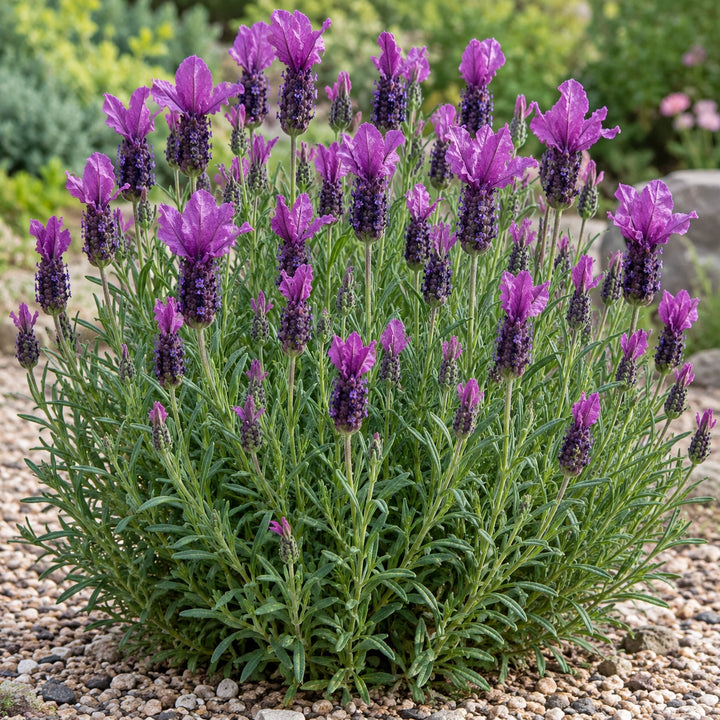
La Diva Lush Purple lavender is built for show. It is documented with extra-large purple blooms crowned by double, extra-large bracts, so each flower head carries a fuller, fluffier topknot than a typical Spanish lavender. The plant grows upright to about 12 to 14 inches tall and 14 inches wide over green foliage.
It is Lavandula stoechas, part of the La Diva Papillon group, rated for USDA zones 6a to 9b, and it flowers in its first year. Its natural flowering season is spring, with strong repeat bloom after the first flush. In a pot by the door, it does the talking.
La Diva Lush Purple at a glance
| Trait | What to expect |
|---|---|
| Botanical name | Lavandula stoechas La Diva Lush Purple |
| Flowers | Extra-large purple blooms with double, extra-large bracts |
| Foliage | Green, upright |
| Size | About 12 to 14 inches tall and 14 inches wide |
| Bloom | Starts mid-April, peaks early May, high rebloom; flowers first year |
| Hardiness | USDA zones 6a to 9b |
| Water needs | Low once established |
| Fragrance | Strong; bold resinous-herbal with camphor and eucalyptus-like notes |
What double bracts look like
Most Spanish lavenders have a pair of flag-like bracts on top of each flower head. Lush Purple's are described as double and extra-large, giving a fuller crown that reads from across a patio. Combined with extra-large blooms, the effect is lush, as promised, without the plant getting tall or floppy.
That makes it a strong choice where a few plants need to make a big impression: a pair of urns, a container on a small balcony or a short row at the front of a sunny bed.
Getting started
- Sun: full sun, six to eight hours.
- Soil: fast-draining. In pots, a gritty mix with drainage holes; in beds, raised or sloped ground.
- Pot size: about 10 to 12 inches across for one plant.
- Timing: plant after your last frost. It will flower the same season.
Keeping the show going
Big bracts are the main event, and they fade over time. Clip spent heads back to the foliage as soon as they brown to make way for new ones. After the first peak, a light shearing over the whole plant resets it for repeat bloom. Water deeply when the top inch of soil is dry, then wait. Fertilize lightly, if at all; rich feeding means more leaves and fewer flowers.
Winter
Spanish lavenders are less cold-hardy than English lavender, but this group is rated to zone 6a. In 6a and warmer, plant in spring in a sheltered, sharply drained spot with gravel around the crown and see how it does. In colder zones or wet soils, keep it potted and move it into a cool, bright room before hard frost. Confirm your zone with the USDA Zone Finder.
Uses and formats
Fresh stems rate good for small bouquets, and the big bracts make each stem count. Dried, the bracts shrink, so its dried rating is fair. Growers value it for large, eye-catching bundles. It is ornamental and not recommended for cooking.
It is offered as a 3-inch plug, 4-inch pot or 1-gallon pot. See the product page for current sizes and availability, or set up Availability Alerts.
Frequently asked questions
Does it really bloom the first year?
Yes. It is documented as first-year flowering, and Spanish lavenders do not need a cold winter to bloom.
How does it compare to Papillon Purple?
Both are purple La Diva Spanish lavenders. Lush Purple is set apart by its extra-large blooms and double bracts. See both on the Compare page.
Do bees like it?
Yes. Its pollinator rating is great.
















Share how it went in your field