

Use & Care NotesLavender Plants
La Diva Papillon Deep Rose: Pink Butterfly Lavender for Pollinators
 Save
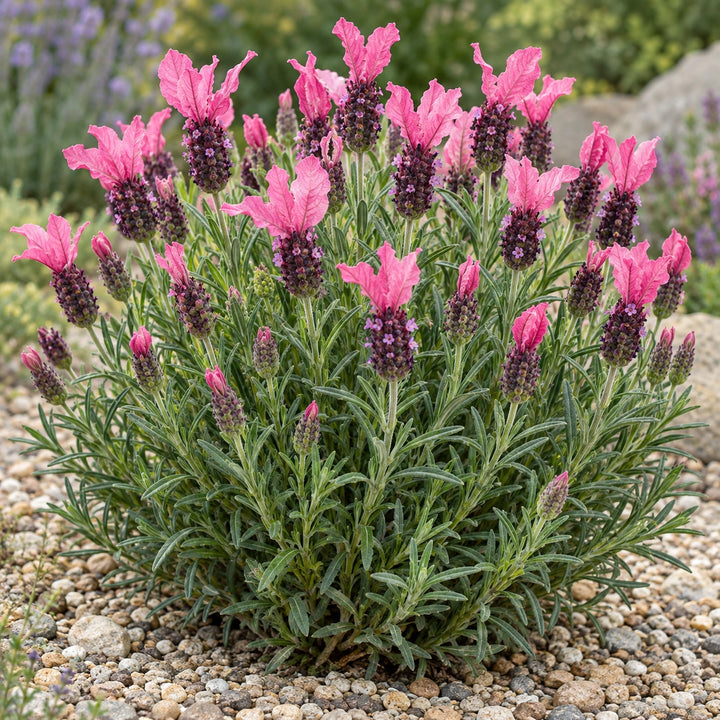
La Diva Papillon Deep Rose lavender is a pink Spanish lavender with an upright, mounding habit, about 14 inches tall and 12 inches wide, and green foliage. Papillon is French for butterfly, a fitting name for the petal-like flags that flutter on top of each flower head.
It is Lavandula stoechas, rated for USDA zones 6a to 9b, with strong fragrance and high rebloom. Where it grows outdoors, it starts in mid-April and peaks in early May, which puts its flowers out for bees when few other plants are blooming.
La Diva Papillon Deep Rose at a glance
| Trait | What to expect |
|---|---|
| Botanical name | Lavandula stoechas La Diva Papillon Deep Rose |
| Flower color | Pink, deep rose |
| Foliage | Green, upright and mounding |
| Size | About 14 inches tall and 12 inches wide |
| Bloom | Starts mid-April, peaks early May, high rebloom |
| Hardiness | USDA zones 6a to 9b |
| Wildlife | Great for pollinators; deer resistant |
| Fragrance | Strong; bold resinous-herbal with camphor and eucalyptus-like notes |
A pollinator patio
You do not need a big yard to feed pollinators. A few pots on a sunny deck can do real good, especially if they bloom early and keep going. Papillon Deep Rose's long season and great pollinator rating make it an anchor for a small pollinator container garden:
- Group three or more pots together so bees find them easily.
- Mix in other sun-lovers that bloom at different times to extend the season.
- Skip pesticides on and around the plants.
- Set a shallow dish with pebbles and water nearby as a drinking spot.
Beekeepers will find more planning ideas on the Beekeeper Tools page.
Planting
Full sun and fast drainage come first. In pots, use a gritty mix in a 10- to 12-inch container with drainage holes. In beds, choose raised or sloped ground and mulch with gravel, not bark. Plant after the last frost so the plant settles in during warm weather.
Care and rebloom
Water deeply when the top inch of soil is dry, then let it dry again; once established, water needs are low. Snip faded heads every week or two to keep its high rebloom going, and shear lightly after the early-May peak. Fertilizer should be light or skipped entirely. Its mounding habit stays neat with little shaping.
Winter
La Diva Spanish lavenders are rated to zone 6a, hardier than most of their group, but still less cold-hardy than English lavender. In 6a and warmer, give it a sheltered, sharply drained spot and it has a chance. Elsewhere, bring the pot into a cool, bright room before hard frost and water sparingly until spring. The USDA Zone Finder helps you decide.
Uses and formats
Fresh stems rate good for small bouquets. Dried, the flags shrink, so its dried rating is fair. It is ornamental and not recommended for cooking.
It is listed as a 3-inch plug, 4-inch pot or 1-gallon pot. See the product page for current sizes and availability.
Frequently asked questions
Why is it called Papillon?
Papillon means butterfly in French, a nod to the flag-like bracts on top of each flower head.
Is Deep Rose more pink than Berry Rosey?
Both are listed as pink. Deep Rose has green foliage and a mounding habit; Berry Rosey has gray-green foliage. Compare them on the Compare page.
Will it flower the first year?
Yes. Spanish lavenders do not need winter chilling to bloom.
















Share how it went in your field