

Use & Care NotesLavender Plants
La Diva Papillon Purple: Heat-Tolerant Spanish Lavender for Hot Spots
 Save
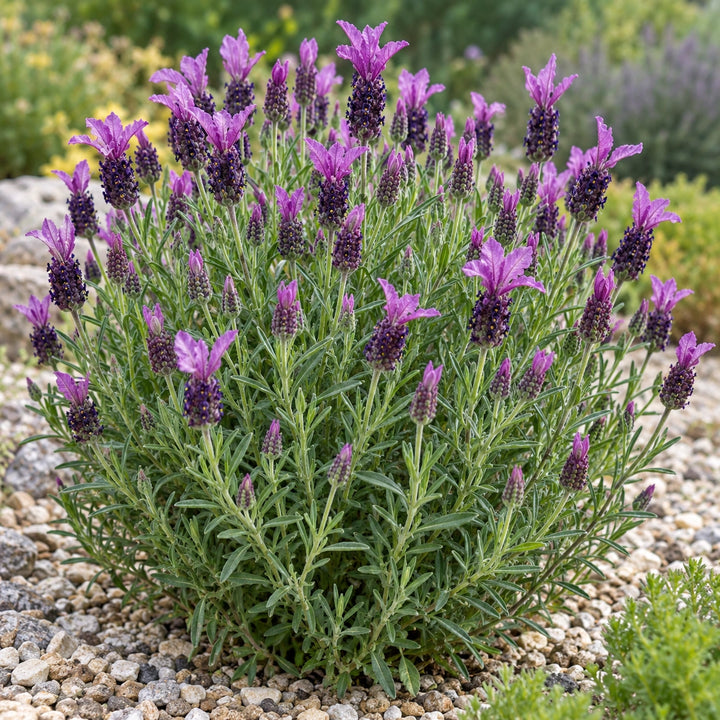
La Diva Papillon Purple lavender is the one to plant where the sun bakes. It is documented as drought and heat tolerant, bee friendly and strong in landscape plantings, and it flowers in its first year. Purple flower heads and flags sit on an upright, mounding plant about 14 inches tall and 12 inches wide, with green foliage.
It is Lavandula stoechas, rated for USDA zones 6a to 9b, with a strong, resinous fragrance and high rebloom. Where it grows outdoors it begins in mid-April and peaks in early May.
La Diva Papillon Purple at a glance
| Trait | What to expect |
|---|---|
| Botanical name | Lavandula stoechas La Diva Papillon Purple |
| Flower color | Purple |
| Foliage | Green, upright and mounding |
| Size | About 14 inches tall and 12 inches wide |
| Bloom | Starts mid-April, peaks early May, high rebloom; flowers first year |
| Hardiness | USDA zones 6a to 9b |
| Tolerances | Documented drought and heat tolerance |
| Fragrance | Strong; bold resinous-herbal with camphor and eucalyptus-like notes |
Spots it was made for
Every property has a place where plants struggle: the strip between driveway and sidewalk, a south-facing wall that reflects heat, a gravel bed by the mailbox, a rooftop or balcony container that dries out by noon. Those are exactly the places a drought- and heat-tolerant lavender can shine. Once established, Papillon Purple takes the heat and keeps flowering.
Just remember that drought tolerant does not mean no water at first. Every new plant needs regular watering until its roots spread.
Planting in a hot site
- Soil: lean and fast-draining. Sand and gravel are fine; rich, moist soil is not.
- First weeks: water deeply every few days in hot weather, letting the top inch dry in between.
- Once settled: water only in long dry spells, or when container soil is dry a couple of inches down.
- Mulch: gravel reflects heat and keeps the crown dry; avoid bark against the stems.
- Containers: light-colored pots stay cooler than black plastic in full sun.
Rebloom and tidying
Clip spent heads back to the foliage regularly and shear the plant lightly after the early-May peak. That keeps it compact and sets up summer flowers. Skip heavy fertilizer, which works against both drought tolerance and flowering. The Plant Care Guide has more on lean-soil lavender care.
Winter
Spanish lavenders are less cold-hardy than English lavender, though La Diva types are rated to zone 6a. In 6a and warmer, a hot, dry, sheltered site is also the best winter site, so it may come through. In colder zones or wet soils, grow it in a pot and move it to a cool, bright room before a hard freeze.
Uses and formats
Bees love it; its pollinator rating is great. Fresh stems rate good for bouquets, while dried flags shrink and rate fair. It is ornamental and not recommended for cooking.
Choose a 3-inch plug, 4-inch pot or 1-gallon pot. See the product page for current sizes and availability, or sign up for Availability Alerts.
Frequently asked questions
Can it go without water all summer?
Not in its first season. Once established it is drought tolerant, but containers and new plantings need regular checks.
Does it flower in the first year?
Yes. It is documented as first-year flowering.
Is it deer resistant?
Yes, it is rated deer resistant.
















Share how it went in your field