

Use & Care NotesLavender Plants
LABZ0005 Lavender: Lilac Spanish Blooms for a Michigan Summer
 Save
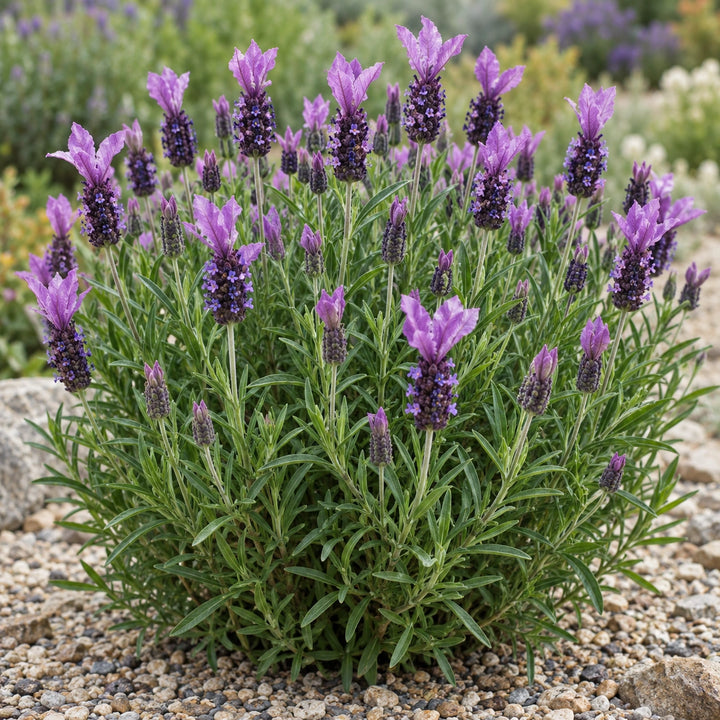
LABZ0005 lavender is a Spanish lavender in a softer palette: lilac flowers under purple-lilac bracts, on an upright, rounded mound about 13 inches tall. Where many Spanish types go for dark drama, this one reads lighter and more pastel, which makes it easy to mix with pinks, whites and silvers.
The listing is honest about one thing: in Michigan it is an annual. Its hardiness rating is USDA zones 8a to 10b, so here it is a plant for a summer of color, or for a pot you bring indoors before winter.
LABZ0005 at a glance
| Trait | What to expect |
|---|---|
| Botanical name | Lavandula stoechas LABZ0005 |
| Bracts and flowers | Purple-lilac bracts, lilac flowers |
| Foliage | Green |
| Size | About 13 inches tall and 12 inches wide |
| Bloom | Records range from early to late May for the start, peaking late May into June; high rebloom |
| Hardiness | USDA zones 8a to 10b (annual in Michigan) |
| Fragrance | Moderate; resinous, camphor and eucalyptus-like |
| Water needs | Low |
Why grow a lavender that lasts one summer?
Because it blooms when English lavender cannot. Spanish lavender does not need winter cold to flower, so a plant set out in late spring is already in color while hardy lavenders are still building buds. With a high rebloom rating, LABZ0005 keeps producing fresh heads through summer if you keep up with deadheading. For a container gardener, that is a long return on one pot.
It is also a great plant for pollinators, and deer tend to leave it alone.
Planting and everyday care
Set plants out once frost danger has passed. In the ground, choose full sun and the sharpest drainage in the yard; a raised bed or a sunny slope is perfect. In containers, use a mix with plenty of grit or perlite and a pot with drainage holes. Terra cotta helps the roots breathe.
- Water deeply, then wait until the top inch or two is dry.
- Feed lightly, if at all. A little slow-release fertilizer in a pot is plenty.
- Pinch off spent heads at the first leaf pair below the flower.
- Give pots room for air to circulate in humid spells.
Bringing it through winter
If you want to keep your plant, move it indoors before a hard frost. A cool, bright room or an unheated sunroom works better than a warm living room. Water only when the mix is dry, expect it to slow down and resist the urge to repot until spring. When nights stay above freezing, harden it off outside over a week before returning it to full sun. The Frost Date Estimator gives you dates to plan around.
Using the flowers
Lilac heads are pretty in small vases with white or pink flowers, and they dry with their shape intact if hung upside down in a dark, airy place. The resinous scent works well in sachets for a fresh, herbal note. Culinary use is not recommended, so keep it for display and fragrance.
LABZ0005 comes as a 3-inch plug, a 4-inch pot or a 1-gallon pot. See the product page for current sizes and availability.
Frequently asked questions
Is LABZ0005 a perennial?
In zones 8a to 10b, yes. In Michigan it is grown as an annual or overwintered indoors.
How is it different from darker Spanish lavenders?
Its bracts and flowers are lilac rather than deep purple, so it blends with pastel plantings. The growth and care are the same.
Why are my flower heads browning?
Older heads naturally fade. Snip them off to make room for new ones. Browning foliage at the base usually means the soil is staying too wet.
















Share how it went in your field