

Product Field NotesLavender Plants
Lemon-Scented Lavender: A Tender Species for Curious Growers
 Save
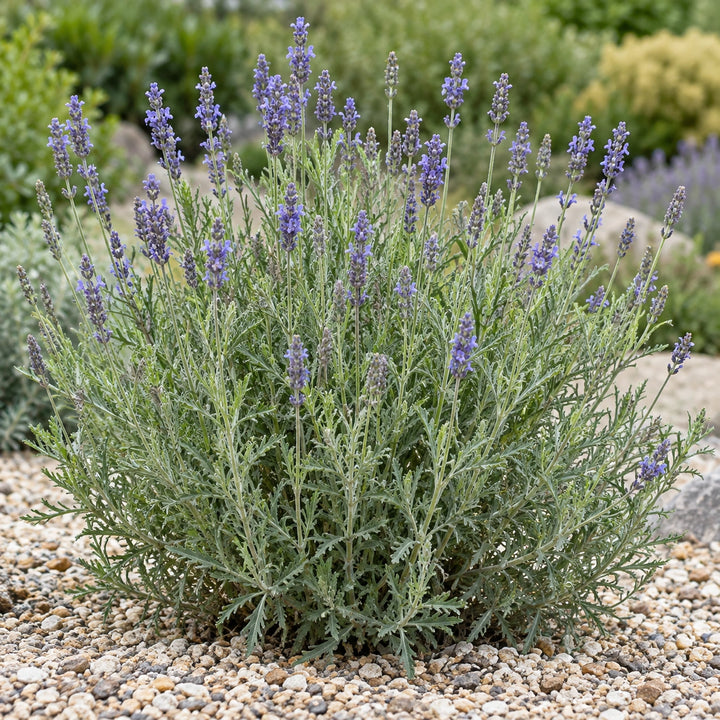
Lemon-scented lavender is sold as commercial stock of Lavandula citriodora, a species in the Pterostoechas group. It grows as a shrubby subshrub with blue flowers and a long bloom season that begins in mid-May. Its common name hints at a citrus note, which is a big part of why people seek it out.
This is a plant for the curious grower: uncommon, a little mysterious and very happy in a sunny pot.
Lemon-scented lavender at a glance
| Trait | What to expect |
|---|---|
| Botanical name | Lavandula citriodora |
| Group | Pterostoechas |
| Flower color | Blue |
| Habit | Subshrub |
| Size | Not stated; check the listing for current size |
| Bloom | Starts mid-May, peaks mid-June, long season with moderate rebloom |
| Fragrance | Moderate; our records describe a resinous, herbal profile |
| Identity | Commercial species stock; traits can vary |
About the scent
The name lemon-scented sets an expectation, and it is worth being straightforward about it. Our records for this stock describe a moderate, resinous and herbal fragrance with camphor-like notes, the general profile of many Pterostoechas lavenders. Because species stock can vary among source lines, individual plants may lean more or less citrusy. Rub a leaf between your fingers on a warm day; the scent of these lavenders often comes through best from the foliage.
Whatever the nose decides, the plant earns its place with blue flowers over a long season and strong appeal for bees.
Growing it in a pot
- Light: full sun outdoors from late spring through early fall.
- Container: 8 to 12 inches across with drainage holes; move up a size as roots fill it.
- Mix: gritty, fast-draining potting mix.
- Water: soak and let the top inch or two dry. Overwatering is a bigger threat than drought.
- Grooming: snip spent spikes to keep new flowers coming through summer.
It can also go into a sunny, sharply drained bed for the summer as an annual.
Overwintering
No hardiness range is stated for this stock, and Pterostoechas lavenders are frost-tender, so bring it indoors before frost. Choose the brightest cool spot you have. Water sparingly through winter and hold off on fertilizer until spring. Trim lightly in late winter if stems stretch toward the window, then return it outdoors after the last frost; the Frost Date Estimator helps you time it.
Using it
It is rated good for fresh and dried flowers. Short stems of blue flowers are pretty in a bud vase, and dried sprigs add color to small crafts. Culinary use is not recommended, despite the lemony name.
It comes as a 3-inch plug, a 4-inch pot or a 1-gallon pot. See the product page for current sizes and availability.
A tip for scent lovers: set the pot where you will brush the foliage, beside a chair, a step or a garden gate. Warm afternoon sun tends to bring out the aroma of lavender leaves more than a cool, damp morning does, so that is the best time to judge it for yourself.
Frequently asked questions
Does it really smell like lemon?
The common name suggests a citrus note. Our records describe a resinous, herbal profile overall, and species stock can vary, so scent may differ from plant to plant.
Can I use it in lemonade or baking?
Culinary use is not recommended for this species. For cooking, choose an English lavender rated for the kitchen.
How big does it get?
Size is not stated for this stock. Check the listing, and expect a pot-grown plant in one northern summer to stay modest.

































Share how it went in your field