

Product Field NotesLavender Plants
Stagshorn Lavender: Antler-Cut Leaves and Early Blue Flowers
 Save
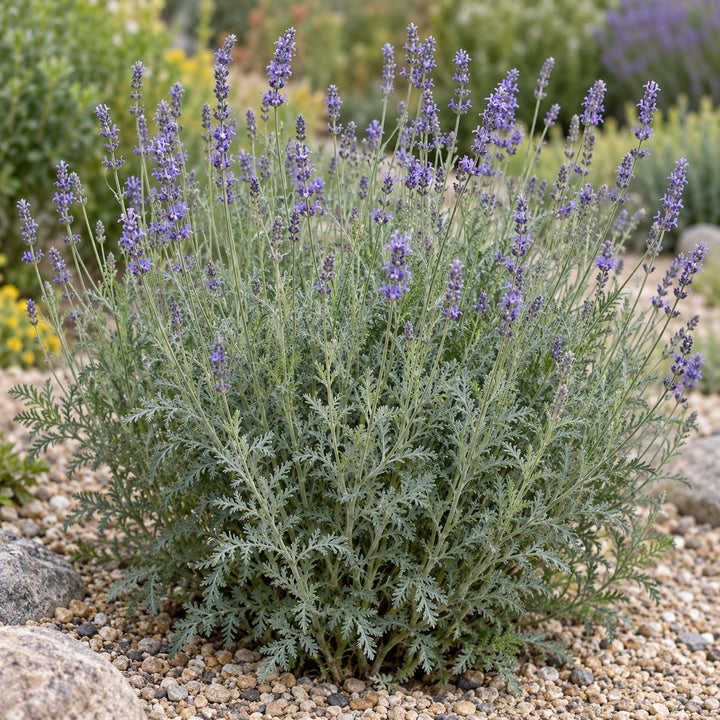
Stagshorn lavender is Lavandula coronopifolia, and the common name tells you where to look first: the leaves. They are divided into narrow, branching lobes that call to mind a stag's antlers, giving the plant a fine, airy texture. Slender spikes of blue to lilac-purple flowers rise above that foliage on a bushy plant that records describe at about 24 inches tall and wide.
It is a Pterostoechas lavender from warm, dry climates, so in the Great Lakes region it lives in a pot or as a summer annual.
Stagshorn lavender at a glance
| Trait | What to expect |
|---|---|
| Botanical name | Lavandula coronopifolia |
| Group | Pterostoechas |
| Flower color | Blue to lilac-purple |
| Foliage | Deeply divided, antler-like |
| Size | About 24 inches tall and 24 inches wide |
| Bloom | Records list a start in mid-January and a peak in mid-April in warm climates; long season |
| Fragrance | Moderate; resinous and herbal with camphor notes |
| Identity | Commercial species stock; traits can vary |
An unusual bloom calendar
Our records show Stagshorn lavender starting to bloom in midwinter and peaking in spring, which reflects how it grows in mild, frost-free places. In a northern home, timing follows the light and warmth you give it. A plant kept in a bright, cool window over winter may start flowering earlier than your outdoor lavenders, and once outside it keeps going over a long season with moderate rebloom. That makes it a fun plant for anyone who misses lavender in the off-season.
Setting up the right pot
- Size: 10 to 14 inches across, with drainage holes.
- Mix: a gritty, fast-draining blend. Add perlite or fine gravel to standard potting soil.
- Light: full sun outdoors in summer; the brightest window you have in winter.
- Water: soak, then allow the top inch or two to dry. Pterostoechas lavenders dislike wet roots.
- Feeding: light, during active growth only.
Moving between seasons
Move the pot outdoors after the last frost, easing it into full sun over a week so the leaves do not scorch. Bring it in before the first frost in fall. The listing does not state a hardiness range, and this group is frost-tender, so do not gamble on a mild night. Indoors, keep it cool and bright, water sparingly and give it a light trim if it stretches. The Frost Date Estimator helps you plan both moves.
Using the flowers and foliage
Stagshorn lavender is rated good for cut and dried flowers and great for pollinators. The antler-cut leaves are as decorative as the spikes in a small arrangement, and short sprigs dry well when hung in a dark, airy spot. Its scent is resinous and herbal rather than sweet. Culinary use is not recommended.
Because this is species stock rather than a named cultivar, flower shade and size can vary among source lines. Expect natural variation if you grow several.
It is offered as a 3-inch plug, a 4-inch pot or a 1-gallon pot. See the product page for current sizes and availability.
Frequently asked questions
Why is it called Stagshorn?
Its deeply divided leaves branch like small antlers, which gives it the common name.
Can I plant it in the garden?
Yes, for the summer, in a sunny, sharply drained spot. In Michigan it will not survive winter outdoors, so lift it into a pot or replant each year.
Will it bloom indoors?
It may flower in strong light indoors, since it does not need a winter chill. Bright, cool conditions give the best results.

































Share how it went in your field