

Product Field NotesLavender Plants
Green Lavender (Lavandula dentata): The Original Fringed Lavender
 Save
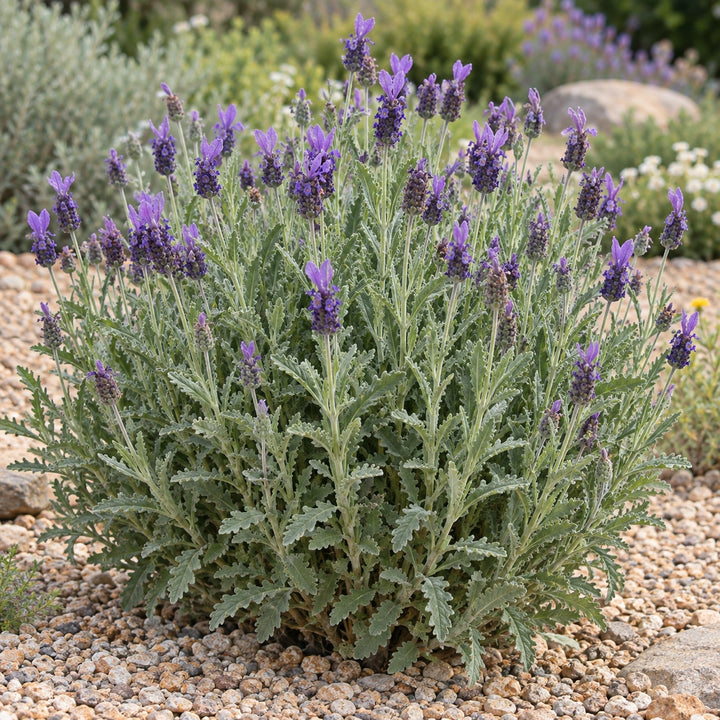
Green lavender is the species form of Lavandula dentata, the plant many catalogs call French or fringed lavender. Its leaves have neat, toothed edges, the feature behind the name dentata, and it produces violet-blue flower heads in an everblooming pattern. In mild climates it flowers almost year-round; in a northern summer it blooms steadily until cold weather arrives.
The fragrance is rated exceptional: fresh and herbal, with eucalyptus-like, camphor and lightly floral notes. It is the kind of plant you brush past on purpose.
Green lavender at a glance
| Trait | What to expect |
|---|---|
| Botanical name | Lavandula dentata (AKA French or fringed lavender) |
| Group | Dentatae |
| Flower color | Violet-blue |
| Foliage | Green, with toothed edges |
| Size | Records list mature plants at about 36 inches tall and wide |
| Bloom | Everblooming; year-round in warm climates, peak mid-July |
| Fragrance | Exceptional; fresh herbal, eucalyptus-like, lightly floral |
| Identity | Commercial species stock; traits can vary |
Sorting out the names
Lavender names can be confusing. The plant sold as French lavender is usually this species, fringed lavender. Spanish lavender is a separate species, L. stoechas, with plump heads and rabbit-ear bracts. English lavender, L. angustifolia, is the hardy, sweet-scented garden staple. Green lavender gets its common name from its green foliage, which sets it apart from gray-leaved dentata selections. The Lavender Botanical Groups page lays out how these fit together.
Growing it in a cold climate
Fringed lavender does not need winter cold to bloom, which makes it an excellent container plant in the north. Plant a gallon pot into a 14 to 16 inch container with gritty mix and drainage holes, set it in full sun after the last frost and you will have flowers within weeks.
- Water thoroughly, then let the mix dry an inch or two down.
- Feed lightly every few weeks in summer; everblooming plants appreciate a little fuel.
- Clip spent heads and tip back long stems to keep it bushy.
- Give it room for air to move, especially in humid spells.
Winter indoors
Bring it inside before frost. A cool, bright room or a sunroom is best; warm, dim rooms lead to weak, stretched growth. Water sparingly and skip fertilizer until spring. In strong light it may keep producing a few flower heads, a small winter bonus for the windowsill. Return it outside after your last frost.
Flowers, fragrance and uses
Green lavender is rated good for fresh and dried flowers and great for essential oil suitability. The scent comes from both leaves and flowers, so even a sprig of foliage in a small vase perfumes a room. Hang short bundles to dry in a dark, airy place. Culinary use is not recommended.
Choose a 3-inch plug, a 4-inch pot or a 1-gallon pot. See the product page for current sizes and availability.
Frequently asked questions
Is Green lavender hardy in Michigan?
No. Fringed lavender is frost-tender and must come indoors or be grown as an annual in the north.
How is it different from LaDiva Imperial?
Both are L. dentata. LaDiva Imperial is a named cultivar with gray foliage and a compact 18 inch size, while Green lavender is species stock with green leaves and a larger mature size.
Why does it bloom so long?
Fringed lavender is everblooming: it keeps producing flowers whenever conditions are warm and bright, without a set season.

































Share how it went in your field