

Product Field NotesLavender Plants
Sweet Lavender (Lavandula × heterophylla): A Late-Summer Hybrid
 Save
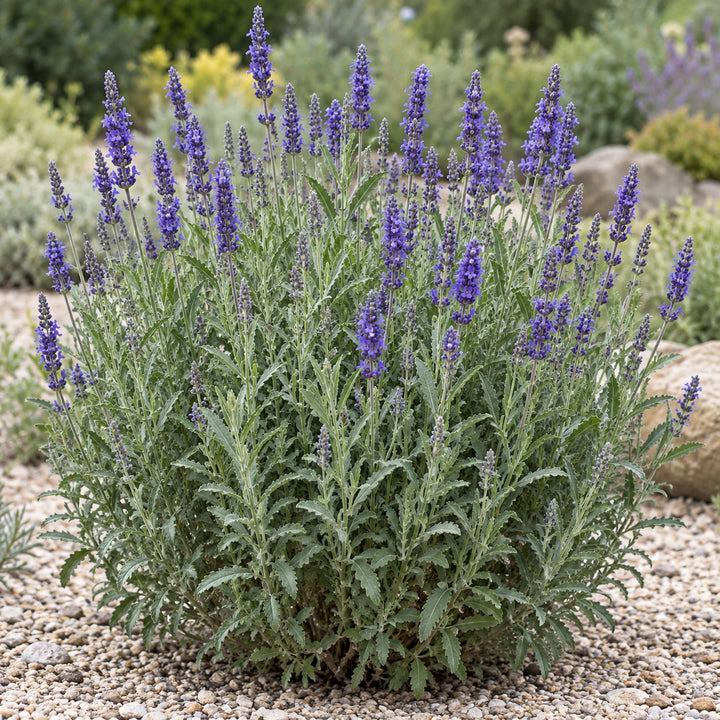
Sweet lavender is Lavandula × heterophylla, a hybrid between fringed lavender (L. dentata) and spike lavender (L. latifolia). You may also see it listed under the synonyms L. × allardii or L. × hybrida. It forms a bushy plant of about 24 inches with violet-blue flowers, and it blooms later than most lavenders, from mid-July into August.
Its name, heterophylla, means varied leaves, and plants can carry both smooth and toothed foliage, a nod to its fringed lavender parent.
Sweet lavender at a glance
| Trait | What to expect |
|---|---|
| Botanical name | Lavandula × heterophylla (syn. L. × allardii, L. × hybrida) |
| Parentage | L. dentata × L. latifolia |
| Flower color | Violet-blue |
| Habit | Bushy |
| Size | About 24 inches tall and 24 inches wide |
| Bloom | Starts mid-July, peaks mid-August, long season |
| Fragrance | Moderate; fresh herbal, eucalyptus-like, lightly floral |
| Identity | Commercial stock; traits can vary |
Filling the late-summer gap
By August many lavender gardens look tired. English lavenders have finished their main flush and been sheared, and Spanish types are between rounds. Sweet lavender steps in right then, starting in mid-July and peaking in mid-August. Pair a pot of it with early lavenders and you stretch the lavender season by weeks. Bees are glad of it too; it is rated great for pollinators.
The scent follows its fringed lavender side: fresh and herbal with eucalyptus-like and lightly floral notes, rather than the sweet floral of English lavender. The common name is a little generous, in other words.
Planting and care
- Sun: full sun all day if possible.
- Soil: lean and fast draining in beds; gritty mix in containers.
- Container size: 14 inches or larger for a gallon plant.
- Water: deeply, then let the top dry out before the next watering.
- Trimming: remove spent spikes and lightly shape after the late-summer peak.
Overwintering in the north
Sweet lavender does not need a winter chill to bloom, and the listing does not give a hardiness range. Its fringed lavender parent is frost-tender, so in Michigan plan to bring it indoors before frost. Keep it in a cool, bright location, water lightly and hold off on fertilizer. It may look sparse by late winter, which is normal in low light. Move it outdoors after the last frost; the Frost Date Estimator gives a target date.
Cutting and drying
It is rated good for fresh and dried flowers. Cut stems in the morning as the spikes begin to open, and hang small bundles in a dark, airy place to dry. A few stems with late-season zinnias or grasses make a pleasant end-of-summer arrangement. Culinary use is not recommended.
It comes as a 3-inch plug, a 4-inch pot or a 1-gallon pot. See the product page for current sizes and availability.
In a mixed planting, give it the spot with the strongest late-summer sun. Flowers that open in August appreciate every hour of light as the days start to shorten.
Frequently asked questions
Is Sweet lavender the same as lavandin?
No. Lavandin is L. × intermedia, a cross of English and spike lavender. Sweet lavender crosses fringed and spike lavender.
When does it bloom?
From mid-July, peaking in mid-August, over a long season.
Can it stay outside in winter?
Not in Michigan. Bring it in before frost or grow it as an annual.

































Share how it went in your field