

Product Field NotesLavender Plants
Portuguese Butterfly Lavender: Tall Flags on Long Stems in May
 Save
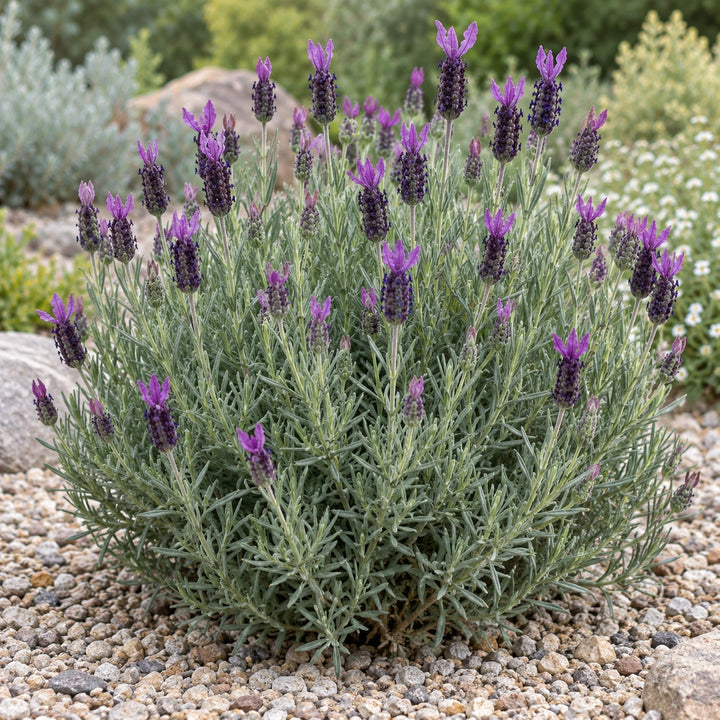
Portuguese or butterfly lavender is Lavandula pedunculata, a close relative of Spanish lavender. The name pedunculata refers to the peduncle, the bare stalk that holds each flower head, and this species is known for holding its purple heads up on longer stems than typical Spanish lavender. The showy bracts on top give the butterfly look.
The plant itself stays compact, around 20 inches tall and wide, and it blooms early, starting in May, with a high rebloom rating.
Butterfly lavender at a glance
| Trait | What to expect |
|---|---|
| Botanical name | Lavandula pedunculata |
| Group | Section Stoechas |
| Flower color | Purple |
| Habit | Compact |
| Size | About 20 inches tall and 20 inches wide |
| Bloom | Starts early May, peaks late May, high rebloom |
| Fragrance | Strong; resinous, camphor and eucalyptus-like |
| Identity | Commercial species stock; traits can vary |
How it compares with Spanish lavender
Butterfly and Spanish lavender share the same basic style: plump flower heads topped with petal-like bracts and a bold, resinous scent. Butterfly lavender is often chosen for its longer flower stems, which lift the heads clear of the foliage and give a lighter, more fluttering look. Its fragrance is rated strong, so it makes an impression in a small space. Oil rating is weak, so this is a fragrance and garden plant rather than an oil crop.
Both bloom without a winter chill, which is why they are so useful in cold regions as container plants.
Growing it in the north
- Planting time: after the last frost, in full sun.
- In beds: choose a raised or sloped spot with gritty soil. It will flower all summer as an annual.
- In pots: a 10 to 12 inch container with a fast-draining mix and drainage holes.
- Water: soak, then wait for the top inch or two to dry.
- Deadheading: cut each faded head off at the base of its stalk to encourage rebloom.
Overwintering
The listing does not give a hardiness range. Butterfly lavender is generally less cold-tolerant than English lavender, and Michigan winters are a real risk, so bring potted plants indoors before hard frost. A bright, cool room or frost-free sunroom is ideal. Water lightly and skip feeding until spring. When nights stay above freezing, harden it off outside before returning it to full sun. The Frost Date Estimator gives you dates to plan around.
Cut flowers and design
Those long stems make butterfly lavender one of the better Stoechas-type lavenders for small bouquets. It is rated good for both fresh and dried flowers. Cut when the bracts are fully colored, and hang bundles to dry in a dark, airy place. In the garden, try a row of pots along a sunny path, or mix it with silver foliage and white flowers. Culinary use is not recommended.
It comes as a 3-inch plug, a 4-inch pot or a 1-gallon pot. See the product page for current sizes and availability.
Frequently asked questions
Why is it called butterfly lavender?
The upright bracts on top of each flower head look like small wings, giving the plant its butterfly name.
Is it the same as Spanish lavender?
They are close relatives in the same section. Butterfly lavender is a separate species, often with longer flower stalks.
Does it rebloom?
Yes. It has a high rebloom rating, especially when faded heads are removed promptly.

































Share how it went in your field