

Product Field NotesLavender Plants
Yellow Lavender: A Pale, Unexpected Twist on Spanish Lavender
 Save
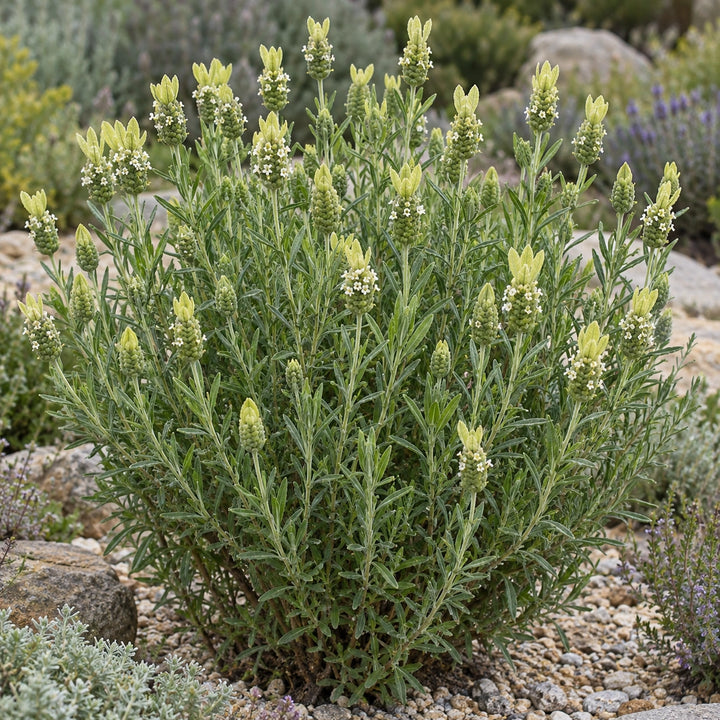
Not every lavender is purple. Yellow lavender is Lavandula viridis, a member of the Stoechas section, the same group as Spanish lavender. It has the familiar plump flower heads topped with bracts, but in pale yellow-toned shades rather than purple. Records describe mature plants as bushy, about 36 inches tall and 30 inches wide, and it blooms from early May with high rebloom.
Plant it next to a purple Spanish lavender and visitors to your patio will ask what on earth it is. That alone may be worth the pot space.
Yellow lavender at a glance
| Trait | What to expect |
|---|---|
| Botanical name | Lavandula viridis |
| Group | Section Stoechas |
| Flower color | Pale yellow tones |
| Habit | Bushy |
| Size | Up to about 36 inches tall and 30 inches wide when mature |
| Bloom | Starts early May, peaks late May, high rebloom |
| Fragrance | Moderate; resinous, camphor and eucalyptus-like |
| Identity | Commercial species stock; traits can vary |
Designing with a yellow lavender
Pale yellow is a gift in a planting full of purples and blues. It brightens dark colors, links lavender to yellow and cream flowers nearby and looks fresh in the low light of early morning and evening. Try it in a large pot beside a deep purple Spanish lavender, or with silver foliage and blue flowers for a cool, sunny combination.
Its name, viridis, means green, a nod to the greenish tint often seen in the plant. Because this listing is species stock, the exact shade can vary among source lines, so enjoy whatever tone your plant settles into.
Growing it in a cold climate
- Container: 14 inches or larger for a gallon plant; it can grow large over several seasons.
- Mix: gritty and fast draining, with drainage holes.
- Sun: full sun all day for the best flowering.
- Water: soak, then let the top dry before the next watering.
- Deadheading: cut faded heads off at the first leaf pair to keep reblooms coming.
- Feeding: light, every few weeks in summer for potted plants.
Winter planning
Stoechas lavenders bloom without winter cold, but they are less cold-hardy than English lavender, and the listing does not give a hardiness range. In Michigan, bring it indoors before frost. A cool, bright room or a frost-free sunroom works well. Water sparingly, skip fertilizer and trim leggy growth lightly in late winter. Set it out again after your last frost; the Frost Date Estimator helps you plan.
Cut flowers and pollinators
Yellow lavender is rated good for fresh and dried flowers and great for pollinators. The pale heads mix beautifully with purple lavender in a small vase. For drying, hang bundles in a dark, airy spot to help the color hold. Its scent is resinous and herbal, like other Stoechas lavenders. Culinary use is not recommended.
It comes as a 3-inch plug, a 4-inch pot or a 1-gallon pot. See the product page for current sizes and availability.
Its pale heads also show off well in a white or pale gray pot, which keeps the whole look soft and bright.
Frequently asked questions
Is yellow lavender really lavender?
Yes. It is a true Lavandula species in the same section as Spanish lavender, just with pale, yellow-toned flowers.
Will it survive winter outdoors?
Not in Michigan. Bring it inside before frost or grow it as an annual.
Does it rebloom?
Yes. It has a high rebloom rating when faded heads are removed.

































Share how it went in your field