

Product Field NotesCompanion Plants
Liberty Hosta: Bold Two-Tone Leaves for the Shade Garden
 Save
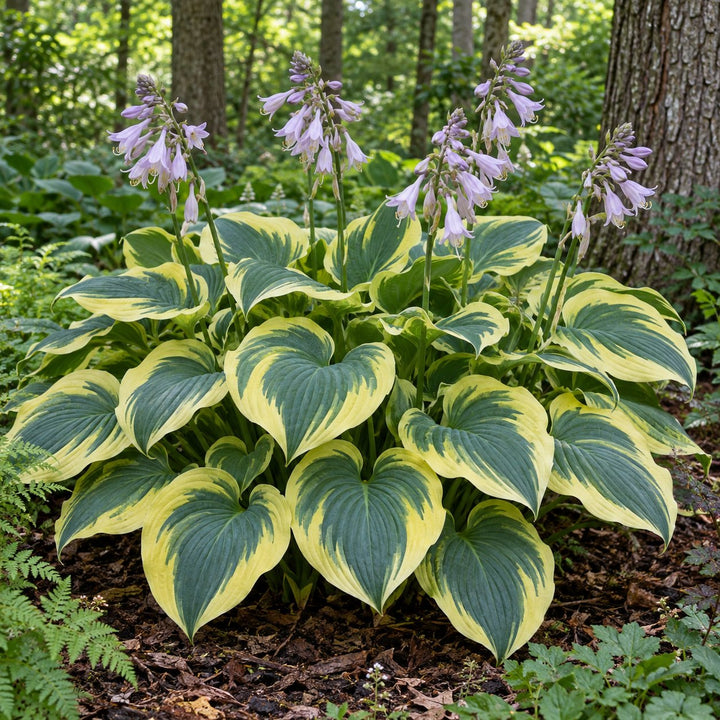
Liberty hosta is a big, bold hosta with broad, heart-shaped leaves: blue-green in the center with very wide, irregularly streaked margins that open yellow in spring and lighten to creamy white by midsummer. The thick leaves hold up to slugs better than most hostas, and lavender-colored trumpet flowers rise on scapes about 40 inches tall in early summer.
It is a former Hosta of the Year and holds the RHS Award of Garden Merit, so it has a long track record in real gardens.
Liberty at a glance
| Trait | What to expect |
|---|---|
| Botanical name | Hosta 'Liberty' |
| Foliage | Blue-green centers, wide margins yellow in spring, creamy white by summer |
| Flowers | Lavender trumpets on scapes about 40 inches tall |
| Size | About 26 inches tall, 39 inches wide |
| Bloom | Mid-June into early July |
| Hardiness | USDA zones 3 to 9 |
| Light | Part to full shade, a few hours of morning sun at most |
| Deer | Susceptible |
Lavender's opposite, on purpose
We will be straight with you: Liberty and lavender should never share a bed. Lavender needs blazing sun and dry, lean soil. Liberty needs shade and moisture. What they can share is a property. Many gardens have a sunny front walk perfect for lavender and a shady back corner where nothing seems to grow. Liberty turns that corner into a feature, and its pale margins brighten shade the way lavender's silver foliage brightens sun.
Good shade partners include ferns, astilbe and darker hostas. Plan both sides of the yard in the Companion Plant Planner.
Planting and care
- Light: morning sun is fine; the cream margins can scorch in hot afternoon sun.
- Soil: rich and humus heavy, evenly moist but well drained.
- Water: deeply during dry spells, especially the first summer.
- Space: it gets over three feet wide, so give it room to show off as a specimen.
- After bloom: cut spent scapes at the base.
- Dividing: split crowded clumps in early spring as the shoots emerge.
Pests, diseases and winter
Long wet, humid spells bring out slugs and can spot leaves with anthracnose; Liberty's thick leaves help, and good airflow does the rest. Watch for mottled, streaked leaves that could signal Hosta Virus X, and discard any infected plant. Deer do browse hostas, so in deer country a fence or repellent routine is worth considering. Liberty is fully hardy in Michigan: cut the leaves down after a hard frost and avoid heavy, wet mulch over the crown.
Frequently asked questions
Why are the margins changing color?
That is normal. They open yellow in spring and fade to creamy white by midsummer.
Is a plug tray right for me?
Liberty is offered as a full 72-cell plug tray, ideal for growers, landscapers and large shade plantings. See the product page for current availability, and the Wholesale Hub for other trays.
Do bees visit the flowers?
Yes. The lavender trumpets draw bees and the occasional hummingbird in early summer.

































Share how it went in your field