

Product Field NotesLavender Plants
Little Lady Lavender: A Prolific Pale Lilac-Blue for Small Spaces
 Save
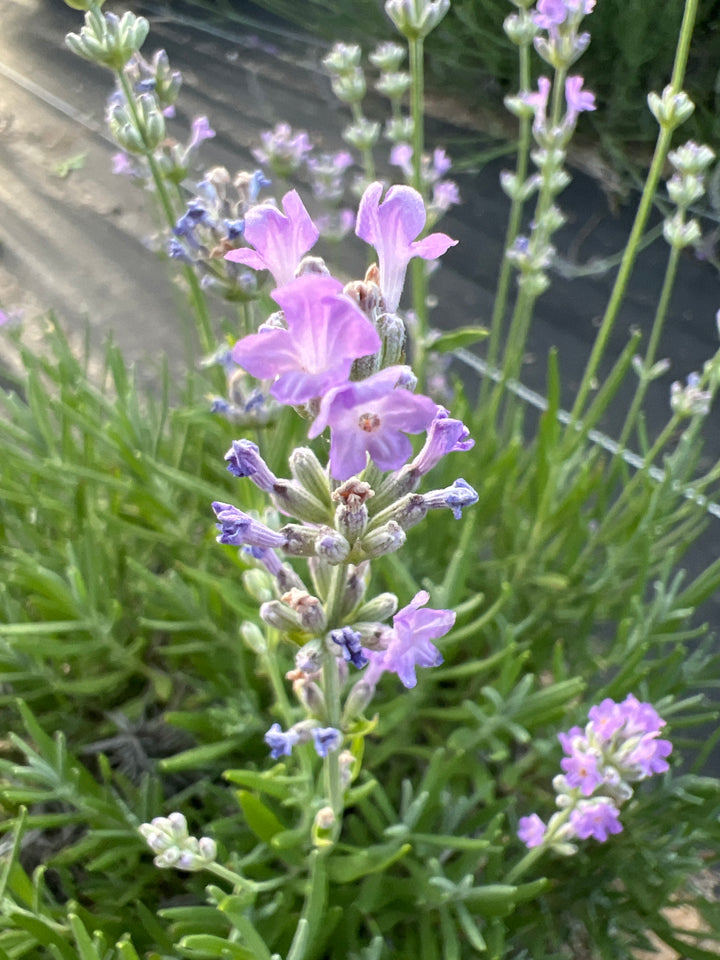
Little Lady lavender is a compact evergreen English lavender, also known by its cultivar name 'Batlad', that holds the Royal Horticultural Society's Award of Garden Merit. It forms a neat, bushy mound of silver-gray foliage about 16 inches tall and up to 16 inches wide, and it covers itself in prolific pale lilac-blue to light violet flowers.
The scent is described as strong but gentle, and its overall fragrance strength is rated mild: pleasant up close, never overpowering. Good news for small patios and people who like their lavender polite.
Little Lady at a glance
| Trait | What to expect |
|---|---|
| Botanical name | Lavandula angustifolia 'Batlad' (Little Lady) |
| Flower color | Pale lilac-blue to light violet |
| Foliage | Silver-gray, evergreen |
| Size | About 16 inches tall and 12 to 16 inches wide |
| Stems | About 10 inches |
| Bloom | Starts mid-June, peaks early August, moderate rebloom |
| Hardiness | USDA zones 5a to 9b (RHS H5) |
| Ratings | Great culinary, excellent oil suitability |
Small plant, long season
Little Lady's bloom window is generous for a compact lavender, starting in mid-June and peaking as late as early August, with flowering centered on June through August. That later peak is handy if you grow several English lavenders: it keeps color going after many earlier cultivars have finished their main flush.
The pale lilac-blue color reads soft and cool. Pair it with deeper purple cultivars for contrast, or mass it on its own for a hazy, romantic edge along a path.
Where it fits
- Edging: its tidy mound lines walks and bed fronts without flopping.
- Containers: one plant fills a 12 inch pot nicely.
- Small gardens: it delivers full lavender character in limited space.
- Kitchen gardens: rated great for culinary use, it earns a spot near the herbs.
Planting and care
Plant in full sun with fast-draining soil. Space plants about 14 to 16 inches apart for a continuous low hedge. Set the crown level with the soil, water deeply at planting and keep watering through the first season whenever the top few inches are dry. After that, water rarely.
After the main bloom, shear the spent stems and shape the mound, staying in leafy growth. Avoid cutting into bare wood. Little Lady needs winter cold to bloom well, so potted plants should stay outdoors in a sheltered spot over winter. The Pruning Calendar covers the timing in detail.
Harvest for the kitchen
For culinary use, cut stems on a dry morning when buds are fully colored and only a few flowers are open. Dry them in small bundles out of the sun, then rub the buds loose. Use only plants grown and handled as a food crop, and start with a small amount. The 10 inch stems are also a nice length for small bundles and sachets, and the pale color makes a soft-toned dried bouquet.
Little Lady comes as a 3-inch plug, a 4-inch pot or a 1-gallon pot. See the product page for current sizes and availability.
Frequently asked questions
Is Little Lady the same as Batlad?
Yes. Batlad is the cultivar name, and Little Lady is the name it is commonly sold under.
Is it a strong-smelling lavender?
Its fragrance is described as strong but gentle, with an overall mild rating, so it is pleasant without being heavy.
When does it bloom?
From mid-June, with a peak around early August and moderate rebloom.

































Share how it went in your field