

Product Field NotesLavender Plants
Loddon Blue Lavender: Dense Dark Spikes for Cutting and Drying
 Save
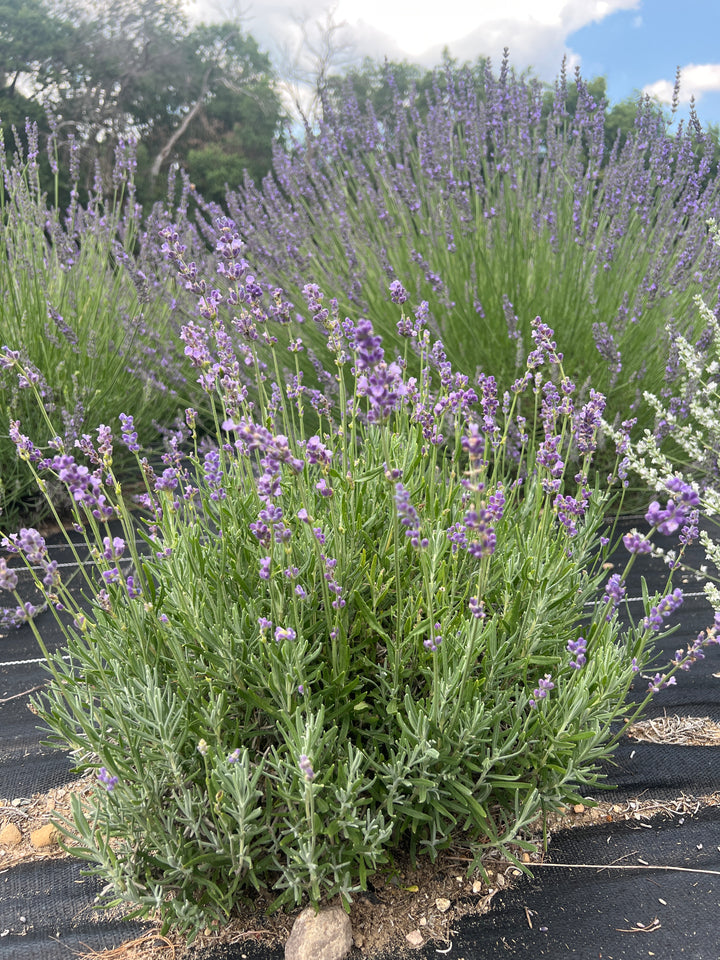
Loddon Blue lavender is an English lavender made for the drying rack. It produces dense, terminal spikes of dark purple-blue flowers over strongly aromatic gray-green foliage, and it is rated excellent for both cut and dried flowers. The plant forms a compact, bushy evergreen mound about 20 inches tall and 30 inches wide.
If you grow lavender to bring indoors, for bundles, wreaths or sachets, this is a cultivar worth a close look.
Loddon Blue at a glance
| Trait | What to expect |
|---|---|
| Botanical name | Lavandula angustifolia 'Loddon Blue' |
| Flower color | Dark purple-blue, dense spikes |
| Foliage | Gray-green, strongly aromatic |
| Size | About 20 inches tall and 30 inches wide |
| Stems | About 8 to 12 inches |
| Bloom | Starts mid-June, peaks mid-July, moderate rebloom |
| Hardiness | USDA zones 5a to 9b (RHS H5) |
| Ratings | Excellent cut and dried flowers; great culinary |
Why it dries so well
Good drying lavender has three things: dense spikes that hold their buds, deep color that does not fade to gray and stems long enough to bundle. Loddon Blue has all three. Its dark purple-blue spikes are tightly packed, and stems of 8 to 12 inches are a comfortable length for hand-tied bundles and small wreaths.
For the best color, harvest on a dry morning when only the first few flowers on each spike have opened. Tie small bundles with a rubber band, which tightens as the stems shrink, and hang them upside down in a dark, airy room. Out of direct sun, the color stays deep for months.
Planting and spacing
Give Loddon Blue full sun and fast-draining soil. It spreads wider than it grows tall, so space plants about 24 to 30 inches apart, or a little closer for a hedge that knits together. On clay, plant on a mound or in a raised bed with added grit. Set the crown level with the soil and keep mulch away from the woody base.
Not sure when to plant? The Frost Date Estimator gives you a window for spring planting.
Care through the year
- Spring: trim winter damage only after green growth appears.
- First summer: water deeply when the top few inches are dry.
- Harvest and bloom: cut for drying as flowers begin to open; leave some for bees.
- After bloom: shear by about a third, staying in leafy growth, to encourage a moderate rebloom and keep the mound tight.
- Winter: no feeding. Like all English lavenders it needs winter cold to bloom well.
Fresh bouquets and the kitchen
It is rated excellent for fresh bouquets too. Cut stems in the morning and place them in water right away. Loddon Blue is also rated great for culinary use; harvest buds when colored but mostly closed, dry and rub them free, and start with a small amount. Use only plants grown and handled as a food crop. Its essential oil suitability is rated excellent.
It comes as a 3-inch plug, a 4-inch pot or a 1-gallon pot. See the product page for current sizes and availability.
Frequently asked questions
Is Loddon Blue good for wreaths?
Yes. Its dense spikes and 8 to 12 inch stems are well suited to small wreaths and bundles.
How wide does it get?
About 30 inches across at maturity, wider than it is tall, so give it room.
Can I cook with it?
Yes. It is rated great for culinary use. Use food-grown buds and small amounts.

































Share how it went in your field