

Product Field NotesLavender Plants
Lovely Sky Lavender: An Early-Starting, Sweet-Scented English Type
 Save
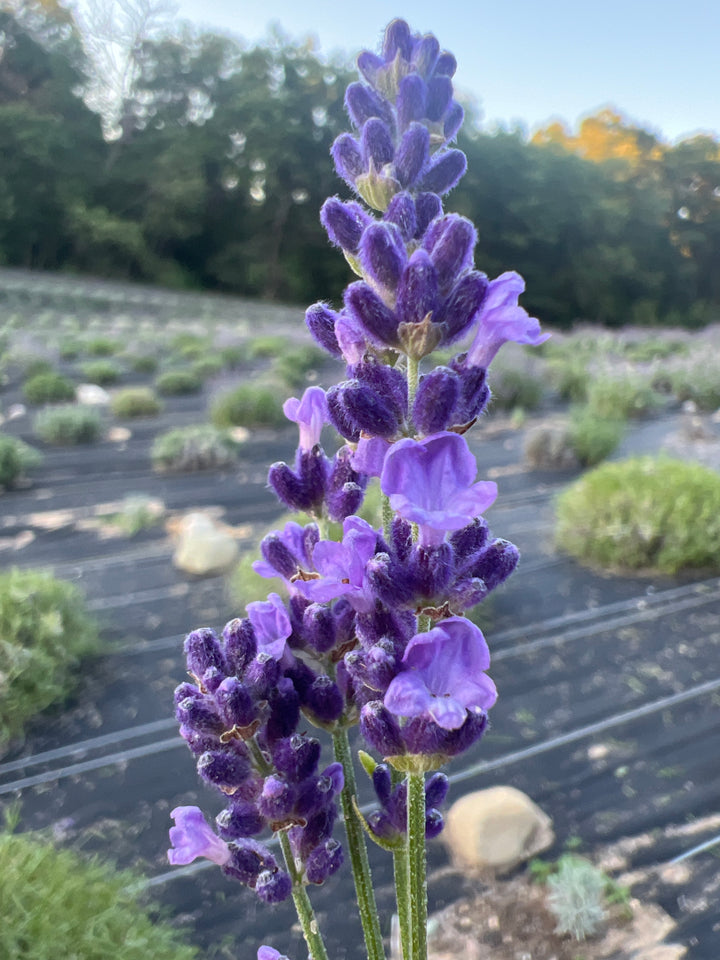
Lovely Sky lavender is an English lavender with purple flowers, green foliage and a strong, sweet fragrance: floral lavender with soft herbal notes and low camphor. It grows into an upright, bushy plant about 16 inches tall and wide, a tidy size for borders, pots and kitchen gardens.
Its bloom can begin as early as late May, a head start on many English lavenders, with the peak arriving in mid-July and moderate rebloom after that.
Lovely Sky at a glance
| Trait | What to expect |
|---|---|
| Botanical name | Lavandula angustifolia 'Lovely Sky' |
| Flower color | Purple |
| Foliage | Green |
| Size | About 16 inches tall and 16 inches wide |
| Habit | Upright and bushy |
| Bloom | Starts late May, peaks mid-July, moderate rebloom |
| Hardiness | USDA zones 5a to 9b |
| Ratings | Great culinary, excellent oil suitability |
The case for an early starter
In a Great Lakes garden, English lavender usually waits until late June to really get going. A cultivar that can start in late May stretches the season at the front end. Plant Lovely Sky alongside later-peaking English lavenders and you get a longer run of purple from one bed, with bees finding flowers sooner. It is rated great for pollinators and deer resistant.
The sweet, low-camphor scent is the classic English lavender profile. It is the kind of fragrance people enjoy brushing past on a warm evening.
Planting it well
- Sun: full sun, at least six to eight hours.
- Soil: lean and fast draining; raised beds help on clay.
- Spacing: about 16 to 18 inches apart for a low hedge or border edge.
- Planting depth: crown level with the soil, never buried.
- First season: water deeply when the top few inches dry out.
- After that: low water needs; skip fertilizer.
For your local timing, try the Frost Date Estimator.
Pruning and winter
When the main flush fades, shear spent stems and shape the plant, staying above the bare wood. That cut keeps it compact and encourages a moderate rebloom. In fall, let it harden off without feeding or extra water. English lavender needs a winter chill to bloom well, so potted plants stay outdoors in a sheltered spot rather than coming inside. In spring, wait for green growth before trimming any winter damage. The Pruning Calendar lays out the steps.
From garden to kitchen
Lovely Sky is rated great for culinary use, and its sweet, low-camphor character is ideal for baking, lavender sugar and syrups. Harvest stems when buds are fully colored but mostly unopened, dry them in small bundles out of the sun and rub the buds free. Use only plants grown and handled as a food crop, and start with a small amount; it is easy to add more and impossible to take it back out. Its essential oil suitability is rated excellent, and dried buds make fragrant sachets.
It comes as a 3-inch plug, a 4-inch pot or a 1-gallon pot. See the product page for current sizes and availability.
Frequently asked questions
When does Lovely Sky bloom?
It can start in late May, peaks in mid-July and has a moderate rebloom.
Is it good for baking?
Yes. It is rated great for culinary use with a sweet, low-camphor flavor.
Will it survive Michigan winters?
It is rated for zones 5a to 9b and is generally among the hardier lavenders. Drainage is the deciding factor.

































Share how it went in your field