

Use & Care NotesLavender Plants
Magnum Lavender: A Big Lavandin for Oil, Bundles and Hedges
 Save
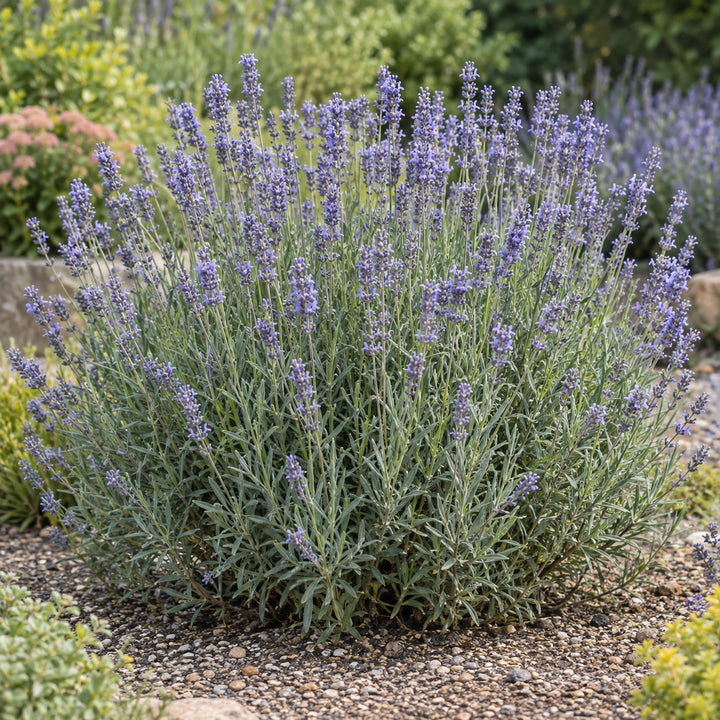
Magnum lavender lives up to its name. It is a lavandin, Lavandula × intermedia, a cross between English lavender and spike lavender, and it grows into a broad, bushy mound about three feet tall and three and a half feet wide, topped with pale lavender-blue spikes in high summer.
Lavandins are the workhorses of lavender growing: bigger plants, longer stems and a lot of oil. Magnum is one to plant when you want volume.
Magnum at a glance
| Trait | What to expect |
|---|---|
| Botanical name | Lavandula × intermedia 'Magnum' |
| Parentage | L. angustifolia × L. latifolia |
| Flower color | Pale lavender-blue |
| Foliage | Silver-green to gray-green |
| Size | About 36 inches tall and 42 inches wide |
| Bloom | Starts mid-June, peaks mid-August, one main flush |
| Hardiness | USDA zones 5a to 8b |
| Ratings | Excellent for oil, cut flowers, dried flowers and pollinators |
Who Magnum is for
Magnum is a strong fit for anyone who wants a lot of lavender from each plant: growers planning field rows, people who make sachets and bundles by the armload, and home gardeners who want a lavender hedge along a drive or fence. Its pale blue color also reads as soft and airy in the landscape, a nice change from the deep purples of many English lavenders.
Because its main bloom peaks in mid-August, Magnum extends the season after most English lavenders have finished. Plant it alongside early cultivars and you will have something in flower for much longer. The Harvest Calendar helps map those windows.
Planting for a big plant
The most common mistake with lavandins is crowding them. Space Magnum at roughly its mature width so air moves between plants; tight rows stay damp after rain, and damp is what lavender likes least. Choose full sun and soil that drains fast. Sandy loam is ideal, and heavy clay needs serious amending, a raised bed or a mounded row.
Set the crown level with the soil, water the root zone deeply after planting and keep mulch pulled back from the base. Check your zone with the USDA Zone Finder; Magnum is rated for 5a to 8b.
Care and pruning
- Water: regularly in the first season, then rarely. Water needs are low once roots are established.
- Feeding: skip it. Rich soil makes large lavandins sprawl and split open.
- Pruning: after harvest, cut stems back and shape the mound, staying above the woody base where green growth remains. A yearly trim keeps big plants from opening up in the middle.
- Winter: good drainage matters more than any cover.
Harvesting and uses
For dried bundles, cut when about a third to half of the flowers on the spike have opened, on a dry morning. Hang in small bunches upside down in a dark, airy spot. Magnum's long stems make generous, full-looking bundles, and its fragrance is a strong floral-herbal blend of sweet lavender with fresh camphor notes.
It is also rated good for culinary use, but lavandin flavor is stronger and more camphor-forward than English lavender, so cooks who try it use very little. Bees and butterflies crowd it in bloom, and deer tend to avoid it.
Magnum is offered as 3-inch plugs, 4-inch pots and 1-gallon pots. See the product page for current sizes and availability.
Frequently asked questions
Does Magnum rebloom?
Not much. It puts on one big main flush. Pair it with reblooming English lavenders if you want color earlier and later.
Is Magnum hardy in Michigan?
It is rated for zones 5a to 8b, which covers much of lower Michigan. Drainage is the deciding factor in wet winters.
Why choose a lavandin over English lavender?
Lavandins give larger plants, longer stems and more oil. English lavenders are smaller, sweeter and better for most cooking.
















Share how it went in your field