

Use & Care NotesLavender Plants
Martha Roderick Lavender: A Dense, Low Mound for Edging
 Save
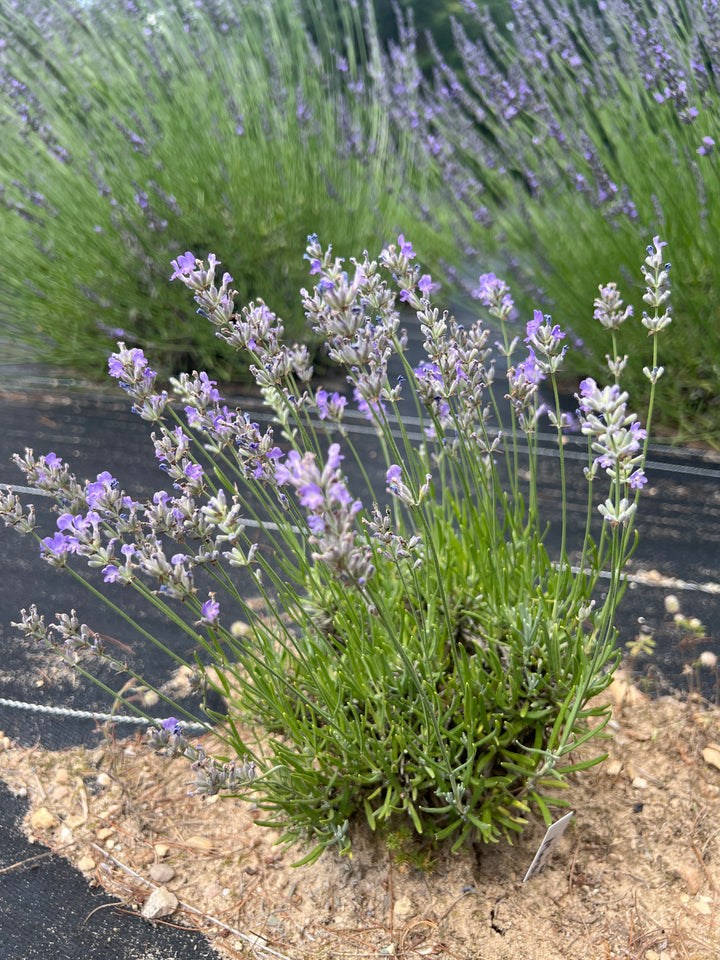
Martha Roderick lavender is a compact English lavender that grows wider than it is tall, about 21 inches high and up to 36 inches across. The mound is dense and tidy, the gray-green foliage stays neat, and in early summer it covers itself in violet to light purple spikes with a sweet, classic English lavender scent.
Introduced in 1981, it has been around long enough to prove itself as a dependable border plant.
Martha Roderick at a glance
| Trait | What to expect |
|---|---|
| Botanical name | Lavandula angustifolia 'Martha Roderick' |
| Flower color | Violet to light purple |
| Habit | Dense, compact and mounding |
| Size | About 21 inches tall and 36 inches wide; stems 6 to 8 inches |
| Bloom | Starts mid-June, peaks early July, moderate rebloom |
| Hardiness | USDA zones 5a to 8b |
| Fragrance | Sweet, classic English lavender |
| Best uses | Dried flowers, fragrance, oil, culinary |
Built for edges and low hedges
Its low, wide shape is what sets Martha Roderick apart. Plant a row along a walkway, the front of a sunny border or the edge of a raised bed and the mounds knit into a soft, continuous ribbon of gray-green and violet. Because the stems are short, 6 to 8 inches, the flowers sit close to the foliage and the planting looks neat even in bloom. It will not flop over onto the path the way taller lavenders can.
For a hedge, space plants a little closer than their full width, about two and a half to three feet, so they meet without crowding. Leave enough room for air to move at the base.
Planting and care
- Sun: full sun, six to eight hours or more.
- Soil: sandy or loamy and quick to drain. Raise the bed if water pools after rain.
- Water: deeply during the first season when the top few inches are dry, then rarely.
- Feeding: minimal. Lean soil keeps the mound dense.
- Pruning: shear after the main bloom to keep the dome shape, cutting into leafy growth but not into bare old wood.
- Winter: keep wet mulch and leaves off the crown.
New to pruning? The Pruning Calendar walks through when and how much.
Drying and culinary use
Martha Roderick is rated excellent for dried flowers. Cut stems when the spikes are colored and only a few flowers have opened, bundle them small and hang them upside down somewhere dark and airy. The short stems are perfect for mini bundles, wreath work, sachets and tucking into gift wrap.
It is also rated great for culinary use. Harvest buds for the kitchen at the same stage, dry them well and start with small amounts. Use only plants grown and handled as a food crop.
Formats
Martha Roderick is offered as 3-inch plugs, 4-inch pots and 1-gallon pots. Plugs are an affordable way to plant a long edge, while gallon pots fill in faster. See the product page for current sizes and availability.
Frequently asked questions
Is Martha Roderick good for a lavender hedge?
Yes. Its dense, low, spreading habit is well suited to edging and short hedges along paths and beds.
Why are the stems so short?
Compact English lavenders carry their flowers close to the foliage. That keeps the plant tidy, and the short stems still work well for small dried bundles.
Does it rebloom?
It has a moderate rebloom. A light shearing after the early July peak encourages a second, smaller show.
















Share how it went in your field