

Product Field NotesCompanion Plants
May Night Salvia: The Dependable Violet Spikes Around Lavender
 Save
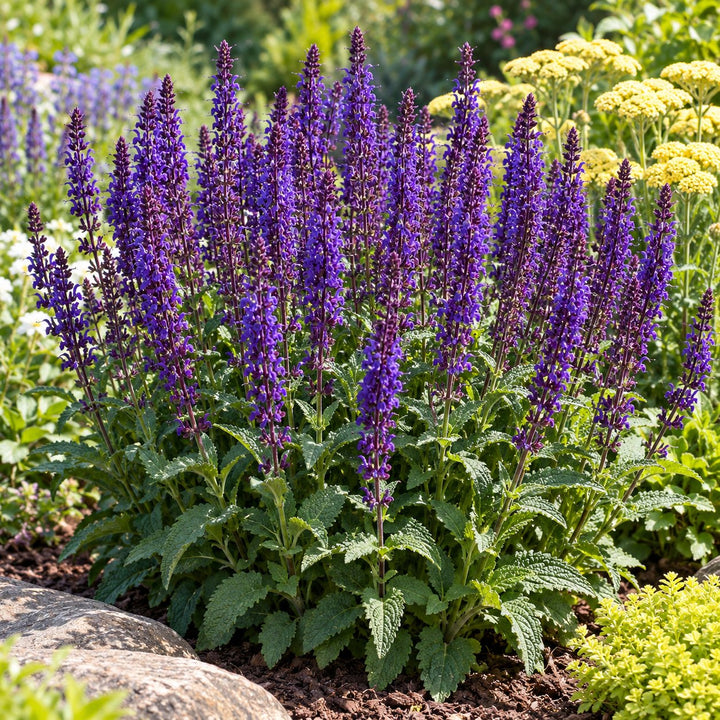
May Night salvia has been a standard among perennial salvias since 1956, and it has earned the spot. It forms a tidy clump about 18 inches tall that sends up dense, upright spikes of deep violet-purple flowers held in dark purple calyxes on purplish stems. At peak it looks like a thick bouquet of dark violet candles. It holds the RHS Award of Garden Merit and was named Perennial Plant of the Year in 1997.
May Night at a glance
| Trait | What to expect |
|---|---|
| Botanical name | Salvia × sylvestris 'May Night' ('Mainacht') |
| Flowers | Deep violet-purple spikes in dark purple calyxes |
| Foliage | Oblong, crinkled, mid-green; mild sage scent when brushed |
| Size | About 18 inches tall, 15 to 18 inches wide |
| Bloom | Early to late June, rebloom into late summer after shearing |
| Hardiness | USDA zones 3 to 8 |
| Light | Full sun |
| Wildlife | Excellent for bees and butterflies; deer resistant |
Why salvia and lavender go together
Perennial salvia and lavender are close cousins in the mint family, and they grow like it: both want full sun, lean to average soil and sharp drainage, and both shrug off heat and drought once established. May Night's upright spikes echo lavender's shape, so the two read as one planting, while its deeper, darker violet adds contrast to lavender's softer purple.
Timing helps too. May Night opens in early June, often before the main English lavender bloom, and its rebloom after shearing fills the gap after the lavender harvest. Interplant them in drifts, or run May Night along the front of a lavender hedge. The Companion Plant Planner makes it easy to test spacing.
The shear that makes it rebloom
- When most of the first spikes have faded, usually in early July, grab a handful of stems.
- Cut back by about a third, down to fresh leaves.
- Water once if the weather is dry.
- Within a few weeks, new spikes appear for a second round of flowers.
The shear also refreshes the foliage, which can get powdery mildew after the first flush in muggy, crowded plantings. Do it around the same time you shear your lavender after bloom.
Planting and winter care
- Soil: average and well drained. Wet, heavy winter soil is the main cause of loss.
- Water: through the first season, then only in long dry spells.
- Winter: reliably hardy in Michigan. Leave stems standing over winter or cut them back in fall, then clean up old growth in spring as new leaves appear.
Frequently asked questions
Is May Night fragrant like lavender?
The flowers are unscented, but the leaves have a mild herbal, sage-like scent when brushed. Let the lavender carry the perfume.
Can I cut it for bouquets?
Yes. It is rated good for cut flowers and fair for drying, and the violet spikes look natural with lavender stems.
Plug tray or bare root?
The 72-cell plug tray suits growers and mass plantings; the bare root plant suits a home bed. See each product page for current availability.















Share how it went in your field