

Product Field NotesCompanion Plants
Midnight Carpathian Bellflower: Dark Violet Cups Along the Edge
 Save
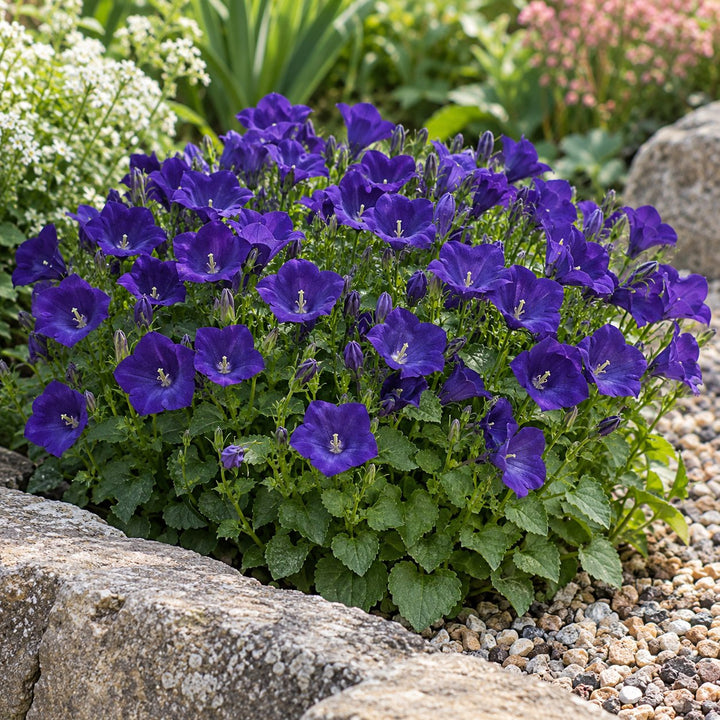
Midnight Carpathian bellflower is a very compact campanula with remarkably dark flowers. Upward-facing, open cups about 1.5 inches across, in very dark violet-blue with slightly darker veins and a pale center, sit just above a tight, glossy green mound only 6 to 8 inches tall. In June the mound almost disappears under them, and with a little deadheading the flowers keep coming on and off through summer.
Midnight at a glance
| Trait | What to expect |
|---|---|
| Botanical name | Campanula carpatica 'Midnight' |
| Flowers | Very dark violet-blue cups, about 1.5 inches |
| Foliage | Small, heart-shaped, glossy, bright green |
| Size | 6 to 8 inches tall, 10 to 12 inches wide |
| Bloom | Early June, peaks late June, on and off through summer |
| Hardiness | USDA zones 3 to 8 |
| Light | Full sun to part shade |
| Deer | Resistant |
Deep violet below the lavender spikes
Midnight likes sun and good drainage, so it can sit at the very front of a lavender bed, where its deep violet cups make a low band of color beneath the lavender spikes. Purple on purple, in two shapes and two heights, is a simple, classy look. It blooms in June alongside English lavender and carries on afterward with deadheading.
The one difference: Midnight wants soil that stays a bit more evenly moist than lavender likes. Plant it right at the bed's edge, a few inches out from the lavender crowns, and give that strip a drink in dry weeks without soaking the lavender. Map the edging in the Companion Plant Planner.
Planting and care
- Soil: moist but well drained. Crown and root rot in soggy or overwatered soil are the main problems.
- Heat: it prefers summers that are not extreme; afternoon shade in hot weather lengthens the bloom.
- Deadheading: snip off spent flowers to keep new buds coming.
- Slugs: slugs and snails chew leaves and flowers, so check under the mound in wet weather.
- Dividing: divide in spring every few years if the center thins.
Winter
Midnight is hardy in Michigan if the crown stays dry over winter. Plant it in well-drained soil, avoid heavy mulch over the crown and tidy the foliage in spring. That routine lines up neatly with lavender's winter care.
Small spaces
Its tiny size suits rock gardens, small containers and the gaps between stepping stones, anywhere you can see the deep color up close. A pot of it next to a potted lavender on a sunny step is a sweet little pairing.
Frequently asked questions
Is it good for cut flowers?
No. The stems are too short. Enjoy the flowers in the garden, where bees visit them.
Does it spread?
It stays a tight, rounded mound that widens slowly to about a foot across.
How is it sold?
As a full 72-cell plug tray, a practical way to edge long beds. See the product page for current availability and the Wholesale Hub for other trays.















Share how it went in your field