

Product Field NotesCompanion Plants
Mini Gallery™ Blue Bicolor Lupine: Blue and White Before the Lavender
 Save
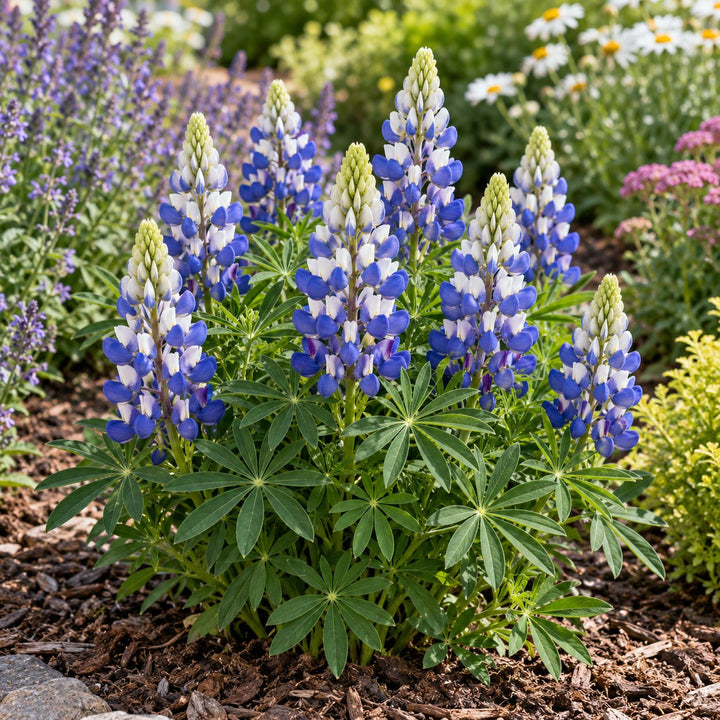
Mini Gallery™ Blue Bicolor lupine brings the classic cottage-garden spike down to a manageable size. Each short, conical spike is striped in medium blue and white, and the whole plant stands only about 14 to 16 inches tall, so it fits the front of a border or a narrow bed along a walkway.
It blooms early and heavily for its size, and its timing is the main reason we like it near lavender: the blue spikes peak just before the first lavender opens, then fade as the purple takes over.
Blue Bicolor at a glance
| Trait | What to expect |
|---|---|
| Botanical name | Lupinus polyphyllus Mini Gallery™ Blue Bicolor |
| Flowers | Medium blue keels and wings with white upper petals |
| Foliage | Soft green, palmate leaves with narrow leaflets |
| Size | 14 to 16 inches tall, 7 to 9 inches wide |
| Bloom | Early summer |
| Hardiness | USDA zones 4 to 8 |
| Light | Full sun to light afternoon shade |
| Wildlife | Hummingbirds, butterflies and bees |
A cool-toned opening act
Blue and white is the easiest palette to pair with lavender because it never fights the purple. Plant Blue Bicolor in small groups along the front of a lavender bed and the effect is a soft progression: blue-and-white spikes in early summer, then violet lavender wands a few weeks later, with the gray-green lavender foliage tying it all together.
Its narrow footprint, under a foot wide, means you can slip it between young lavender plants without crowding them, as long as both get full sun and air. Try spacing in the Companion Plant Planner.
Planting and care
- Soil: average and well drained, leaning slightly acidic. Lupines dislike heavy clay and standing water.
- Planting: set plugs at the same depth they grew and water them in. Pick the spot carefully; the long taproot resents being moved later.
- Water: keep evenly moist while young, then water during dry spells.
- Deadheading: cut spent spikes before they set seed to tidy the plant.
- Summer heat: lupines prefer cool nights and can fade in hot, humid summers. A spot with a little afternoon shade helps.
Cutting the spikes
The compact spikes are good for cutting. Take them when the bottom third of the florets is open and the tip is still in bud, and put them straight into cool water. A small jar of blue-and-white lupines with a few early lavender stems makes a charming first-of-summer bouquet.
The plug tray format
Blue Bicolor is offered as a full 72-cell plug tray, a good fit for growers, cutting gardens and anyone planting a long border edge. See the product page for current availability, or visit the Wholesale Hub for tray orders.
Frequently asked questions
Why did my lupine look tired by August?
Lupines like cool nights, and a hot, humid stretch can make them fade. Trim back spent stems, keep the soil from drying out completely and let the plant rest.
Can I move it after a year?
It is best not to. Lupines grow a long taproot that does not like disturbance, so plant it where it can stay.

































Share how it went in your field