

Product Field NotesCompanion Plants
Mini Gallery™ Mix Lupine: A Low Patchwork of Early Summer Color
 Save
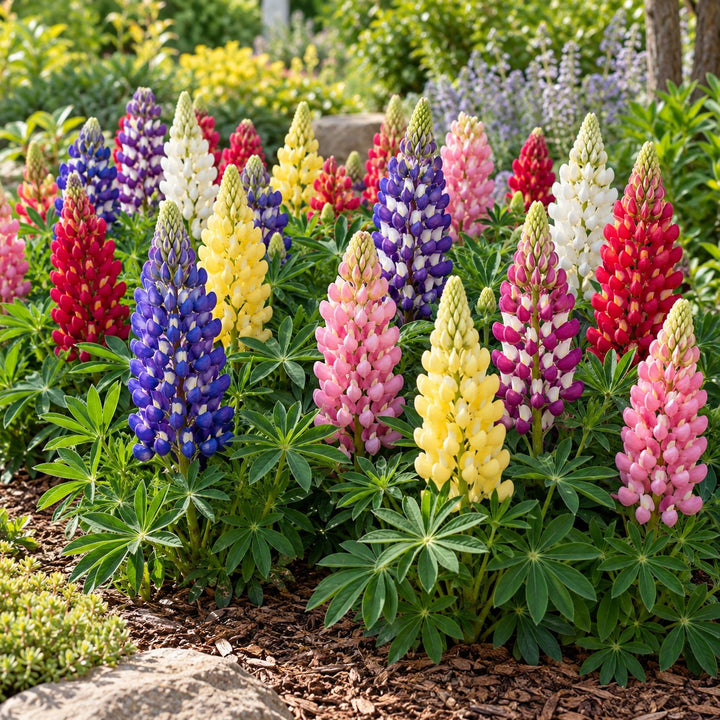
Mini Gallery™ Mix lupine gathers the whole color range of a compact lupine series into one planting: medium blue, red, rose pink, soft yellow and white, plus bicolors with white upper petals. The plants stay about 14 to 16 inches tall, so you get a patchwork of spikes without the height, or the staking, of traditional tall lupines.
Mini Gallery Mix at a glance
| Trait | What to expect |
|---|---|
| Botanical name | Lupinus polyphyllus Mini Gallery™ Mix |
| Flowers | Blue, red, rose pink, soft yellow, white and bicolors |
| Foliage | Green palmate leaves, like wheel spokes |
| Size | 14 to 16 inches tall, 7 to 9 inches wide |
| Bloom | Early summer |
| Hardiness | USDA zones 4 to 8 |
| Light | Full sun to light afternoon shade |
Designing with a mix
A single color makes a statement; a mix makes a celebration. Mini Gallery Mix is at its best planted in a generous drift, where the colors fall wherever they land and read as a low quilt of spikes. In a lavender garden, try a band of the mix along the sunny front edge of a bed, with lavender behind. The lupines carry the color in early summer and hand off to the purple wands as they fade.
Because each plant is narrow, a drift can be planted fairly closely, but leave a little space where the lupines meet the lavender so the lavender's base stays dry and well aired. Sketch the drift in the Companion Plant Planner.
Planting and care
- Site: full sun to light afternoon shade, with good drainage. Lupines share lavender's dislike of heavy clay and standing water.
- Soil: average, leaning slightly acidic. A simple soil test tells you where you stand.
- Water: regular watering while plants establish, then during dry spells.
- Deadheading: cut spent spikes before they set seed.
- Climate: lupines prefer cool nights and can fade in hot, humid summers. Great Lakes springs usually suit them well.
A ready-made cutting patch
Each plant builds into a clump of several stems, and the spikes cut well. A row of the mix in a cutting garden gives you mixed bouquets in early summer, right when the first lavender stems are ready to join them. Plan your rows in the Cut Flower Planner. Early-summer pollinators find the flowers quickly, so leave some uncut for the bees.
The plug tray format
The mix is offered as a full 72-cell plug tray, which suits mass plantings and growers potting up their own stock. See the product page for current availability, or the Wholesale Hub for tray orders.
Frequently asked questions
Which colors will I get?
The mix covers the series range: blue, red, rose pink, soft yellow and white, including bicolors. Exact proportions vary from tray to tray.
Should I let them self-seed?
Cutting spent spikes before seed sets keeps the plants tidy. Seedlings from a mix may not match their parents, so most gardeners deadhead.
Are lupines safe around pets?
Lupine seeds and plant parts can be toxic if eaten, so plant them where curious pets and children will not snack on them.

































Share how it went in your field