

Product Field NotesCompanion Plants
Nosferatu Daylily: Shimmering Dark Purple That Loves the Sun
 Save
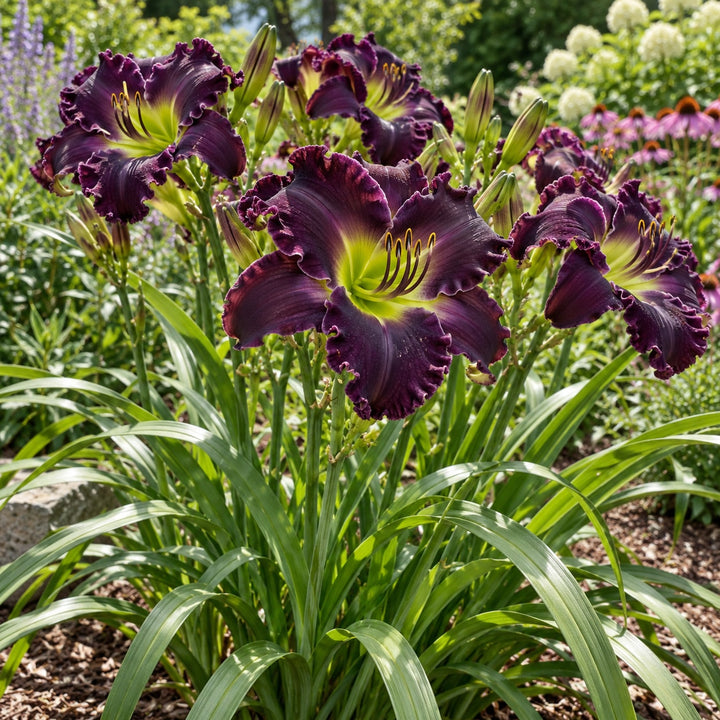
Nosferatu daylily has large 6-inch flowers in a shimmering dark purple, with a bright chartreuse throat and pie-crust ruffled petals. Unlike its namesake, it has no trouble with sunlight; the color holds up very well in full sun. A high bud count on well-branched scapes gives many weeks of bloom in midsummer, and the flowers carry a light fragrance.
Nosferatu at a glance
| Trait | What to expect |
|---|---|
| Botanical name | Hemerocallis 'Nosferatu' |
| Flowers | About 6 inches, shimmering dark purple, chartreuse throat, pie-crust ruffles, lightly fragrant |
| Foliage | Medium green, arching, semi-evergreen |
| Size | Scapes about 26 inches; foliage about 16 inches tall, 18 to 24 inches wide |
| Bloom | Starts early July, peaks mid-July, single flush |
| Hardiness | USDA zones 3 to 9 |
| Light | Full sun to light part shade |
| Deer | Susceptible |
Purple on purple
Most companions contrast with lavender. Nosferatu matches it. Its deep purple flowers echo lavender's hue on a much larger scale, so a planting of the two reads as one rich color story with two very different textures: fine, upright lavender spikes and big, ruffled, flat-faced daylily blooms. The chartreuse throat adds a small spark that keeps the purple from feeling heavy.
Its bloom starts in early July and peaks mid-July, right as many English lavenders are at full color, so the two peak together. For extra contrast, add a pale yellow neighbor such as threadleaf coreopsis. Plan the bed in the Companion Plant Planner.
Planting a bare root daylily
- Soak: soak the roots for an hour or so before planting.
- Depth: spread the roots over a mound of soil, with the crown about an inch below the surface.
- Spacing: give it 18 to 24 inches, and keep the arching leaves from leaning over lavender crowns.
- Water: water well and keep the soil lightly moist until it is growing strongly.
Once established, daylilies handle heat, clay and dry spells. They are more forgiving of soil than lavender, so put the daylily on the heavier edge of a bed and the lavender on the best-drained ground.
Care and the deer question
Each bloom lasts a day; snap off faded ones for a tidy look and cut bare scapes to the base once flowering ends. Divide crowded clumps every few years. Nosferatu is rated susceptible to deer, which love daylily buds. In open country, a fence, netting during bloom or a repellent will save the show. The lavender next to it, happily, is left alone.
Frequently asked questions
Does dark purple fade in sun?
Some dark daylilies fade, but Nosferatu's color holds up very well in full sun.
Is it fragrant?
Yes, lightly. It is not as strong as the lavender beside it, but it is there.
Will it rebloom?
It is a single flush in midsummer, but a high bud count on branched scapes stretches that flush over many weeks.

































Share how it went in your field