

Use & Care NotesLavender Plants
Otto Quast Lavender: An Upright Spanish Lavender for Tall Pots
 Save
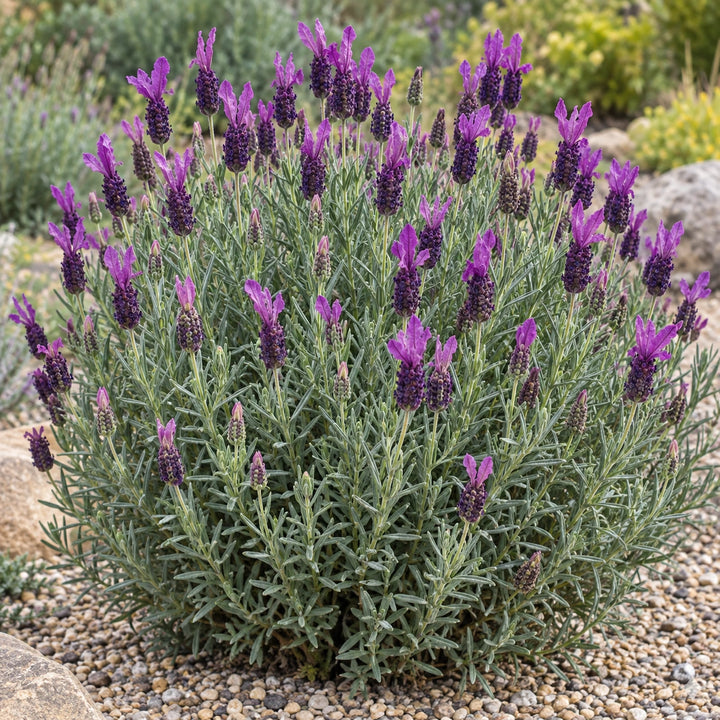
Otto Quast lavender is a Spanish lavender with an upright attitude. It grows about 30 inches tall but only about 20 inches wide, forming a bushy, mounding plant of gray-green foliage crowned with purple flower heads and their signature top bracts. The fragrance is bold and resinous, with camphor and eucalyptus-like notes.
Taller-than-wide is a useful shape. It means more flowers at eye level and less plant spilling into the path.
Otto Quast at a glance
| Trait | What to expect |
|---|---|
| Botanical name | Lavandula stoechas 'Otto Quast' |
| Flowers | Purple heads with purple bracts |
| Foliage | Gray-green |
| Habit and size | Mounding, upright and bushy; about 30 inches tall and 20 inches wide |
| Bloom | Starts early May, peaks late May, high rebloom |
| Hardiness | USDA zones 7a to 9b |
| Fragrance | Bold, resinous and herbal |
| Wildlife | Great for pollinators; deer resistant |
Using an upright Spanish lavender
Otto Quast's narrow, upright shape makes it a natural for tall containers: a pair of urns by a front door, a row of pots on deck steps or a single tall planter as a patio focal point. In mild-climate gardens, plant it in the middle of a sunny border where it rises above low herbs and groundcovers without crowding them. Its purple heads look especially good against white walls, pale gravel and silver foliage.
Winter strategy for colder zones
Otto Quast is rated for zones 7a to 9b. In colder gardens, including much of the Great Lakes region, plan for one of two approaches:
- Container and shelter: grow it in a pot with gritty mix and drainage holes, then move it before hard frost to a cool, bright, frost-free spot. Water lightly through winter.
- One-season color: plant it for spring and summer bloom and replant the next year.
Look up your zone with the USDA Zone Finder.
Care for nonstop heads
- Sun: full sun, six to eight hours or more.
- Soil: sandy or gravelly and very fast-draining.
- Water: regularly while rooting in, then only when the top few inches are dry.
- Deadheading: clip spent heads back to the foliage. Otto Quast has a high rebloom rating and responds well.
- Shaping: a light trim after each major flush keeps it full. Avoid cutting into bare wood.
- Feeding: very light.
Cutting and formats
The upright stems are good for fresh cut flowers; the heads dry only fairly, so enjoy them in a vase rather than a bundle. It is grown for fragrance and ornament and is not recommended for culinary use. Bees and butterflies visit it often, and deer usually leave it alone.
Otto Quast is offered as 3-inch plugs, 4-inch pots and 1-gallon pots. See the product page for current sizes and availability.
For tall pots, choose a heavy container or add a layer of gravel at the bottom of the mix for stability, since an upright plant in full flower can catch the wind. Turn the pot every week or two so it grows evenly toward the sun.
Frequently asked questions
Why is Otto Quast taller than it is wide?
Its upright, mounding habit grows to about 30 inches tall and 20 inches wide, which suits tall pots and narrow spaces.
Can Otto Quast overwinter outdoors in Michigan?
Usually not. It is rated for zones 7a to 9b. Shelter potted plants indoors in a cool, bright, frost-free place over winter.
Is it edible?
It is not recommended for culinary use. Grow an English lavender for the kitchen.
















Share how it went in your field