

Use & Care NotesLavender Plants
Pacific Pink Lavender: An Early Pink for Borders and Baking
 Save
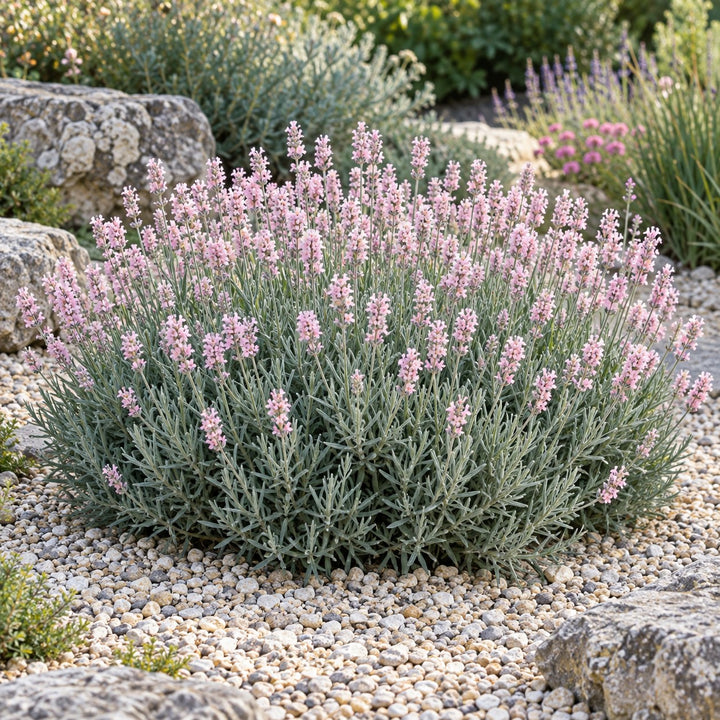
Pacific Pink lavender is an English lavender with soft pink flowers that arrive early, starting in early June and peaking by mid-June. The plant is compact and bushy, about 24 inches tall and up to 36 inches wide, with gray-green foliage and the sweet, low-camphor scent that English lavenders are known for.
Pink lavender tends to stop people mid-sentence. It is a good conversation starter that also happens to be useful in the kitchen.
Pacific Pink at a glance
| Trait | What to expect |
|---|---|
| Botanical name | Lavandula angustifolia 'Pacific Pink' |
| Flower color | Pink |
| Foliage | Gray-green |
| Habit and size | Compact and bushy; about 24 inches tall and 36 inches wide |
| Bloom | Starts early June, peaks mid-June, moderate rebloom |
| Hardiness | USDA zones 5a to 8b |
| Fragrance | Sweet floral, soft herbal, low camphor |
| Culinary | Rated great |
Designing with an early pink
Pacific Pink blooms ahead of many purple English lavenders, so it opens the season with a soft pink note. Plant it in front of later purple and blue cultivars and the bed shifts from pink to purple as summer goes on. It also pairs well with its namesake, Pacific Blue, for a pink-and-blue combination that overlaps in June.
For a pastel border, add white lavender and silver-leaved herbs. Use the Lavender Bloom Calendar to see which cultivars overlap.
Planting and spacing
- Sun: full sun all day if possible.
- Soil: lean and fast-draining; sandy or loamy is ideal. Raise beds in clay.
- Spacing: about 30 to 36 inches to allow for its spread.
- Depth: set the crown level with the soil and keep organic mulch away from it.
- First season: water deeply when the top few inches dry out.
Care after bloom
Since Pacific Pink finishes its first flush by late June, it is one of the first lavenders you will prune each year. Shear the mound lightly, cutting through the spent stems and a little of the leafy growth, but stay above the bare wood. That trim keeps the plant compact and encourages a moderate rebloom later in summer. Feed lightly, if at all, and water only in long dry spells once established. Through winter, keep the crown dry and free of heavy mulch.
Harvest and uses
Pacific Pink is rated great for culinary use. Harvest buds in June when they are colored but mostly unopened, then dry in the shade and store airtight. Pink buds give lavender sugar and shortbread a gentle blush. Use only plants grown and handled as a food crop and start with small amounts. Cut stems also work in small fresh posies and dried bundles; for the best pink, dry them in the dark. It is great for pollinators and deer resistant.
It is offered as 3-inch plugs, 4-inch pots and 1-gallon pots. See the product page for current sizes and availability.
Frequently asked questions
Does pink lavender keep its color when dried?
Pink tends to soften as it dries. Cut early, dry in a dark, airy place and store away from sunlight to keep as much color as possible.
Is Pacific Pink hardy?
It is an English lavender rated for zones 5a to 8b, and it handles cold best in well-drained soil.
Can I cook with it?
Yes. It is rated great for culinary use. A little goes a long way.
















Share how it went in your field