

Use & Care NotesLavender Plants
Patleigh Lavender: Yellow Bracts and Citrus-Scented Leaves
 Save
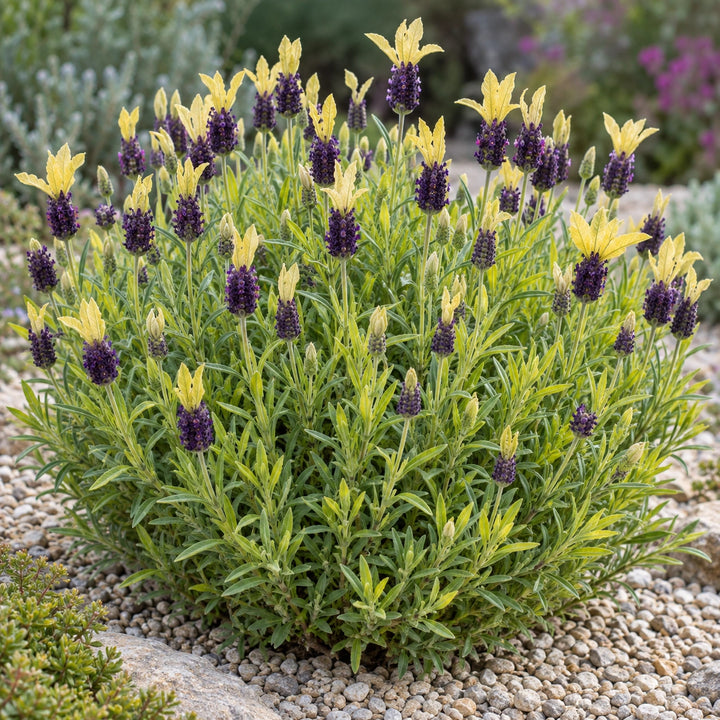
Patleigh lavender breaks the usual lavender color rules. This Spanish lavender carries dark purple flower heads topped with yellow bracts, over yellow-green foliage that smells of citrus when you brush it. It was discovered as a seedling among Lavandula stoechas, and its exact parents are unknown.
It stays small, about 13 inches tall and 18 inches wide, with an upright, spreading, rounded habit. A conversation piece that fits on a patio table.
Patleigh at a glance
| Trait | What to expect |
|---|---|
| Botanical name | Lavandula stoechas 'Patleigh' |
| Flowers | Dark purple heads with yellow bracts |
| Foliage | Yellow-green, citrus-scented |
| Habit and size | Upright, spreading and rounded; about 13 inches tall and 18 inches wide |
| Bloom | Starts mid-April, peaks early May, high rebloom |
| Hardiness | USDA zone 8b; documented to roughly 16°F (about -9°C) |
| Fragrance | Moderate; citrus-scented foliage |
| Best uses | Pollinators, fragrance, dried flowers, fresh bouquets |
A lavender that does not look like lavender
Yellow bracts over dark purple heads make a high-contrast combination, and the yellow-green foliage repeats the brighter tone, so the whole plant glows. Use it where it will be seen up close: a tabletop pot, a window box, the front of a container grouping or beside purple and silver plants that echo its colors. Brushing the leaves releases a citrus scent, a nice surprise for anyone expecting classic lavender.
Growing it in pots
With hardiness listed at zone 8b and documented cold tolerance only to about 16°F, Patleigh is best grown in a container in colder regions.
- Pot: a small to medium container with drainage holes; terracotta helps the mix dry evenly.
- Mix: gritty and fast-draining.
- Light: full sun outdoors from spring to fall.
- Winter: before frost, move it to a cool, bright, frost-free place and water sparingly. The Frost Date Estimator helps time the move.
In zone 8b and warmer, it can grow in the ground in sharp-draining soil and full sun.
Care for repeat bloom
- Deadhead faded heads back to the foliage; its rebloom is rated high.
- Water when the top inch or two of the mix is dry.
- Feed lightly, if at all, to keep the plant compact.
- Trim lightly after a big flush, avoiding bare wood.
Cutting, drying and formats
Patleigh is rated good for both fresh and dried flowers, so the yellow-and-purple heads can go into small posies or dried arrangements. Cut for drying when the bracts are fully colored and hang small bunches in a dark, airy spot. It is not recommended for culinary use. Pollinators visit it often, and deer generally avoid it.
It is offered as 3-inch plugs, 4-inch pots and 1-gallon pots. See the product page for current sizes and availability.
For a striking container combination, pair Patleigh with a dark purple Spanish lavender or a silver-leaved herb that likes the same lean mix. The yellow bracts and citrus-scented leaves stand out even more beside darker or cooler tones, and the whole group can come indoors together for winter.
Frequently asked questions
Why are the bracts yellow?
That is Patleigh's signature trait. It was found as a seedling among Spanish lavenders and carries yellow bracts above dark purple flowers.
Do the flowers smell like citrus?
The citrus scent comes from the foliage. Brush or rub the leaves to release it.
Can Patleigh survive outside in Michigan?
Not over winter. Its hardiness is listed at zone 8b, so overwinter potted plants indoors in a cool, bright spot.
















Share how it went in your field