

Product Field NotesCompanion Plants
Perfectly Picasso Speedwell: Pink Brushes Dipped in White
 Save
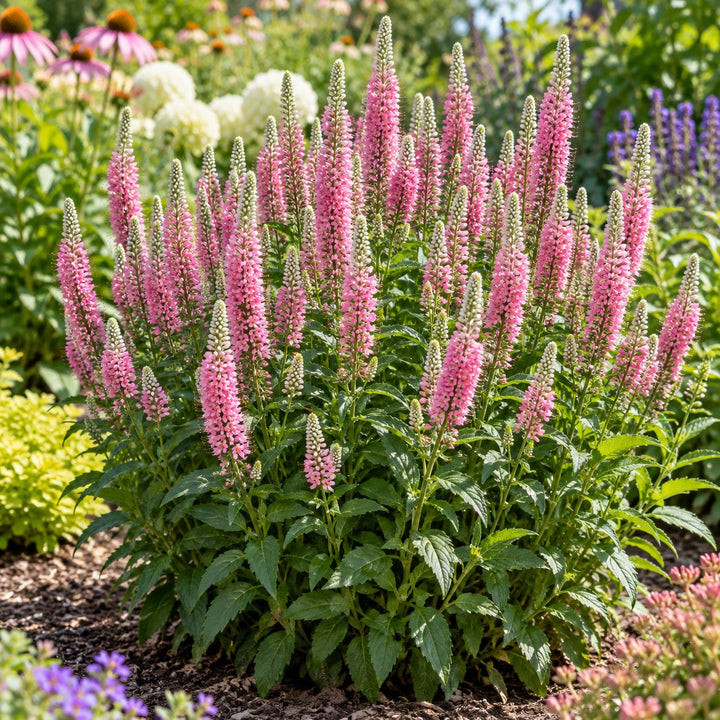
Perfectly Picasso spike speedwell carries thick, paintbrush-like spikes with near-white buds at the tips and medium pink open flowers below, so each spike shows two colors at once. The spikes cover the top half of a rounded clump of healthy, finely toothed green leaves, and at peak the plant looks like a mound bristling with pink brushes dipped in white paint.
At about 2 feet tall, it fits the middle of a sunny border and blooms from midsummer into late summer.
Perfectly Picasso at a glance
| Trait | What to expect |
|---|---|
| Botanical name | Veronica 'Perfectly Picasso' |
| Flowers | Medium pink with white buds, on 4 to 8 inch spikes |
| Foliage | Medium green, lance-shaped, finely toothed |
| Size | 22 to 26 inches tall, 22 to 24 inches wide |
| Bloom | Starts early July, peaks late July, moderate rebloom |
| Hardiness | USDA zones 4 to 8 |
| Light | Full sun to part shade |
| Wildlife | Excellent for bees and butterflies; deer resistant |
Spikes beside spikes
Speedwell's slender, upright spikes echo lavender's form, so the two look like they belong together. Pink and white next to purple is a soft, cottage-garden palette, and because Perfectly Picasso starts in early July it extends the season of spiky color after the first lavender flush.
The one difference is water. Speedwell likes soil that does not stay dry for long, while lavender prefers to dry out. Plant it on the outer edge of the lavender bed, where a hose or a little runoff reaches it, rather than deep among the mounds. For more contrast, pair it with a violet speedwell nearby. Plan it in the Companion Plant Planner.
Planting and care
- Soil: average and well drained, but not bone dry for long stretches.
- Heat: in hot, dry spells bloom slows and lower leaves may brown, so water during dry weather.
- Deadheading: cut each spent spike back to the next set of side buds to keep new spikes coming.
- Dividing: lift and split crowded clumps every few years in spring.
- Winter: hardy in Michigan within its zone range. Cut back spent stems in fall or early spring and keep the crown in well-drained soil.
For bouquets and bees
The spikes rate well as cut flowers, and their two-tone look adds interest to a vase of fresh lavender and other summer stems. In the garden they are an excellent pollinator plant; expect the same bees that work your lavender to move straight over. The Cut Flower Planner can help you plan a cutting row.
Plug tray or bare root
It is offered as a 72-cell plug tray for borders and mass plantings and as a bare root plant for a single clump. See the product pages for current availability.
Frequently asked questions
Why does each spike look two-toned?
The buds start near white and open medium pink from the bottom up, so each spike shows both colors.
Will deer eat it?
Deer usually leave speedwell alone.

































Share how it went in your field