

Product Field NotesCompanion Plants
Periwinkle Popsicle False Indigo: A Late Blue Vase Over Lavender
 Save
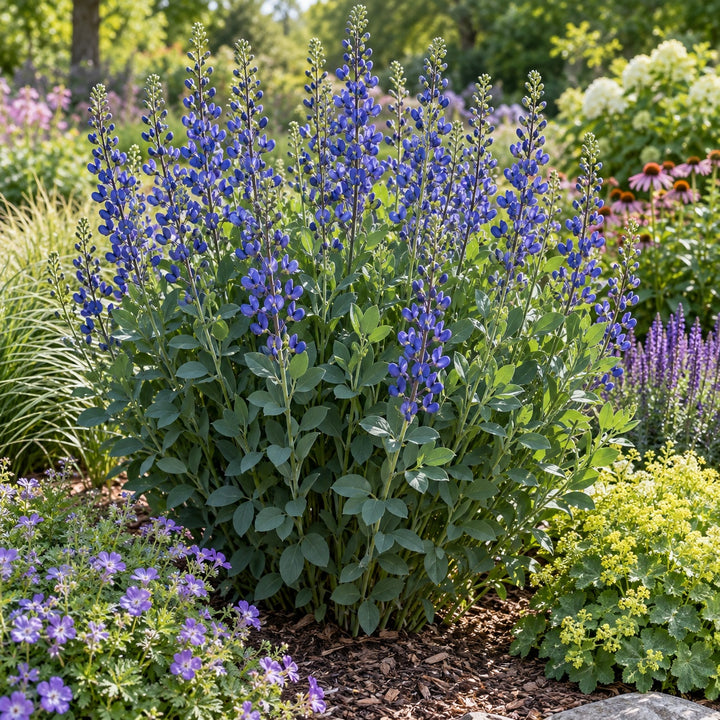
Periwinkle Popsicle false indigo is an upright, dark blue Baptisia with an elegant vase shape that is taller than it is wide. Spikes 10 to 14 inches long of pea-shaped flowers in deep periwinkle to dark blue rise above three-parted, blue-green leaves. It flowers later than most false indigos, just as other varieties are finishing, which stretches the season of blue.
At 4 to 4½ feet tall it makes a strong backdrop, and its narrow base leaves room for planting around it.
Periwinkle Popsicle at a glance
| Trait | What to expect |
|---|---|
| Botanical name | Baptisia 'Periwinkle Popsicle' |
| Flowers | Dark periwinkle blue, on 10 to 14 inch spikes |
| Foliage | Blue-green, three-parted leaves |
| Size | 48 to 54 inches tall, about 42 inches wide |
| Bloom | Early to mid-June, later than most false indigos |
| Hardiness | USDA zones 4 to 9 |
| Light | Full sun to part shade |
| Wildlife | Great for pollinators; deer resistant |
A true partner for a lavender bed
False indigo wants the same lean, sunny, well-drained soil as lavender and is drought tolerant once its taproot is down, so the two can genuinely share a bed. The vase shape is the clever part. Because the plant is narrow at the base and wide at the top, you can tuck lavender around its feet without the two fighting for space or light.
Its late bloom also lines up well. Periwinkle Popsicle flowers in June, overlapping lavender's first bloom, so dark blue spires rise above purple mounds at the same time. Plan the layout in the Companion Plant Planner.
Planting for the long haul
- Choose the spot carefully. Established plants have a deep taproot and do not like to be moved.
- Be patient. It takes a couple of seasons to settle in before it really performs, then it is very long lived.
- Drainage matters. Soggy winter soil is the main cause of loss; plant where water drains away.
- No fuss after that. It is fully hardy in Michigan with no winter protection.
After the flowers
Spikes pass more quickly in a hot spring, so bloom can be shorter some years. Once flowering ends, dark seed pods form. Cut stems down in late fall, or leave the pods standing for winter interest; they rattle in the wind. The flowers also cut well for early summer bouquets.
Good to know
False indigo contains alkaloids and is considered mildly toxic if eaten, so it is strictly ornamental. The bare root plant should be planted with the crown just below the soil surface; see the product page for current availability.
Frequently asked questions
Is false indigo native?
Baptisia is native to North America and a classic of prairie and meadow plantings.
Why has my plant not bloomed yet?
Young plants spend their first seasons building roots. Flowering improves as the plant settles in.

































Share how it went in your field