

Product Field NotesCompanion Plants
Persian Ruby Daylily: Huge Spidery Rubies With Green Throats
 Save
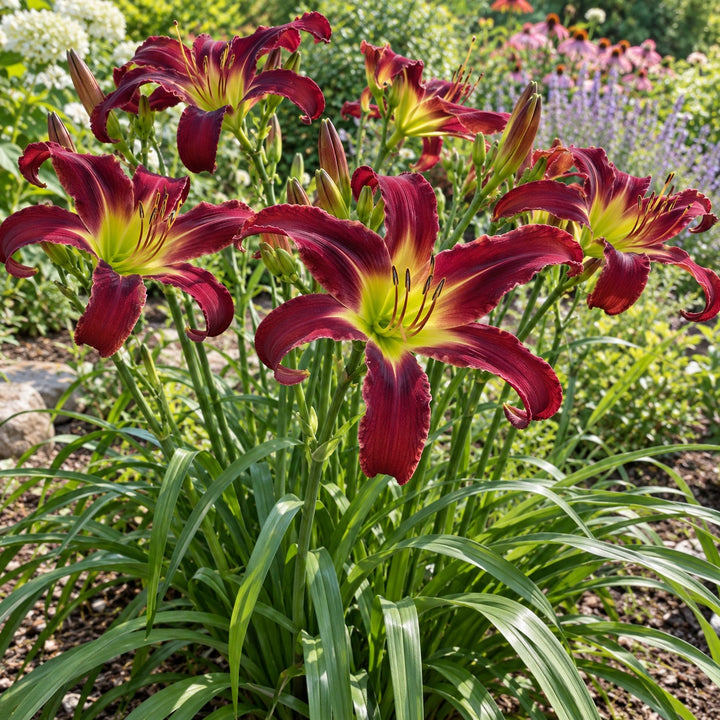
Persian Ruby daylily produces massive spider-type flowers nearly 8 inches across. Its long, narrow, spoon-shaped petals in deep purplish red spread wide around a large bright green throat, and the contrast between dark petals and green center is what stops people on the path. It has earned honors from daylily growers for both merit and extra-large bloom size.
A high bud count means the plant bursts into bloom in early to mid-July, with many big flowers open at once on 30-inch scapes.
Persian Ruby at a glance
| Trait | What to expect |
|---|---|
| Botanical name | Hemerocallis 'Persian Ruby' |
| Flowers | Spider form, nearly 8 inches, deep purplish red with a large green throat |
| Size | Scapes about 30 inches; foliage about 18 inches tall, 18 to 24 inches wide |
| Bloom | Starts early July, peaks mid-July, one main flush lasting several weeks |
| Hardiness | USDA zones 3 to 9 |
| Light | Full sun to light part shade |
| Foliage type | Dormant; dies back in fall |
| Deer | Susceptible |
Drama behind the lavender
Deep purplish red is one of the richest partners for lavender's purple, close enough in tone to feel related but dark enough to add depth. Planted behind a row of lavender, Persian Ruby's 30-inch scapes lift the big spidery flowers above the purple spikes, and its arching leaves fill in the back of the bed after the lavender has been sheared.
Both plants like full sun and soil that drains, and once established the daylily handles heat, clay and dry spells without asking for extra water. Leave a gap between the daylily clumps and the lavender so air can move around the lavender crowns. Plan the layers in the Companion Plant Planner.
Keeping the color rich
Dark daylily petals can fade or scorch in strong afternoon sun. If your lavender bed has a spot that catches a little shade late in the day, from a fence, a building or a tree, that is the ideal place for Persian Ruby. It still needs at least six hours of sun for good bloom.
Care through the year
- During bloom: each flower lasts a day. Snap off faded flowers to keep the clump tidy.
- After bloom: cut bare scapes to the base.
- Problems: generally trouble-free; watch for leaf streak in wet years and crown rot in soggy soil.
- Fall: it is a dormant type that dies back completely. Clean up the foliage after a hard frost.
- Every few years: divide crowded clumps to keep blooms large.
Planting the bare root
Spread the roots over a mound of soil in a wide hole, set the crown about an inch below the surface and water well. Fully hardy in Michigan; avoid soggy winter soil. See the product page for current availability.
Frequently asked questions
What is a spider daylily?
Spider types have long, narrow petals that spread wide, giving a looser, more open flower than the round, ruffled forms.
Is it safe for cats?
No. All parts of daylilies are toxic to cats.
Does Persian Ruby rebloom?
It has one main flush that lasts several weeks rather than repeated rounds.

































Share how it went in your field