

Product Field NotesCompanion Plants
Pilioseum Hen and Chicks: Soft Gray-Green Rosettes for Stone
 Save
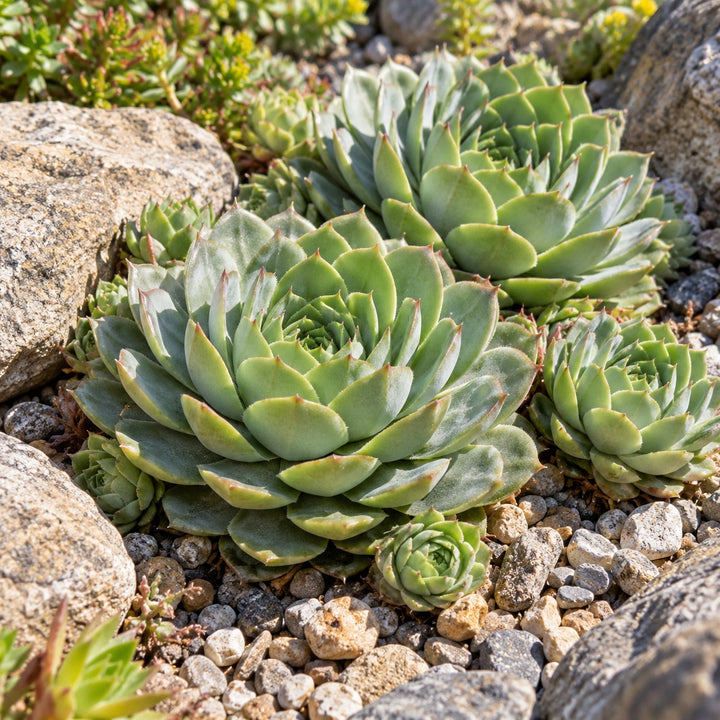
Pilioseum hen and chicks forms medium to large rosettes, 3 to 4 inches across, of thick, fleshy, pointed leaves in soft gray-green. The rosettes are rounded but slightly loose, and the color can warm or cool from season to season, so the planting looks a little different each time you walk past.
Like all Sempervivum, the main rosette surrounds itself with chicks that knit into a tight mat over time.
Pilioseum at a glance
| Trait | What to expect |
|---|---|
| Botanical name | Sempervivum 'Pilioseum' |
| Rosettes | 3 to 4 inches, soft gray-green, rounded and semi-loose |
| Size | 3 to 4 inches tall, 6 to 8 inches wide as a cluster |
| Flowers | Occasional short stalk of star-shaped flowers |
| Hardiness | USDA zones 3 to 8 |
| Light | Full sun |
| Foliage | Evergreen through winter |
| Deer | Resistant |
Made for the stone edges of a lavender garden
Lavender gardens tend to come with stone: gravel mulch, a dry-stack wall, flagstones along a path. Those hard, sun-baked spots are where Pilioseum is happiest, and they are the same conditions lavender loves. Tuck rosettes into wall crevices, between pavers or into gravel at the front of the bed, and they will fill the gaps that nothing else wants.
The soft gray-green tone sits beautifully beside lavender's silver foliage, and the round, low rosettes contrast with lavender's upright stems. Plan your stone and gravel pockets in the Companion Plant Planner.
Planting in walls and cracks
- Work a little gritty soil into the crevice or crack first.
- Press the rosette in so its base touches the soil; a small chick with a bit of stem roots quickly.
- Water lightly once to settle it, then leave it mostly alone.
Care and the flowering cycle
- Water: very little. It rots in wet soil.
- Summer: rosettes may close up and lose some color in the hottest weeks, then recover in fall.
- Flowering: a mature rosette occasionally sends up a stalk of star-shaped flowers, then dies. Cut off the spent stalk and fill the gap with a chick.
- Winter: fully hardy in Michigan and evergreen. Do not mulch over the rosettes.
Sharing the chicks
Extra chicks can be lifted and replanted whenever you like, which makes hens and chicks one of the easiest plants to multiply or share. A shallow bowl of rosettes also makes a sweet, low-fuss gift for a sunny windowsill or step; pair it with a potted lavender for a matched set. See the product page for current availability.
Frequently asked questions
Why do my rosettes look different in fall?
Pilioseum's tone shifts with the seasons, often warming or cooling as temperatures change.
Can I grow it in a pot?
Yes. Use a shallow pot with a drainage hole and a gritty mix.

































Share how it went in your field