

Product Field NotesCompanion Plants
Pink-a-Blue Lungwort: Spring Bells and Silver Spots for the Shade
 Save
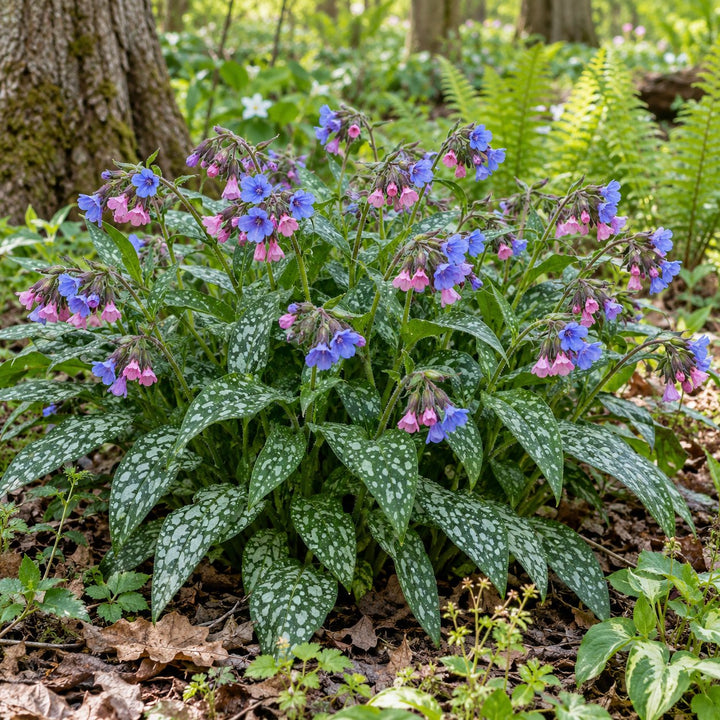
Pink-a-Blue lungwort is one of the first perennials to flower in a shade garden. Its nodding clusters hold rosy pink buds and freshly opened sky-blue bells at the same time, so every stem looks two-toned. When the flowers finish, long, dark green leaves splashed with silver spots take over and keep the shady corner bright until frost.
To be honest about it: lungwort and lavender want opposite things. Lavender wants hot sun and dry roots; lungwort wants shade and soil that stays moist. It belongs on the shady side of the garden, not in the lavender bed.
Pink-a-Blue at a glance
| Trait | What to expect |
|---|---|
| Botanical name | Pulmonaria 'Pink-a-Blue' |
| Flowers | Pink buds opening to medium blue, both showing at once |
| Foliage | Long, narrow, dark green with many silver spots |
| Size | Leaf mound 16 to 18 inches tall and about 2 feet wide after bloom |
| Bloom | Starts late April, peaks mid-May |
| Hardiness | USDA zones 3 to 9 |
| Light | Part to full shade |
| Deer | Resistant; rabbits tend to leave it alone too |
Where it fits in a lavender garden
Most properties with a sunny lavender bed also have a shady patch: the north side of the house, the ground under a maple, the strip along a fence. Pink-a-Blue is a strong choice there. It blooms in April and May, long before lavender, so the garden has color in spring, and its silver-spotted leaves echo lavender's silvery foliage from the other side of the yard.
Pair it with hostas, ferns and other shade plants, and keep it well away from the dry lavender bed. The Companion Plant Planner lets you plan sunny and shady beds together.
Keeping the leaves handsome
- Shade from midday on: leaves scorch and wilt in hot afternoon sun or dry soil.
- Moisture: water during summer dry spells. Lungworts dry at the roots are more prone to powdery mildew, though this cultivar was selected for good mildew resistance.
- After bloom: cut off the old flower stems so fresh foliage fills in.
- Slugs: they may chew the leaves, so keep an eye out in damp weather.
- Dividing: split crowded clumps in early fall if needed.
Winter and early spring
Pink-a-Blue is very hardy in Michigan, and the leaves often hang on into early winter. In early spring, cut away the tattered old leaves before the flowers emerge, and avoid sites that stay waterlogged through winter.
About the plug tray
It is offered as a 72-cell plug tray, which works well for underplanting a group of trees or filling a long shady border. See the product page for current availability.
Frequently asked questions
Why are the flowers two colors?
Each flower opens pink and matures to blue, so buds and older flowers share the same cluster.
Can I grow it in the lavender bed if I water it more?
Extra water in a lavender bed usually harms the lavender. Give lungwort its own shady spot instead.
Is it a groundcover?
It forms a dense, spreading clump, and a group of plants makes an effective groundcover under trees.















Share how it went in your field