

Product Field NotesCompanion Plants
Pinkapotamus Daylily: Ruffled Rosy Pink in Lavender's Sun
 Save
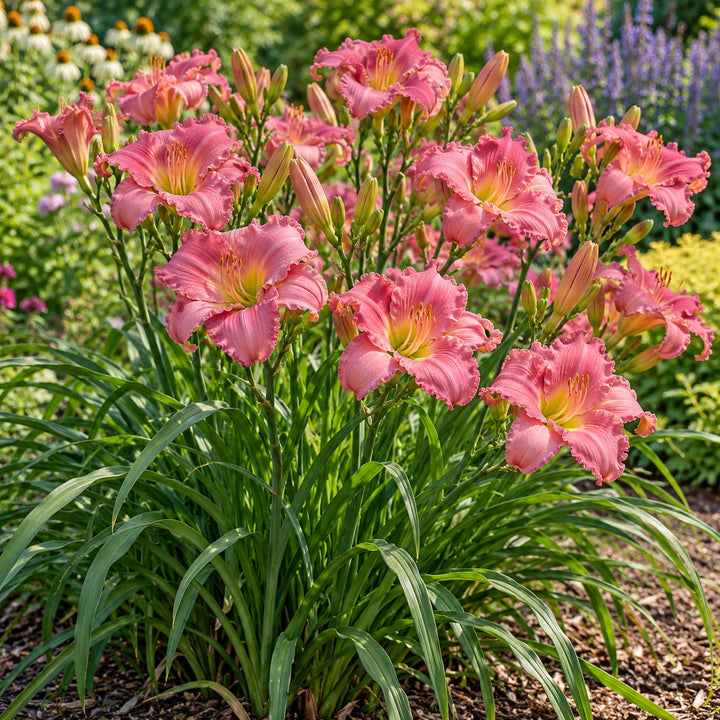
Pinkapotamus daylily has a big name and modest flowers, in the best way. Its blooms are about 4.5 inches across, rich rosy pink with ruffled edges and a yellow-green throat, and what they lack in size they make up for in sheer number. Well-branched scapes carry a high bud count, so the clump stays thickly covered for weeks.
It is a compact, uniform plant, and it likes the same full sun lavender does. Rosy pink and lavender purple are an easy, soft color match.
Pinkapotamus at a glance
| Trait | What to expect |
|---|---|
| Botanical name | Hemerocallis 'Pinkapotamus' |
| Flowers | Rosy pink, ruffled, about 4.5 inches across, yellow-green throat |
| Foliage | Arching, strap-shaped, medium green |
| Size | Foliage about 16 inches tall; scapes 24 to 26 inches; 18 to 24 inches wide |
| Bloom | Starts late June, peaks mid-July, reblooms into late summer |
| Hardiness | USDA zones 3 to 9 |
| Light | Full sun to light part shade |
| Deer | Susceptible |
How it plays with lavender
Daylilies bring a shape lavender lacks: broad, open trumpets on top of a fountain of arching leaves. Set a few clumps of Pinkapotamus behind or between lavender plants, and the purple spikes get a soft pink backdrop in July. Since it reblooms through late summer, it keeps color going after the main lavender harvest.
Daylilies are tougher about soil than lavender, handling clay and dry spells once established, so they can also bridge the transition from a lavender bed to wetter or heavier parts of a border. Keep the arching leaves from flopping onto lavender mounds, which need their airflow. The Companion Plant Planner helps with spacing.
Daylily care in a nutshell
- Sun: at least six hours for the best bloom. It is very heat tolerant.
- Deadheading: each flower lasts one day. Snap off spent blooms and pull finished scapes to keep new buds coming.
- Wet seasons: blooms can spot after rain, and leaf streak is more common in wet, humid summers.
- Dividing: split crowded clumps every few years.
- Winter: hardy in Michigan within its zones. Cut foliage back after hard frost, mulch new plantings the first winter and avoid soggy soil.
Planting a bare root daylily
Pinkapotamus is offered as a dormant bare root plant. Soak the roots briefly if they look dry, then spread them over a small mound of soil in a wide hole, with the crown sitting about an inch below the surface. Firm the soil and water well. See the product page for current availability.
Frequently asked questions
Are daylilies safe around cats?
No. All parts of daylilies are toxic to cats, so plant them where curious cats will not chew on them.
Will deer eat it?
Daylilies are a deer favorite. In deer country, plant them closer to the house or behind a fence, and let the lavender stand guard out front.
Can I cut the flowers?
Each bloom lasts a day, so they are poor cut flowers. Enjoy them in the garden.















Share how it went in your field