

Product Field NotesCompanion Plants
Pink Chenille Bee Balm: Fluorescent Pink Heads, Two Flushes
 Save
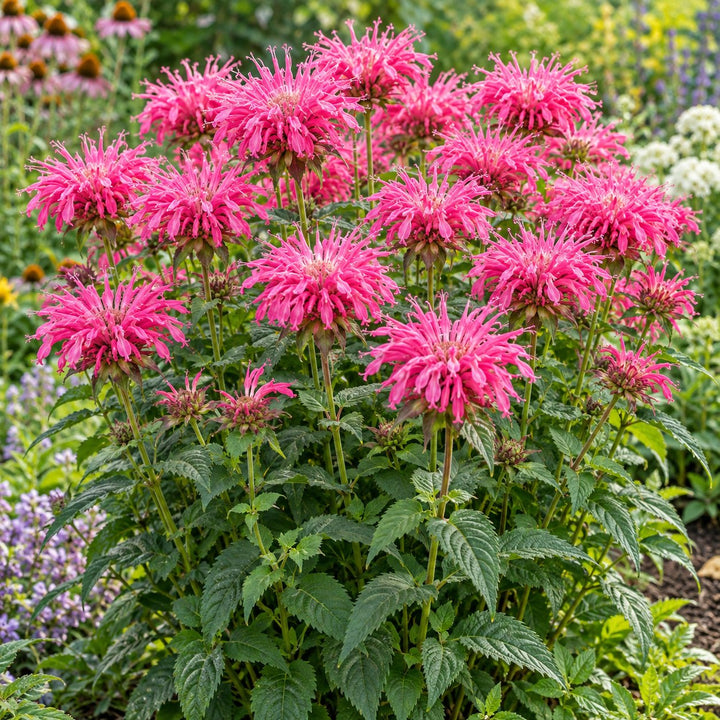
Pink Chenille bee balm has very large, shaggy flower heads, about 3.5 inches across, in fluorescent pink that fades to a lighter pink toward the center. The two-tone heads sit on wine-colored bracts at the ends of well-branched stems, and at peak they cover the top half of the plant. It is a color you will not miss from across the yard.
At 20 to 22 inches tall and wide, it is a solid middle-of-the-border size.
Pink Chenille at a glance
| Trait | What to expect |
|---|---|
| Botanical name | Monarda 'Pink Chenille' |
| Flowers | About 3.5 inches, fluorescent pink with paler centers |
| Foliage | Glossy medium to dark green, minty when brushed |
| Size | 20 to 22 inches tall, 18 to 22 inches wide |
| Bloom | Starts early July, peaks late July, repeat flush when deadheaded |
| Hardiness | USDA zones 4 to 8 |
| Wildlife | Excellent for bees, butterflies and hummingbirds; deer resistant |
| Disease | Strong powdery mildew resistance |
Bright pink next to soft purple
Pink Chenille is not a subtle plant, and that is the point. Its fluorescent heads make lavender's purple look cooler and calmer by comparison, and the shaggy round flowers contrast nicely with lavender's slim spikes. It blooms in early July, as the first lavender flush fades, so the pollinators working your lavender simply shift a few feet over.
Keep the two in neighboring beds rather than mixed together. Bee balm wants richer, evenly moist soil, and the extra water would not suit lavender. A path between them is ideal. Plan the layout in the Companion Plant Planner.
Getting two rounds of flowers
- The first flush lasts about 3 to 4 weeks from early summer.
- As heads fade, cut them back to the next set of side shoots.
- The well-branched stems follow with a second flush that extends the season.
- Water during dry spells; drought stress makes mildew worse.
Care through the year
- Airflow: give it room around the stems to keep leaves clean.
- Spread: it spreads by shallow rhizomes. Divide every 2 to 3 years in spring to keep the center vigorous.
- Winter: very hardy in Michigan. Cut stems back in fall or leave them until spring.
Tea, garnish and cut flowers
The minty foliage can be used for herbal tea, and the leaves and flowers are edible as a garnish, like other bee balms. The heads also make good cut flowers; a few fluorescent pink heads in a jar with fresh lavender is a cheerful summer combination.
Frequently asked questions
Is it better in a pot or in the ground?
Both work. Its size suits a big container, as long as you water regularly.
How does it compare with the shorter Pardon My bee balms?
Pink Chenille is taller and has even larger heads, with a two-tone pink look and a second flush.

































Share how it went in your field