

Product Field NotesCompanion Plants
Pineapple Sage: A Fruity-Scented Herb for the Lavender Garden
 Save
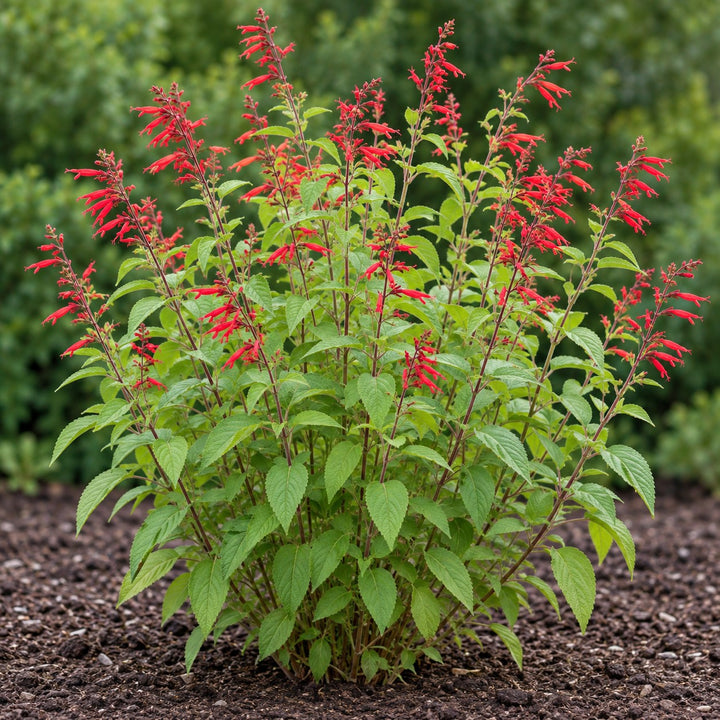
Pineapple sage, Salvia elegans, is a tender sage with soft, velvety, light green leaves that smell like pineapple when you crush them. It grows fast and upright in summer heat, and very late in the season it can send up spikes of bright scarlet, tubular flowers that hummingbirds adore.
In Michigan, grow it as an annual or a potted plant you bring indoors. Grow it mainly for the leaves, and count any flowers as a bonus.
Pineapple sage at a glance
| Trait | What to expect |
|---|---|
| Botanical name | Salvia elegans |
| Scent | Pineapple, from crushed leaves |
| Flowers | Bright scarlet tubes, 1 to 2 inches, very late in the season |
| Size | 24 to 60 inches tall, 36 to 48 inches wide |
| Bloom | Starts late September, peaks mid-October |
| Hardiness | USDA zones 8a to 10b; grown as an annual in zones 5 and 6 |
| Water | Moderate; wilts when dry |
| Culinary | Good: leaves and flowers are edible |
Growing it alongside lavender
Pineapple sage and lavender both love sun, but pineapple sage wants more water than lavender and wilts when it dries out. Rather than mixing them in one bed, grow it in a kitchen garden bed or a large container near the lavender, where you can water it regularly. Together they make a fragrant herb corner: lavender's floral scent on one side, pineapple on the other.
It is a big plant by fall, up to 5 feet tall, so give it room at the back of a bed and some shelter from wind, since tall stems can break. Plan it in the Companion Plant Planner.
About those late flowers
Pineapple sage is a short-day plant, which means it waits for the shorter days of fall to bloom. In the Midwest, the red flowers often do not appear before the first frost, and night lighting near the plant can delay them further. If you want to see the flowers, pot it up and bring it inside before frost, or simply enjoy the leaves.
Using the leaves
- Muddle fresh leaves into iced tea, lemonade or sparkling water.
- Chop them into fruit salads for a pineapple-herbal note.
- Use them in jellies or as a garnish on desserts and drinks.
- The flowers are edible too, with a sweet, fruity flavor.
Pick from plants grown as food, and use leaves fresh; the scent fades when dried.
Choosing a size
It is offered as a 3-inch plug, a 4-inch pot and a 1-gallon pot. Because it grows fast, even a plug fills out by midsummer; a gallon gives you leaves to pick right away. See the product page for current sizes and availability.
Frequently asked questions
Will pineapple sage come back next year?
Not outdoors in Michigan. It dies after a hard frost and is hardy only to zone 8.
Do deer eat it?
Deer tend to leave it alone.

































Share how it went in your field