

Product Field NotesCompanion Plants
Pink Fizz Foamy Bells: Pink Wands for the Shady Side of the Garden
 Save
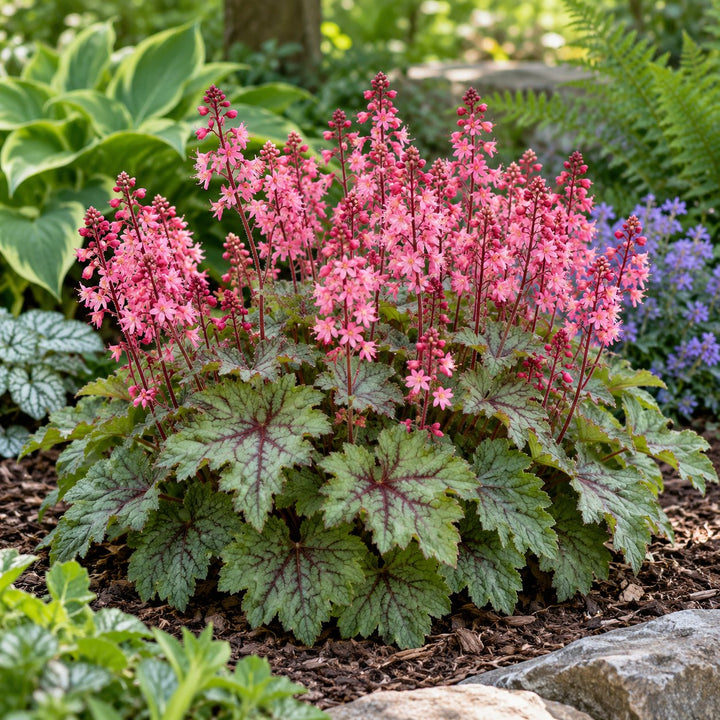
Pink Fizz foamy bells makes a low, full clump of big, deeply lobed leaves washed in silver and traced with dark wine-red to purple veins. In early summer, hot pink buds open into pure pink starry flowers packed tightly on short wands that sit just above the leaves, like a pink band laid across a silvery cushion.
We will be straight with you: this is not a plant for the lavender bed itself. It wants more moisture than lavender ever will. It is, however, a lovely choice for the lightly shaded bed on the other side of the path.
Pink Fizz at a glance
| Trait | What to expect |
|---|---|
| Botanical name | × Heucherella 'Pink Fizz' |
| Flowers | Pure pink stars from hot pink buds on 10- to 13-inch stems |
| Foliage | Soft green with light silvering and wine-red to purple veins |
| Size | About 8 inches tall and 18 inches wide in leaf |
| Bloom | Starts early June, peaks late June, with repeat flowering |
| Hardiness | USDA zones 4 to 9 |
| Light | Full sun to full shade; best leaf color with filtered sun or afternoon shade |
| Deer | Moderately resistant |
Its place in a lavender garden plan
Lavender wants hot sun, lean soil and a dry crown. Pink Fizz wants average to fertile soil that stays evenly moist. Put them side by side and one of them will be unhappy, and it is usually the lavender. So think in zones: lavender out in the open sun, and Pink Fizz along the shady edge of a porch, under a small tree or in a north-facing bed, with ferns and hostas for company.
The two still talk to each other across the garden. The silver wash on Pink Fizz echoes lavender's gray foliage, and its pink wands bloom through early summer as the lavender comes on. The Companion Plant Planner helps you sort sunny and shady spots before you plant.
Keeping it fizzing
- Soil and water: average to fertile, well-drained soil kept evenly moist. Soggy soil is the main risk, since crowns can rot.
- Light: it is bred to handle more sun and heat than older foamy bells, but the leaf color is richest with afternoon shade in hot summers.
- Deadheading: trim spent wands at the base to encourage more flowers.
- Winter: hardy in Michigan in well-drained soil. The semi-evergreen leaves may brown in a hard winter. Mulch lightly after the ground freezes to prevent heaving, then trim damaged leaves in spring.
Containers and cutting
At 8 inches tall, Pink Fizz is a natural for edging and for shady pots, where the leaves carry the display between flushes of bloom. The wands cut well, too, and make a sweet filler for small jars on the kitchen table.
Two tray sizes
Pink Fizz comes as a 72-cell plug tray for larger plantings and growers, and as a 20-cell plug tray with bigger cells for a smaller project. See each product page for current availability.
Frequently asked questions
What is the difference between foamy bells and coral bells?
Foamy bells is a cross between coral bells and foamflower. It tends to have lobed, often veined leaves and dense, frothy flower wands.
Can Pink Fizz take full sun?
It can grow in full sun, but with steady moisture. In hot summers, filtered light or afternoon shade keeps the leaves looking their best.
Is it fragrant?
No. Pink Fizz is grown for its leaves and flowers, not scent. Let the lavender handle that job.

































Share how it went in your field