

Product Field NotesCompanion Plants
Pink Potion Speedwell: Baby-Pink Spires at the Edge of the Lavender
 Save
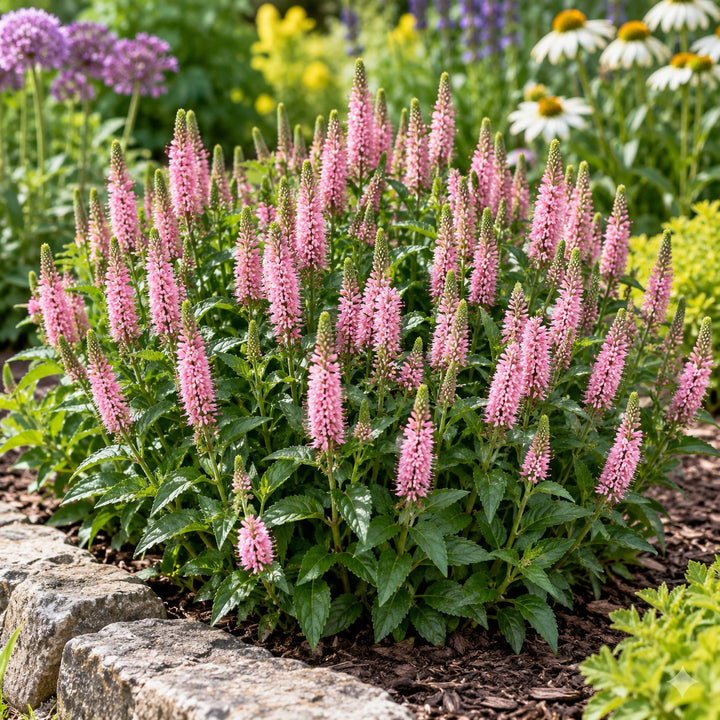
Pink Potion spike speedwell grows wider than most speedwells, so instead of a few spikes poking up, you get a broad, low mound with the whole top half covered in tapering baby-pink spires. From early summer into midsummer it barely takes a break, and the bees seem to know it.
Its spiky flowers are a natural echo of lavender's wands, which makes it a handy way to stretch the look of a lavender planting across more of the summer.
Pink Potion at a glance
| Trait | What to expect |
|---|---|
| Botanical name | Veronica 'Pink Potion' |
| Flowers | Baby pink, on dense spikes 4 to 6 inches long |
| Foliage | Deep green, lance-shaped, finely toothed |
| Size | 14 to 16 inches tall, 18 to 22 inches wide |
| Bloom | Starts mid-June, peaks mid-July, nearly continuous with deadheading |
| Hardiness | USDA zones 4 to 8 |
| Light | Full sun to part shade |
| Wildlife | Excellent for bees and butterflies; deer resistant |
Spikes beside spikes
Some companions work by contrast. Pink Potion works by rhythm. Its pink spires repeat lavender's upright form in a softer color, so a row of lavender with Pink Potion in front reads as one long, layered sweep of spikes: pink low in front, purple behind. Since speedwell peaks in mid-July, it also carries color past the main lavender flush.
The one difference is water. Speedwell likes soil that does not stay dry for long, while lavender would rather go thirsty. Set Pink Potion at the outer edge of the bed, where you can give it an occasional drink without soaking the lavender crowns. Test layouts in the Companion Plant Planner.
A season with Pink Potion
- Spring: clear away last year's stems as new growth appears. Divide crowded clumps every few years at this time.
- Early summer: the first spikes open. Water in dry spells; in heat with no moisture, bloom slows and lower leaves may brown.
- Midsummer: cut each faded spike back to the next set of side buds. New spikes follow.
- Muggy weeks: space plants for airflow to keep powdery and downy mildew down.
- Fall and winter: hardy in Michigan within its zones. Cut stems back in fall or early spring, and make sure the site drains so the crown does not rot.
Fronts, pots and small bouquets
Pink Potion is a vigorous grower that fills in quickly, so it suits edging, containers and the front of any sunny border. The spikes cut well and dry fairly well, and they look sweet bundled with dried lavender stems.
Two ways to plant it
Choose a 72-cell plug tray for a big edging project or for growing on, or a bare root plant to set directly into the garden. See each product page for current availability.
Frequently asked questions
How is Pink Potion different from other pink speedwells?
Its habit is the giveaway: it is wider than tall and very heavily flowered, with cleaner foliage than some older pink types.
Will it bloom again if I cut it back?
Yes. Removing spent spikes to the side buds keeps new spikes coming through summer.















Share how it went in your field