

Product Field NotesCompanion Plants
Pink Pearls Penstemon: Hummingbird Pink for a Dry, Sunny Lavender Bed
 Save
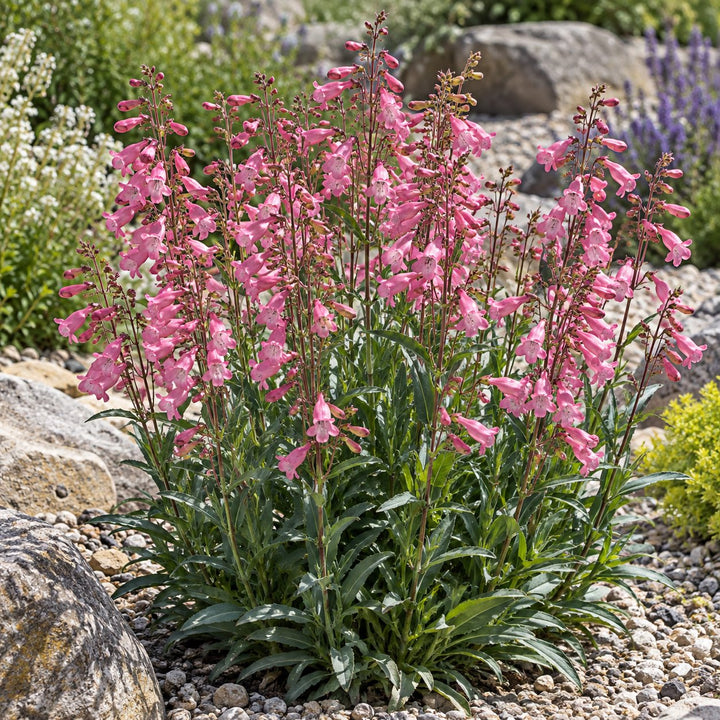
Pink Pearls penstemon is a bearded penstemon, or beardtongue, with slender upright stems lined in inch-long tubular flowers of medium rosy pink. Its kind comes from dry, rocky hillsides in the Southwest, so it arrives in your garden already fond of sun, heat and soil that drains in a hurry.
If that sounds like a description of a good lavender site, you are right. This is one of the more natural partners you can give lavender.
Pink Pearls at a glance
| Trait | What to expect |
|---|---|
| Botanical name | Penstemon barbatus 'Pink Pearls' |
| Flowers | Narrow tubular flowers about an inch long, medium rosy pink, paler inside |
| Foliage | Smooth, lance-shaped, dark blue-green basal clump |
| Size | 16 to 20 inches tall, 20 to 24 inches wide |
| Bloom | Starts late May, peaks mid-June, about four weeks |
| Hardiness | USDA zones 4 to 8 |
| Light | Full sun |
| Wildlife | Great for pollinators and hummingbirds; moderately deer resistant |
A matched pair for pollinators
Pink Pearls opens just as the first lavender flowers do, so the two share their peak in June. Bees work both, and hummingbirds go straight for the pink tubes, which are shaped for their bills. Plant a few penstemon in a loose group at the front or middle of a lavender bed and you get a pink-and-purple mix with a lot of traffic.
The foliage plays along, too. Its dark blue-green leaves hold their color in bright light and sit comfortably beside lavender's silver-gray. Both plants are upright, but the penstemon's flowers are broader and more open, which keeps the pairing from looking repetitive. Lay out your groupings in the Companion Plant Planner.
Growing it well
- Drainage first: it does poorly in wet, heavy ground, especially over winter. Humidity plus heavy soil leads to crown rot.
- Water: regularly in the first season, then only in long droughts. Heat and dry spells are no trouble once it is settled.
- After bloom: cut the flower stalks down to the leafy base. That tidies the plant and encourages a smaller second round in late summer.
- Winter: hardy in Michigan in well-drained soil. Leave the basal foliage in place and keep heavy mulch off the crown.
- Pests: few, beyond the occasional aphids or spider mites.
Rock gardens, gravel and pots
Beyond the lavender bed, Pink Pearls is at home in rock gardens, dry xeriscape plantings and containers with a gritty mix. The stems are fair for cutting, though most people leave them for the hummingbirds.
About the plug tray
Pink Pearls is offered as a 72-cell plug tray, a practical way to plant a long pollinator border or grow on your own plants. See the product page for current availability.
Frequently asked questions
Why is it called beardtongue?
Many penstemons have a fuzzy, hairlike sterile stamen inside the flower that looks a bit like a tiny beard on a tongue. The name stuck.
Is Pink Pearls long lived?
It is considered a long-lived penstemon when its drainage needs are met. Wet winter soil is what shortens its life.
Does it have a scent?
No notable fragrance. It is grown for color and for the pollinators.















Share how it went in your field