

Product Field NotesLavender Plants
Portuguese Giant Lavender: Green Lavender with Pale Yellow Blooms
 Save
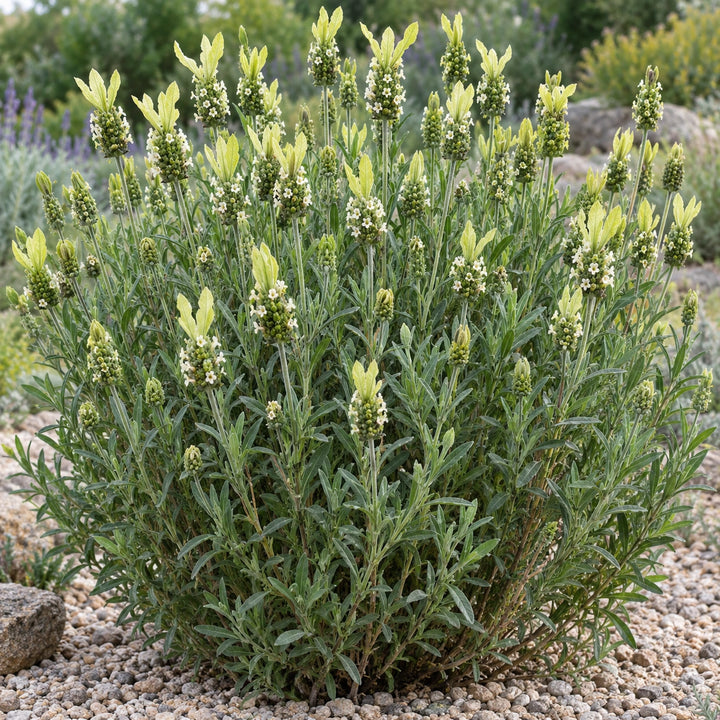
Portuguese Giant lavender belongs to Lavandula viridis, the green lavender, and it looks nothing like the purple plant most people picture. Its flower heads are a soft yellow-green, set over fresh green foliage on a bushy, upright plant about 36 inches tall and wide. The heads carry the topknot bracts typical of its Spanish lavender relatives.
Show it to a friend and ask them to guess what it is. Lavender is rarely the first answer.
Portuguese Giant at a glance
| Trait | What to expect |
|---|---|
| Botanical name | Lavandula viridis 'Portuguese Giant' |
| Flower color | Yellow-green |
| Foliage | Green |
| Size | About 36 inches tall and wide in mild climates |
| Bloom | Starts early May, peaks late May, high rebloom |
| Hardiness | USDA zones 8a to 10b |
| Fragrance | Moderate; resinous and herbal with camphor notes |
| Best uses | Pollinators, fragrance, dried flowers, fresh bouquets |
Designing with green flowers
Green flowers are a designer's secret weapon. They make neighboring colors pop and blend with everything. Pair Portuguese Giant with deep purple lavenders for a striking contrast, with white flowers for a fresh, cool look, or with burgundy foliage for drama. In a container grouping it adds height and an unexpected color, and in a mild-climate garden it can stand as a small, airy shrub.
Its green foliage also sets it apart from the gray and silver tones of most lavenders.
Growing it in pots
- Container: a large pot with drainage holes, since this is a bigger plant.
- Mix: gritty and fast-draining.
- Sun: full sun from late spring through fall.
- Water: when the top couple of inches are dry. Water needs are low.
- Winter: before frost, move it indoors to a cool, bright, frost-free spot and water lightly until spring. The Frost Date Estimator helps with timing.
In zone 8 and warmer, plant it in the ground in full sun and sharp-draining soil.
Care, cutting and drying
Deadhead regularly by cutting faded heads back to the foliage; its rebloom is rated high. Shape lightly after a big flush, staying out of bare wood, and feed sparingly. Lean conditions keep the plant compact.
Portuguese Giant is rated good for both fresh and dried flowers, so the green heads can go into bouquets and dried arrangements, where their color is a talking point. Cut for drying when the heads are fully formed and hang small bunches in a dark, airy spot. It is not recommended for culinary use. Bees visit it, and deer tend to avoid it.
It is offered as 3-inch plugs, 4-inch pots and 1-gallon pots. See the product page for current sizes and availability.
Because it is a larger plant, give a potted Portuguese Giant a container on casters or a sturdy saucer you can slide. Moving a heavy pot indoors in fall is much easier when you plan for it in spring. Turn the pot occasionally through summer so the plant fills out evenly on all sides.
Frequently asked questions
Is green lavender really lavender?
Yes. Portuguese Giant is Lavandula viridis, a true lavender species with yellow-green flowers instead of purple.
How big does it get?
About 36 inches tall and wide where it grows outdoors year-round. Potted plants stay smaller.
Can it survive a Michigan winter?
No. It is rated for zones 8a to 10b, so overwinter it indoors in colder regions.

































Share how it went in your field