

Rainbow Sherbet Coneflower: Orange and Coral Pompoms by Lavender
 Save
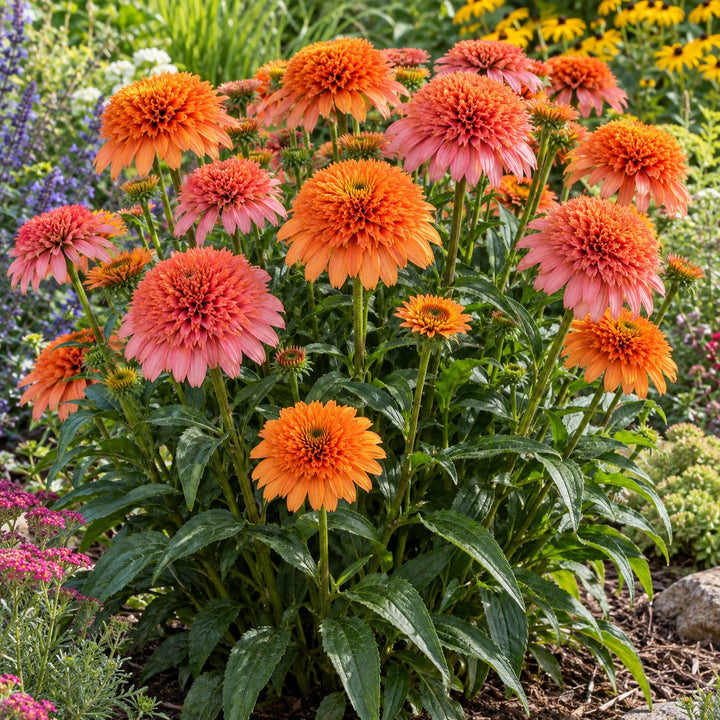
Rainbow Sherbet coneflower is a fully double coneflower that looks exactly like its name. Each 4½-inch pompom has a dense, rounded tuft of short petals inside a skirt of wide, flat ray petals. New blooms open bright tangerine orange and soften to coral pink as they age, so orange and coral flowers show side by side on the same plant.
Against lavender's cool purple, all that warmth really glows. And it wants the same sunny, well-drained ground.
Rainbow Sherbet at a glance
| Trait | What to expect |
|---|---|
| Botanical name | Echinacea 'Rainbow Sherbet' |
| Flowers | Fully double pompoms, tangerine orange aging to coral pink, about 4½ inches |
| Foliage | Dark green, lance-shaped |
| Size | 26 to 28 inches tall, 18 to 24 inches wide |
| Bloom | Starts early July, peaks late July, long blooming |
| Hardiness | USDA zones 4 to 8 |
| Fragrance | Faint, lightly sweet and honey-like |
| Deer | Resistant |
Warm meets cool
Orange and purple sit nearly opposite each other on the color wheel, which is why this combination reads from across the yard. Rainbow Sherbet's round, heavy pompoms also contrast with lavender's slender spikes, so the planting has both color and shape working for it.
Timing lines up well. Rainbow Sherbet starts in early July, overlapping the tail end of the main English lavender bloom, and keeps going into late summer after the lavender is cut. At 26 to 28 inches, it fits the middle of a border, behind lower lavenders or between taller ones. Leave room for air to move around both. The Companion Plant Planner helps with the layout.
Planting and care
- Soil: average to lean and well drained. Hybrid coneflowers are most often lost to wet winter soil.
- Timing: plant by late summer so roots establish before winter.
- Water: regularly the first season, then little; it handles dry spells.
- Deadheading: cut spent heads back to a side bud and the branched stems keep producing.
- Winter: leave stems standing, avoid heavy mulch over the crown and leave the last seed heads for winter birds.
Aster yellows, which distorts flowers into green tufts, is the main concern; remove affected plants. Crowded plants in damp shade are more prone to leaf spot and powdery mildew. Flower color is richest in moderate temperatures and can fade faster in extreme heat.
For the vase
Rainbow Sherbet is rated good for cutting. The sturdy branched stems hold the heavy flowers upright, and a mix of orange and coral blooms with a few lavender stems makes a bright summer bouquet. It also works in large containers on a sunny patio.
Offered as a plug tray
Rainbow Sherbet comes as a 72-cell plug tray, suited to growers, cut-flower rows and larger borders. See the product page for current availability.
Frequently asked questions
Can I eat or make tea from this coneflower?
No. Rainbow Sherbet is grown as an ornamental, not for eating.
Do double coneflowers attract pollinators?
They do, though the dense double centers offer less to bees than single coneflowers. It is rated good for pollinators.
Why are some flowers orange and some pink?
That is the plant's charm. Each bloom opens orange and fades to coral pink as it ages.
















Share how it went in your field