

Product Field NotesCompanion Plants
Raspberry Ripple Coneflower: Big Doubles After Lavender Peaks
 Save
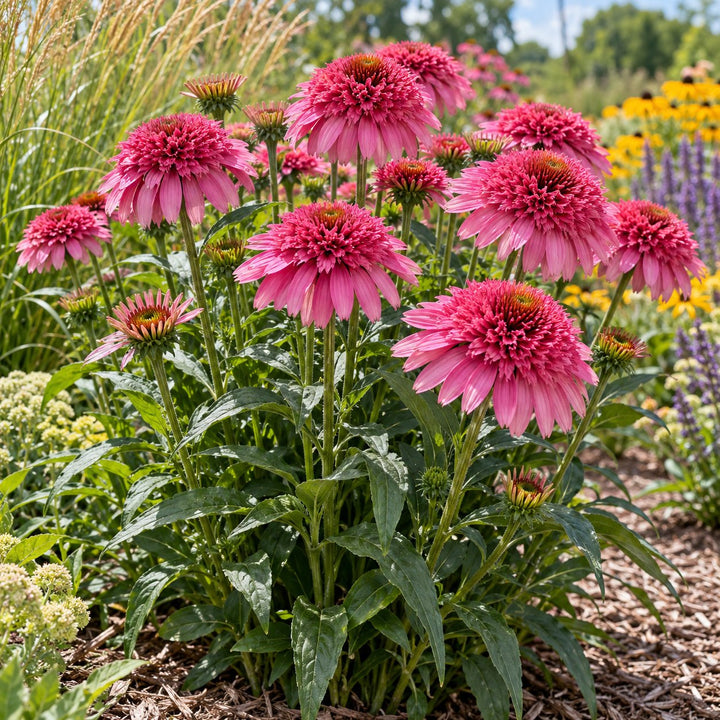
Raspberry Ripple coneflower has big, round, fully double flowers about 4.5 inches across: a ring of wide, overlapping raspberry-pink petals around a domed center of short, shaggy petals in a slightly darker tone. The strong, well-branched stems carry those heavy blooms easily, and the plant holds many flowers at once at its peak.
Raspberry Ripple at a glance
| Trait | What to expect |
|---|---|
| Botanical name | Echinacea 'Raspberry Ripple' |
| Flowers | Fully double raspberry pink with a darker center, about 4.5 inches |
| Foliage | Dark green, slightly rough |
| Size | 22 to 26 inches tall, 18 to 24 inches wide |
| Bloom | Starts early July, peaks late July, into late summer |
| Hardiness | USDA zones 4 to 8 |
| Light | Full sun to light part shade |
| Deer | Resistant |
Picking up where lavender leaves off
Lavender's big moment is late June into July. Raspberry Ripple starts in early July and peaks at the end of the month, then keeps going into late summer, so it carries a sunny bed through August when the lavender has been harvested and trimmed. At about two feet tall, it sits well in the middle of a border, behind lower edging plants and beside or just behind lavender.
It shares lavender's love of sun and well-drained soil and handles heat and dry spells once established. Bold raspberry pink against silver foliage and the last purple spikes is a cheerful late-summer combination. Sketch it in the Companion Plant Planner.
Planting and care
- Soil: average to lean and well drained; it dislikes wet winter soil.
- Timing: plant by late summer so it roots in before winter.
- Water: regularly the first season, then sparingly.
- Deadheading: cut spent heads back to a side bud to keep new flowers coming.
- Airflow: crowded plants in damp shade are prone to leaf spot and mildew.
- Watch for: aster yellows (distorted green flowers); remove affected plants.
A cutting garden favorite
Raspberry Ripple rates good for cutting, and the sturdy stems and big doubles hold up well in a vase. Combine it with fresh lavender and something airy, like grasses or white yarrow. Plan a cutting bed in the Cut Flower Planner.
Winter
It is hardy in Michigan in well-drained soil. Leave the stems and some seed heads standing over winter for structure and for finches, avoid heavy mulch over the crown and cut back in spring.
Frequently asked questions
Is it good for pollinators?
It is only fair. Double flowers offer less accessible pollen and nectar than single coneflowers, so pair it with singles if pollinators are your priority.
How is it offered?
As a full 72-cell plug tray. See the product page for current availability.

































Share how it went in your field