

Product Field NotesCompanion Plants
Raspberry Ruffles Dianthus: Clove-Scented Edging for Lavender
 Save
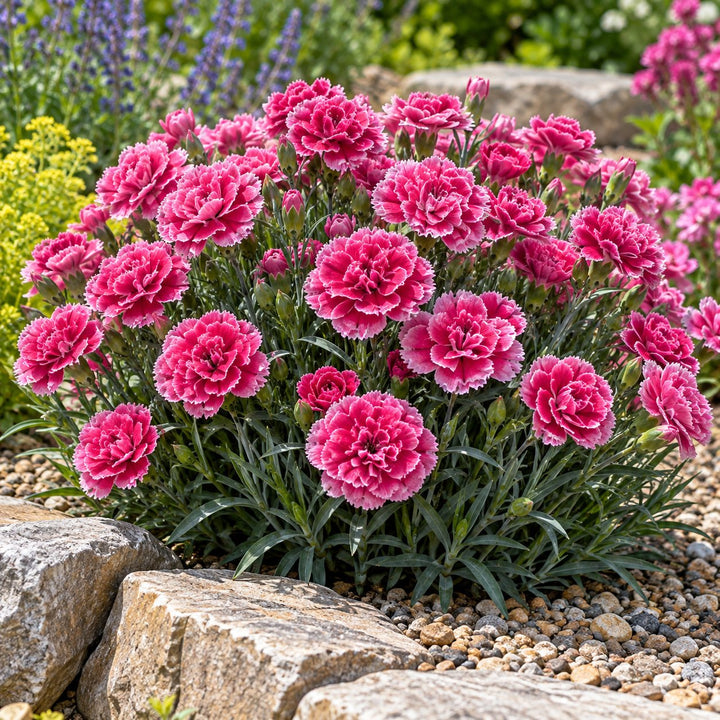
Raspberry Ruffles dianthus carries carnation-like flowers on a plant small enough to edge a path. Each fully double bloom is about 1.75 inches across, packed with ruffled, toothed petals in raspberry pink, and every petal is traced with a razor-thin white edge. The flowers smell lightly sweet and spicy, the classic clove scent of garden pinks.
Raspberry Ruffles at a glance
| Trait | What to expect |
|---|---|
| Botanical name | Dianthus 'Raspberry Ruffles' |
| Flowers | Fully double, raspberry pink with a thin white edge |
| Foliage | Blue-green, grassy, semi-evergreen |
| Size | 8 to 10 inches tall, 12 to 14 inches wide |
| Bloom | About six weeks from early June, with rebloom in early fall after shearing |
| Hardiness | USDA zones 4 to 9 |
| Light | Full sun to light part shade |
| Fragrance | Moderate, sweet and clove-like |
A front-row partner for lavender
Dianthus and lavender are old friends in cottage gardens for good reason. Both want sun, lean soil and dry feet, and both have gray to blue-green foliage that looks good together long after the flowers fade. Raspberry Ruffles sits low enough to go right in front of a lavender hedge, where its pink doubles bloom alongside the first purple spikes in June.
The fragrance pairing is a pleasure, too. Brush past the lavender and you get its familiar herbal scent; lean down and the dianthus adds a soft clove note. Try it along a walkway where you will notice both. The Companion Plant Planner can help you space the two.
Planting and care
- Soil: average to lean and well drained. Wet, heavy soil is the main way garden pinks are lost, especially over winter.
- Water: regularly while it establishes, then let the soil dry between waterings. Water at the base, not overhead.
- Airflow: give each plant room. It handles humidity better than older garden pinks, but crowding invites leaf spot.
- Shearing: after the main flush, shear the plant lightly to tidy it and encourage scattered rebloom.
- Midsummer: flowering slows in the hottest weeks and picks up again as nights cool.
Winter in Michigan
Raspberry Ruffles is semi-evergreen and reliably hardy here in sharply drained soil. Do not pile mulch or leaves over the crown, which holds moisture against it. In spring, trim off any winter-damaged leaves and it will freshen up quickly. It was bred for resistance to center die-out, the bare middle that older pinks often develop.
About the plug tray
It is offered as a full 72-cell plug tray, a good fit for edging long beds or for growers potting up their own plants. See the product page for current availability.
Frequently asked questions
Can I cut it for bouquets?
Yes, for small ones. The stems are short, but a few clove-scented flowers in a tiny vase or tucked into a lavender posy are lovely.
Do the flowers fade?
The raspberry color holds well through the bloom season instead of washing out.
Will it grow in a container?
Yes. Use a gritty, fast-draining mix and a pot with a drainage hole, and let it dry slightly between waterings.

































Share how it went in your field