

Product Field NotesCompanion Plants
Red Flame Switch Grass: Wine-Red Blades Behind Silver Lavender
 Save
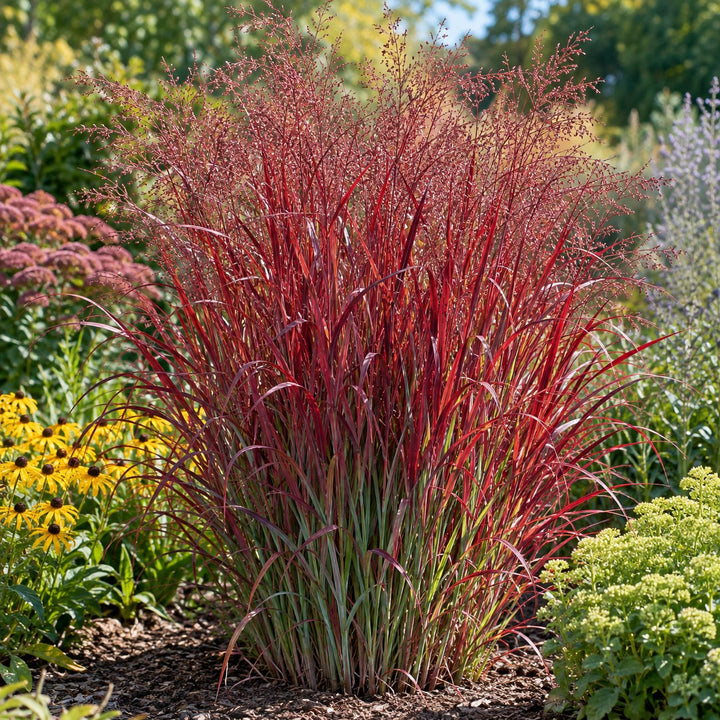
Red Flame switch grass is a selection of our native Panicum virgatum grown for its color. The narrow leaves come up bluish green, then begin turning wine red from the tips down starting in late July, earlier than many red switch grasses. By the end of summer the clump is nearly all red, topped with an airy haze of reddish flower panicles.
Red Flame at a glance
| Trait | What to expect |
|---|---|
| Botanical name | Panicum virgatum 'Red Flame' |
| Foliage | Blue-green turning wine red from late July |
| Flowers | Airy reddish panicles that age to tan |
| Size | 36 to 42 inches tall, about 24 inches wide |
| Bloom | Mid to late August, holding into winter |
| Hardiness | USDA zones 4 to 9 |
| Light | Full sun |
| Deer | Resistant |
Red, silver and purple
Lavender's silvery foliage looks its best against something dark, and Red Flame provides it. Planted behind a lavender hedge, the upright red column frames the purple spikes in summer and keeps the bed lively in fall, long after lavender is done. Its fine blades also move in every breeze, which softens a planting of tidy lavender mounds.
The two agree on sun and on drought once established. Switch grass is more forgiving of soil than lavender, from sand to clay, so you can tuck it into a slightly heavier spot at the back while keeping the lavender in the best-drained ground. Lay out the row in the Companion Plant Planner.
Planting and care
- Site: full sun in almost any soil. It holds up to drought and to salt, a plus near driveways.
- Water: regularly during the first season, then only in long dry spells.
- Feeding: rarely needed. Lean soil keeps it upright and compact.
- Disease: rust is the main issue in muggy summers. Good airflow helps.
- Spring: it is a warm-season grass, so new growth starts late. Do not give up on it in April.
Winter interest
Do not cut it down in fall. The tan panicles and russet clump look handsome under frost and snow, and they give birds cover. Cut the whole clump back to a few inches in early spring before new shoots appear. It is very reliable through Michigan winters.
About the plug tray
Red Flame is offered as a full 72-cell plug tray, ideal for mass plantings, screening, rain gardens or growers potting their own grasses. See the product page for current availability, or the Wholesale Hub for more trays.
Frequently asked questions
Can I use it in arrangements?
Yes. The panicles rate well both fresh and dried, and they pair nicely with dried lavender bundles.
Will it spread through my garden?
It grows as an upright clump that widens slowly. Divide it in spring if it outgrows its spot.
When does the red show up?
Color usually starts in late July and deepens through August and September.

































Share how it went in your field