

Use & Care NotesLavender Plants
Sachet Lavender: An English Lavender Named for What It Does Best
 Save
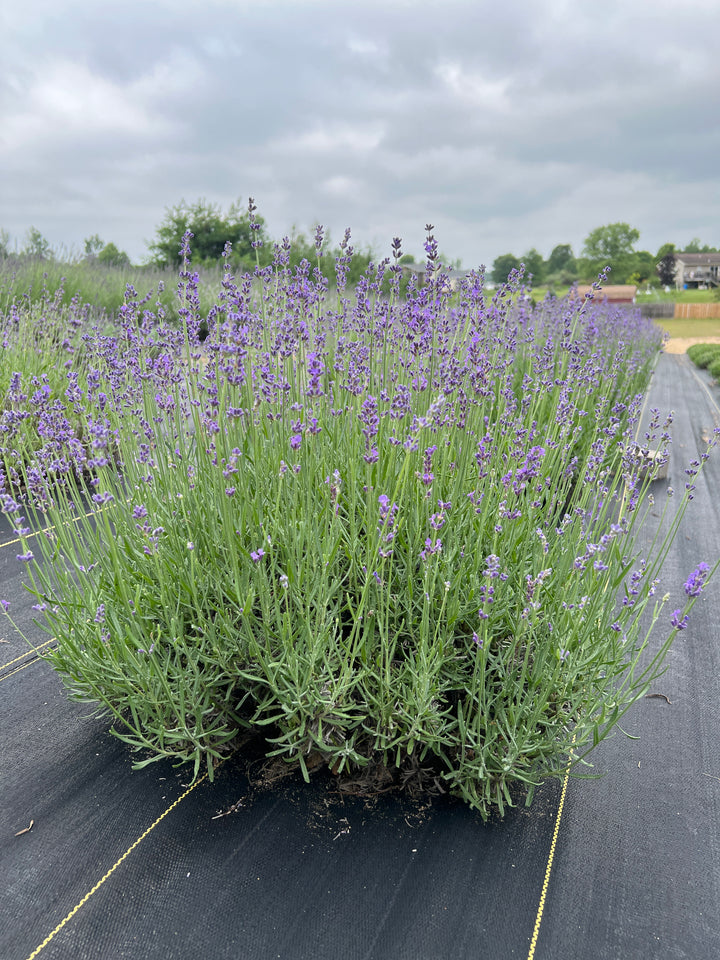
Sachet lavender is an English lavender with a name that tells you where its flowers tend to end up. It grows into a compact, bushy plant about 30 inches tall and 36 inches wide, with gray-green foliage and purple spikes in early summer. The scent is strong but gentle in character: sweet floral with soft herbal notes and very little camphor.
Sachet at a glance
| Trait | What to expect |
|---|---|
| Botanical name | Lavandula angustifolia 'Sachet' |
| Flower color | Purple |
| Foliage | Gray-green |
| Habit | Compact and bushy |
| Mature size | About 30 inches tall and 36 inches wide |
| Bloom | Starts early June, peaks mid-June, moderate rebloom |
| Hardiness | USDA zones 5a to 8b |
| Fragrance | Strong, sweet floral, low camphor |
| Best uses | Fragrance, essential oil, culinary, sachets |
Making sachets from your own plants
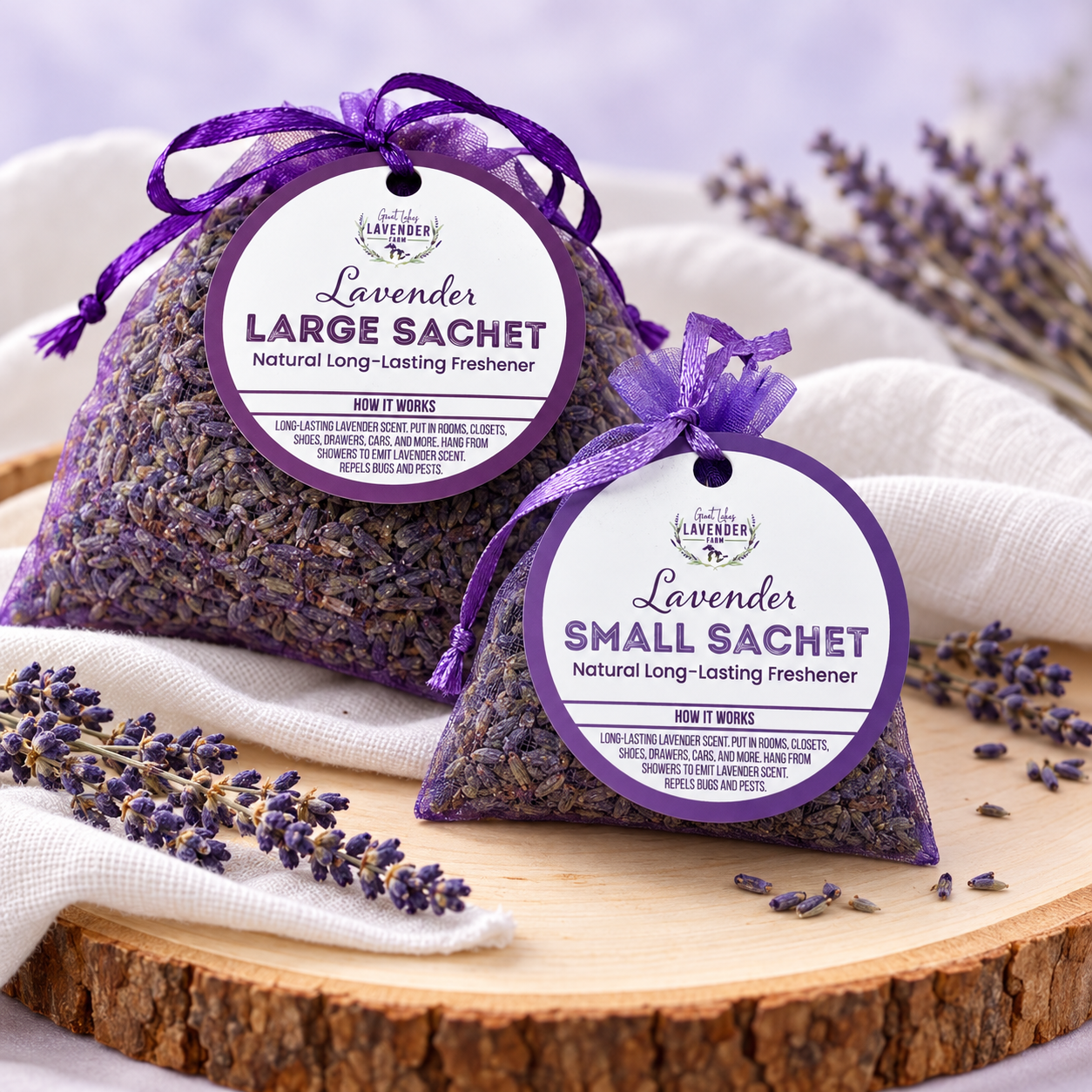
Sweet, low-camphor English lavender is the classic choice for sachets because the scent stays soft and pleasant in a drawer or closet. Here is the simple farm method:
- Cut stems on a dry morning when the buds are fully colored and only a few flowers have opened.
- Hang small bunches upside down in a dark, airy spot for one to two weeks.
- Roll the dry stems between your hands over a bowl to release the buds.
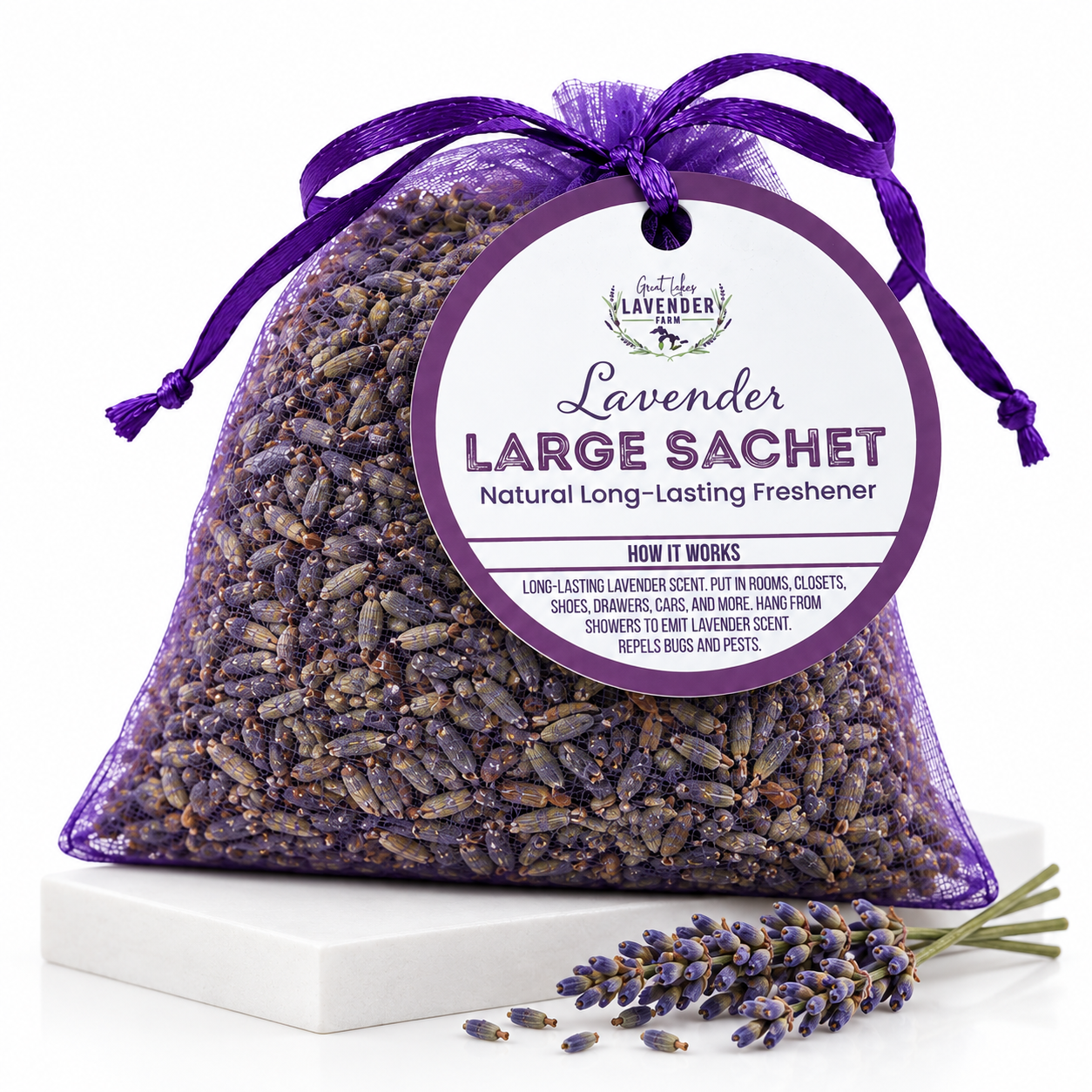
- Sift out bits of stem and leaf, then fill small cotton or linen bags.
- Squeeze a sachet now and then to wake up the scent, and refresh the buds each season.
Store extra dried buds in a sealed jar away from light so they hold their color and fragrance.
Planting and care
Full sun and quick drainage come first. Sachet's listed spread is about three feet, so give each plant that much room, or space a little tighter for a low hedge. In heavy soil, plant on a raised row. Water deeply at planting and while it establishes, then water only in extended dry spells.
- After the June flush: cut the stems and shape the plant, staying in leafy growth. This brings on moderate rebloom.
- Feeding: skip it. Lean soil keeps the plant compact and the scent concentrated.
- Winter: drainage matters more than covering; keep wet mulch off the crown.
In the kitchen
Sachet is rated great for culinary use. The same buds you dry for sachets work in lavender sugar, shortbread and lemonade, as long as they are grown and handled as a food crop. Start with a small pinch and taste; a little lavender goes a long way.
Plants or plug trays
Sachet is offered as individual plants and plugs (3-inch plugs, 4-inch pots and 1-gallon pots) and as a 72-cell or deep 20-cell plug tray for growers planting rows or potting up their own stock. See each product page for current sizes and availability, and the Wholesale Hub for tray orders.
Frequently asked questions
Is Sachet a good lavender for crafts?
Yes. Its sweet, low-camphor fragrance and good dried rating make it a natural for sachets, potpourri and small dried bundles.
Can I cook with Sachet?
Yes. It is an English lavender rated great for culinary use. Use food-grown buds and use them sparingly.
When should I harvest it?
Early to mid-June in its listed bloom window, when buds are colored but mostly unopened. The Harvest Calendar can help you plan.



Share how it went in your field