

Use & Care NotesLavender Plants
Sarah Lavender: A Small English Lavender with a Sweet Midsummer Show
 Save
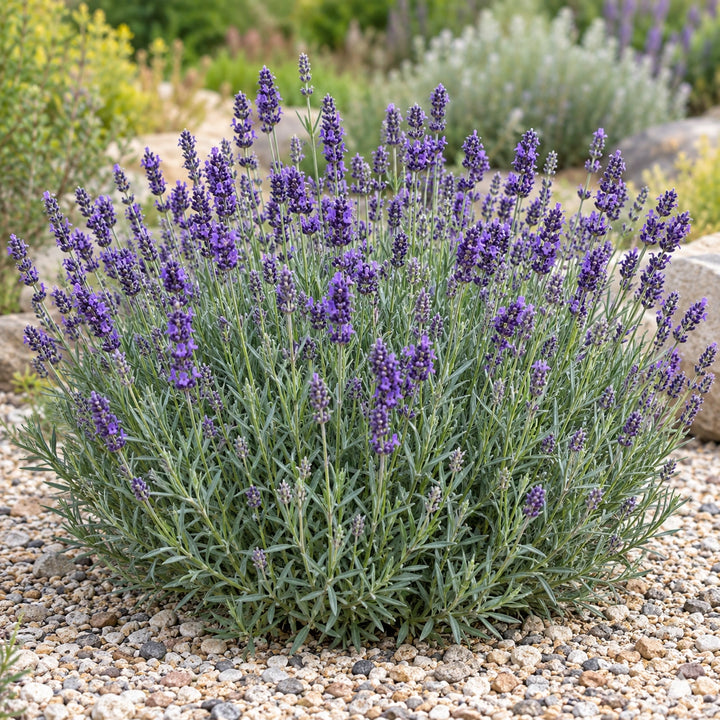
Sarah lavender is a compact, bushy English lavender that tops out around 18 inches tall and 24 inches wide. Its purple spikes rise over gray-green foliage in early to midsummer and carry a strong, sweet floral fragrance with soft herbal notes and little camphor.
It is a good answer to a common question: what lavender fits in a small garden and still gives you something to harvest?
Sarah at a glance
| Trait | What to expect |
|---|---|
| Botanical name | Lavandula angustifolia 'Sarah' |
| Flower color | Purple |
| Foliage | Gray-green |
| Habit | Compact and bushy |
| Mature size | About 18 inches tall and 24 inches wide |
| Bloom | Starts late June, peaks mid-July, moderate rebloom |
| Hardiness | USDA zones 5a to 8b |
| Fragrance | Strong, sweet floral, low camphor |
| Culinary | Rated great |
Small-space uses
- Patio pots: a 12- to 14-inch container holds one plant comfortably.
- Raised beds: tuck one at a sunny corner of a vegetable bed for pollinators and kitchen buds.
- Low hedges: space plants about 20 to 24 inches apart along a path.
- Herb spirals and rock gardens: anywhere that drains fast and bakes in sun.
Because it flowers from late June into July, Sarah fills the stretch between the earliest English lavenders and the late lavandins. The Bloom Calendar shows where it fits in the sequence.
Planting for a long life
English lavender can live many years when it starts in the right place. Choose full sun and soil that drains within minutes after a rain. Loosen the soil deeply, and in clay, build up a raised bed or a gravelly mound. Plant the crown level with the soil surface, water deeply, and keep bark mulch and compost away from the stems.
In containers, use a gritty mix and a pot with a drainage hole. Containers dry faster, so check them often in summer, but still let the mix dry between waterings.
Pruning and winter care
After the July peak, cut the spent stems and shape the plant into a low dome, taking off about a third of the leafy growth. Never cut into bare wood. This keeps Sarah tight and well-branched, and it encourages the moderate rebloom. Skip fertilizer; lean soil gives a more compact plant and better scent.
In winter, drainage is the best protection. In-ground plants in well-drained soil come through cold winters well; container plants in zone 5 appreciate being moved against a sheltered wall or into an unheated garage once the soil freezes.
Harvest for the kitchen
Sarah is rated great for culinary use, with the sweet, low-camphor flavor that suits baking. Harvest on a dry morning once buds are colored and only a few flowers have opened. Hang small bunches in a shaded, airy place, then rub the dry buds off the stems and store them in a sealed jar. Use only plants grown as a food crop, and start with a small amount. It is also rated excellent for essential oil and good for drying.
Frequently asked questions
Is Sarah a dwarf lavender?
It is a compact English lavender at about 18 inches tall. That is smaller than most, though not as tiny as the true miniatures.
Can I grow Sarah in a pot through winter in zone 5?
Yes, with some shelter. Pots freeze harder than garden soil, so move it to a protected spot or an unheated garage for the coldest months and water very little.
Does it rebloom?
It has a moderate rebloom after a trim following the main flush.
















Share how it went in your field